

Nic nat explained: the oral nicotine gel for UK adults

If you searched “nic nat” looking for a nicotine product rather than an AFL footballer, you’re in the right place. In nicotine slang, “nic nat” is shorthand for nicotine, and the most relevant UK option landing on our radar right now is the Lesser Evil Oral Mister: a tobacco-free, battery-free sublingual nicotine gel launching in the UK in 2026. No vapour. No battery. No tobacco. Just a small gel spray applied under the tongue. Licensed NRT medicines from the NHS are the evidence-based route for formal cessation support, and systematic reviews show they increase quit rates significantly versus no NRT. The Oral Mister sits in a different category entirely: a consumer nicotine product, not a medicine.
Table of Contents
- Why does “nic nat” bring up a footballer?
- How does a sublingual nicotine gel actually work?
- What does the NHS say, and where do consumer gels fit?
- Is an oral nicotine gel right for you?
- How to use a sublingual nicotine gel safely
- Lesser Evil Oral Mister: what it is and when it arrives in the UK
- Key takeaways
- The part most people skip
- Lesser Evil Oral Mister is coming to the UK in 2026
- Useful sources and further reading
Why does “nic nat” bring up a footballer?
Simple: Nic Naitanui is one of the most recognisable names in Australian rules football, and “Nic Nat” is his universally known nickname. Search engines serve both audiences from the same query.
How to tell which result you actually need:
- Sport context: “Nic Nat” + AFL, West Coast Eagles, ruckman, or footy stats. That’s the athlete.
- Nicotine context: “nic nat” + vape, oral, gel, pouch, or UK. That’s nicotine slang.
- Ambiguous results: if you see a mix of both, add “nicotine” or “oral gel” to your search to filter it down fast.
The slang angle is informal and not a recognised industry term. The proper category is oral nicotine gel or sublingual nicotine product.
How does a sublingual nicotine gel actually work?
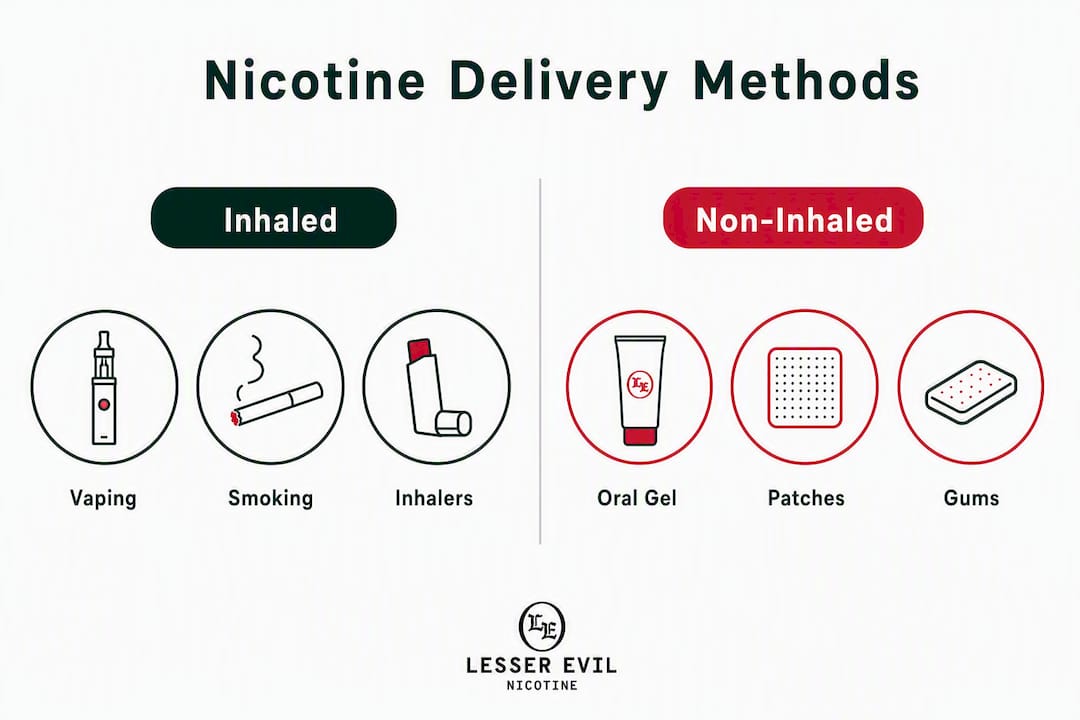
A sublingual gel is applied directly under the tongue, where nicotine absorbs through the oral mucosa into the bloodstream. No heating, no battery, no vapour. That’s the fundamental difference from vaping, where liquid is heated and you inhale the resulting vapour into your lungs.

The gel delivery method also differs from pouches, which sit between the gum and lip and release nicotine more slowly through gum tissue. A measured gel spray can offer more consistent per-use delivery than chewing gum, where dosing consistency depends partly on chewing technique.
| Format | Delivery method | Vapour? | Battery needed? | Tobacco? |
|---|---|---|---|---|
| Vaping | Inhaled vapour | Yes | Yes | No |
| Nicotine pouch | Gum tissue absorption | No | No | No |
| Licensed NRT spray | Oral mucosa / nasal | No | No | No |
| Sublingual gel (Oral Mister) | Under-tongue mucosa | No | No | No |
Pro Tip: If discretion at work is your main concern, non-inhalation nicotine methods are worth understanding before you commit to any format. No cloud, no smell, no explaining yourself.
What does the NHS say, and where do consumer gels fit?
The NHS classifies nicotine replacement therapy as a licensed medicine. NRT products — patches, gum, lozenges, inhalers, and mouth sprays — are available through NHS Stop Smoking services and pharmacies, and they carry formal clinical evidence behind them. StatPearls summarises their mechanisms and indications in detail.
Consumer oral nicotine gels are not licensed NRTs. They are sold as consumer goods, not medicines, and they make no clinical claims.
The NHS recommends combining a slow-acting product (such as a patch) with a fast-acting product (such as a mouth spray or gum) for steady support alongside immediate relief. If you are actively trying to stop smoking with medical support, speak to your GP or pharmacist about licensed NRT options first.
That distinction matters for how you shop. If you want a consumer nicotine product to use instead of vaping or smoking, that is a separate decision from seeking NHS-supported cessation treatment.
Is an oral nicotine gel right for you?
Likely a good fit if you:
- Vape or smoke and want something with no vapour and no battery
- Prioritise discretion at work, on public transport, or in social settings
- Prefer natural flavours and sweeteners over synthetic formulations
- Want to avoid contributing to e-waste from disposable devices
Worth knowing before you buy:
- Not a licensed medicine. No clinical cessation claims apply.
- Not for under-18s. Full stop.
- If you are pregnant, speak to a midwife or GP before using any nicotine product.
- Some users report mild mouth irritation with oral nicotine products. A water-based, low-burn formulation aims to reduce this, but individual responses vary.
Urban professionals who vape and want something quieter, cleaner, and less visible tend to find this format fits their day well. If you need formal medical support to stop smoking, the NHS Stop Smoking service is the right first call.
How to use a sublingual nicotine gel safely
- Check the label. Confirm the dose per spray and the recommended maximum for your session before you start.
- Lift your tongue. Apply the spray directly under the tongue, not on top of it or against the cheek.
- Hold, don’t swallow. Keep the gel in place for 30–60 seconds to allow absorption through the oral mucosa.
- Avoid eating or drinking for a few minutes before and after use. Food and drink can interfere with absorption.
- Start low. If you are new to this format, begin with one spray and wait to gauge the effect before adding more.
- Log your use. A simple note on your phone of how many sprays per day helps you stay in control of your intake.
- Store it properly. Keep the product at room temperature, away from direct sunlight, and out of reach of children.
Pro Tip: For discreet use at work, a sublingual gel is one of the least visible nicotine formats going. No cloud, no pouch bulge, no smell on your clothes. A quick application under the tongue takes seconds.
Lesser Evil Oral Mister: what it is and when it arrives in the UK
The Lesser Evil Oral Mister is a sublingual nicotine gel spray built on a patent-pending, low-burn formulation. Here are the plain facts:
- Format: sublingual gel spray, applied under the tongue
- Formulation: water-based, tobacco-free, natural flavours and natural sweeteners
- Battery-free: no charging, no e-waste
- Flavours: Peppermint, Black Grape, Green Apple
- UK launch: 2026, starting London-first through premium independent retail and direct-to-consumer online
“I no longer have to step outside or explain myself. It just fits into my day.” — user opinion shared with the brand.
Lesser Evil Nicotine is positioning the Oral Mister specifically for adult vapers who want a tobacco-free, low-burn alternative that does not require a battery or produce vapour. A nicotine mouth spray is also in development. You can find full product details and register your interest for the UK launch on the product page.
Key takeaways
Oral nicotine gel is a tobacco-free, battery-free format absorbed under the tongue, distinct from both licensed NRT medicines and vapour-based products.
| Point | Details |
|---|---|
| “Nic nat” in nicotine context | Informal slang for nicotine; the recognised product category is sublingual or oral nicotine gel. |
| Gel vs vaping | A sublingual gel absorbs through the oral mucosa with no vapour, no battery, and no e-waste. |
| NHS vs consumer products | Licensed NRTs are medicines with clinical evidence; consumer oral gels are separate goods, not cessation treatments. |
| Who it suits | Adults who vape or smoke and want a discreet, tobacco-free, battery-free alternative in their daily routine. |
| Lesser Evil Oral Mister | Launching in the UK in 2026: tobacco-free, battery-free sublingual gel in Peppermint, Black Grape, and Green Apple. |
The part most people skip
The nicotine product market is full of formats competing on the same claim: “less bad than smoking.” What most articles don’t say plainly is that the format you’ll actually stick with is the one that fits your life, not the one with the best clinical write-up.
Patches are effective. The evidence is solid. But a lot of people quietly peel them off after a week because they feel clinical, visible, or just a bit grim. Pouches work for plenty of people, but the category has been built almost entirely around a male aesthetic that leaves a lot of women cold. Vaping replaced smoking for millions, but it still means carrying a device, charging it, and breathing something in.
A sublingual gel is not a magic fix. It is a different format with a different sensory experience and a different set of trade-offs. The interesting thing about the Lesser Evil Oral Mister is not that it claims to be healthier. It is that it is designed for people who have already decided they want something that fits more quietly into a professional life. That is a real gap in the UK market, and it is worth paying attention to.
Lesser Evil Oral Mister is coming to the UK in 2026
If you’ve been vaping and want something with no vapour, no battery, and no tobacco, the Lesser Evil Oral Mister is worth putting on your radar. It is a sublingual nicotine gel spray in three natural flavours: Peppermint, Black Grape, and Green Apple. Tobacco-free. Battery-free. Designed to fit into your day without anyone noticing.

The UK launch is rolling out in 2026, London-first. Visit the product page to get the details and register your interest before it hits shelves.
Useful sources and further reading
- NHS: Quit smoking with nicotine replacement therapies (NRT) — official NHS guidance on licensed NRT options
- StatPearls / NCBI Bookshelf: Nicotine replacement therapy — clinical overview of NRT types and mechanisms
- PMC: NRT versus control for smoking cessation — systematic review on NRT quit-rate evidence
- BNF / NICE: Nicotine — dosing and formulation reference for oral nicotine products
- Lesser Evil Oral Mister product page — UK launch details and product facts
- Switching cigarettes to oral nicotine: your 2026 guide — practical guide for smokers considering oral nicotine formats
This article is general information, not medical advice. For personal cessation support, speak to your GP, pharmacist, or the NHS Stop Smoking service.