

Switching cigarettes to oral nicotine: your 2026 guide

TL;DR:
- Switching from cigarettes to oral nicotine involves replacing inhaled smoke with mouth-absorbed nicotine products. Proper planning and gradual reduction are essential to avoid dual use and maximize harm reduction. Oral nicotine is not risk-free and requires intentional use to prevent dependence.
Switching cigarettes to oral nicotine means replacing smoked tobacco with products that deliver nicotine through the mouth’s lining, without combustion, smoke, or the lung tax that comes with every cigarette. The industry term for this category is “oral nicotine products,” which includes nicotine pouches, sublingual gels, and nicotine gum. The core appeal is straightforward: you stop breathing garbage and start absorbing nicotine through your oral mucosa instead. The FDA has authorised 26 nicotine pouch products with modified risk status as of june 2026, which signals a meaningful regulatory shift in how these products are viewed. That said, switching is not a magic fix. Done right, it reduces your exposure to combustion chemicals. Done carelessly, it just adds another habit on top of the old one.
What are oral nicotine products and how do they work?
Oral nicotine products are tobacco-free formats that absorb nicotine through the mouth rather than the lungs. The two most common formats are nicotine pouches, which sit between the gum and lip, and sublingual gels, which are placed under the tongue. Both formats use the oral mucosa to move nicotine into the bloodstream. You get the hit without breathing in smoke or vaporised chemicals.

Cigarettes work through combustion. Burning tobacco produces thousands of chemicals, including carbon monoxide and carcinogens, which enter the lungs and bloodstream simultaneously. Oral nicotine skips that process entirely. Nicotine still reaches the blood, but the combustion toxins do not come with it.
| Feature | Cigarettes | Oral nicotine products |
|---|---|---|
| Nicotine delivery route | Lungs via smoke inhalation | Oral mucosa absorption |
| Combustion toxins | Yes, thousands | None |
| Tobacco content | Yes | Tobacco-free formats available |
| Discreet use | No | Yes |
| Battery or device required | No | No (pouches and gels) |
Nicotine pouches deliver nicotine faster and to a higher degree than some traditional nicotine replacement products. That speed matters because it means the dependence loop can reinforce quickly if you are not paying attention to your dosage.
How to prepare for switching from cigarettes to oral nicotine
Preparation is the part most people skip, and it is exactly why so many end up as dual users rather than making a clean break. Before you buy anything, get honest about your current cigarette consumption. How many do you smoke a day? When are the strongest urges? Knowing this shapes which nicotine strength you start with and how often you will need to use an oral product.
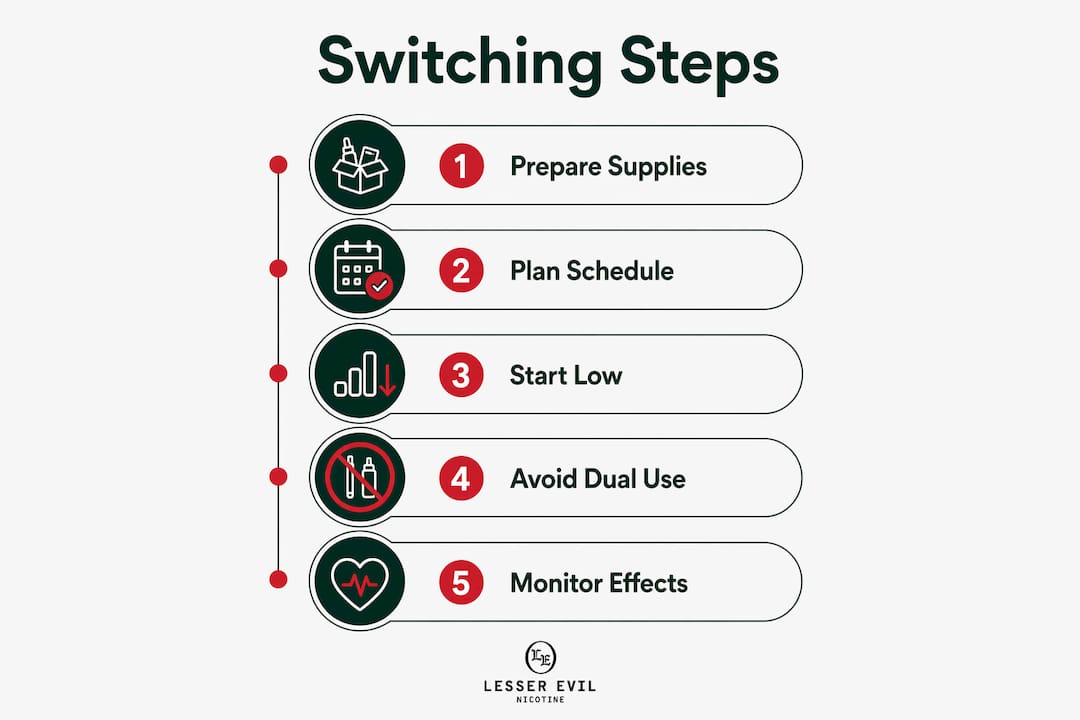
The supplies you need are simple: a stock of your chosen oral nicotine format, a clear plan for your first two weeks, and ideally some stress management strategies for the moments when habit triggers hit hardest. Habit triggers are the situations, times of day, or emotions that you associate with lighting up. They do not disappear just because you have swapped the format.
Pro Tip: Start with the lowest nicotine strength available. Oral nicotine absorbs efficiently, and many people overestimate how much they need when switching from cigarettes.
| Format | How it is used | Onset speed | Best for |
|---|---|---|---|
| Nicotine pouch | Between gum and lip | Moderate | Discreet daytime use |
| Sublingual gel | Under the tongue | Fast | Controlled, low-dose use |
| Nicotine gum | Chewed then parked | Moderate | Those who like oral activity |
Choosing the right format matters more than most guides admit. A sublingual gel like Lesser Evil Nicotine’s patent-pending formulation delivers nicotine via the oral mucosa with natural flavours and no tobacco. That is a meaningfully different experience from a pouch that sits against your gum for 30 minutes.
Step-by-step guide to switching from cigarettes to oral nicotine
A complete switch, not a partial one, is what produces the harm reduction benefit. Dual use carries risks comparable to exclusive smoking, so the goal is full replacement, not supplementation.
-
Match your nicotine intake to your cigarette consumption. Count how many cigarettes you smoke daily and map that to the number of oral nicotine sessions you will need. A moderate smoker of 10–15 cigarettes per day typically needs 8–12 oral nicotine uses across the day to cover the same intake.
-
Use the product correctly. For pouches, place it between your gum and lip and leave it. Do not chew it. For sublingual gels, place the dose under your tongue and let it absorb. Do not swallow it. Correct placement is what drives efficient absorption through the oral mucosa.
-
Replace cigarettes one by one, not all at once. Start by swapping your first cigarette of the day with an oral nicotine product. Do that for three days. Then swap the second cigarette. Gradual replacement is more sustainable than going cold turkey on cigarettes while simultaneously learning a new product.
-
Track your usage. Write down every time you use an oral nicotine product and every time you smoke. Patterns become visible quickly. Most people discover they smoke out of boredom or routine far more than they realised.
-
Handle habit triggers deliberately. The after-meal cigarette, the one with coffee, the one outside the office. These are behavioural cues, not just nicotine needs. Replace the ritual, not just the nicotine. Step outside, use your oral product, and give yourself the same two minutes you would have taken for a smoke.
-
Reduce frequency over time. Once you have fully replaced cigarettes, start spacing your oral nicotine uses further apart. The types of nicotine products you use should serve your habit, not expand it.
Pro Tip: Space your doses at least 60 minutes apart to avoid nicotine stacking. Oral products absorb efficiently, and using them back-to-back raises your total intake fast.
Common mistakes when switching to oral nicotine
The biggest mistake is dual use. Continuing to smoke while also using oral nicotine products does not reduce your risk. Research from a randomised controlled trial found that most smokers switching to pouches remained dual users rather than fully quitting cigarettes. That outcome delivers almost none of the harm reduction benefit.
The second mistake is assuming oral nicotine is completely safe. It is not. Nicotine itself carries cardiovascular risks regardless of the delivery method. Oral products remove combustion toxins from the equation, but they do not remove nicotine’s effects on heart rate and blood pressure.
The third mistake is stacking. Some oral pouches contain up to 56mg of nicotine per unit. Using multiple high-strength products in quick succession risks inadvertent nicotine overdose. Symptoms include nausea, dizziness, and a racing heart.
Watch for these warning signs that your switch is stalling:
- You are still smoking more than two cigarettes a day after two weeks
- You are using oral nicotine more frequently than you were smoking
- You feel nauseous or dizzy after using an oral product
- You are using oral nicotine in addition to cigarettes, not instead of them
- You are increasing your nicotine strength rather than holding steady or reducing
If any of these apply, slow down and reassess your dosage and frequency before continuing.
What to expect after switching: health and ongoing considerations
Completely switching from cigarettes to oral nicotine reduces your exposure to combustion-related carcinogens. Short-term studies show significant reductions in gingival inflammation and mucosal irritation in people who make a full switch. That is a real and measurable improvement. The caveat is that the evidence base is still building, and long-term data on oral nicotine products is limited compared to decades of smoking research.
Nicotine’s cardiovascular effects do not disappear when you stop smoking. Your heart rate and blood pressure still respond to nicotine regardless of how it enters your body. Experts are clear that complete cessation remains the ideal outcome for health, with oral nicotine serving as a harm reduction step rather than a permanent destination.
There is also a medication consideration that catches many people off guard. Stopping cigarettes changes how your body metabolises certain drugs. Warfarin and clozapine are two examples where dose adjustments may be needed after quitting smoking. If you take prescription medication, speak to your GP or pharmacist when you make the switch.
“Oral nicotine pouches do not have a planned treatment off-ramp like FDA-approved nicotine replacement therapies, which typically last around three months. Without a clear stop date, users risk indefinite nicotine dependence rather than a genuine reduction in use.” Pharmaceutical Journal, 2026
The goal is not to use oral nicotine forever. The goal is to use it as a bridge away from cigarettes, then gradually reduce your overall nicotine intake over time. Responsible use means reducing nicotine intake as a long-term aim, not just swapping one indefinite habit for another.
Key takeaways
Switching from cigarettes to oral nicotine only delivers harm reduction benefits when you make a complete switch and actively work to reduce your overall nicotine use over time.
| Point | Details |
|---|---|
| Complete switching is non-negotiable | Dual use carries risks equal to exclusive smoking and removes the harm reduction benefit. |
| Start low on nicotine strength | Oral nicotine absorbs faster than many expect; starting low prevents reinforcing dependence. |
| Oral products remove combustion toxins | Switching fully reduces exposure to carcinogens and improves oral health markers in the short term. |
| Medication interactions are real | Stopping cigarettes changes drug metabolism; check with a pharmacist if you take prescription medicines. |
| Plan your exit from oral nicotine too | Unlike FDA-approved NRT, oral pouches have no standard stop date, so set your own reduction plan. |
My honest view on switching to oral nicotine
I have watched a lot of people go through this switch, and the pattern is consistent. The ones who succeed treat it as a deliberate process, not a casual swap. They track their usage, they pick a format that actually suits their lifestyle, and they do not kid themselves about dual use.
The thing that surprises most people is how quickly oral nicotine can become its own entrenched habit if you are not paying attention. The absorption is fast, the format is discreet, and there is no social friction the way there is with a cigarette. That combination makes it easy to use more than you intended. I have seen people who stopped smoking entirely but ended up using oral nicotine more frequently than they ever smoked. That is not harm reduction. That is just a different habit.
Behavioural support matters more than most people admit. Knowing your triggers, having a plan for the hard moments, and tracking your usage honestly are what separate a successful switch from a lateral move. The format change is the easy part. The mindset shift is the work.
If you are going to do this, do it properly. Pick the lowest strength that covers your needs, space your doses, and set a date to start reducing. Oral nicotine is a useful tool when used with intention. Without intention, it is just another thing you are hooked on.
— Luke McLeod
Lesser Evil Nicotine: a tobacco-free option for your switch

Lesser Evil Nicotine is a tobacco-free sublingual nicotine gel built for adults who want to stop breathing in chemicals. The patent-pending formulation sits under your tongue and absorbs through the oral mucosa. No tobacco, no batteries, no e-waste. Natural flavours and natural sweeteners only, in Peppermint, Black Grape, and Green Apple. It is designed for discreet, controlled use throughout the day, which makes it a practical option if you are working through a structured switch from cigarettes. You can explore the Lesser Evil Oral Mister and see which flavour fits your routine. If you want the full picture on quitting smoking without picking up another device, the 2026 quitting guide is worth reading alongside this one.
FAQ
What is oral nicotine and how does it differ from cigarettes?
Oral nicotine products deliver nicotine through the mouth’s lining without combustion or smoke. Cigarettes burn tobacco and produce thousands of toxins; oral products remove that combustion process entirely.
Is switching to oral nicotine safer than smoking?
Completely switching reduces exposure to combustion-related carcinogens and improves short-term oral health markers. Nicotine itself still carries cardiovascular risks regardless of the delivery method.
What happens if I use oral nicotine and still smoke?
Dual use carries health risks comparable to exclusive smoking. Research shows it negates the harm reduction benefit of switching, so a complete replacement is necessary for any meaningful risk reduction.
Can oral nicotine affect my prescription medication?
Yes. Stopping cigarettes changes how your body metabolises certain drugs, including warfarin and clozapine. Speak to your GP or pharmacist when you make the switch.
How do I avoid becoming dependent on oral nicotine?
Start with the lowest nicotine strength available, space your doses at least 60 minutes apart, and set a personal reduction plan. Unlike FDA-approved nicotine replacement therapies, oral pouches have no standard treatment end date, so you need to set your own.