

Reduce nicotine stress management: your 2026 guide

TL;DR:
- Nicotine does not reduce stress; it sustains a cycle that elevates baseline anxiety over time.
- Effective management replaces conditioned responses, using techniques like breathing exercises, behavioral tactics, and lifestyle changes.
Nicotine is not a stress reliever. It is the cause of a stress cycle that keeps your baseline anxiety permanently elevated. The perceived calm you feel after a cigarette or vape is simply your body returning from a withdrawal-induced stress state back to normal. That is not relief. That is just getting back to zero. Effective reduce nicotine stress management means breaking that cycle entirely, using evidence-based techniques that restore your natural mood balance without feeding the loop. The good news? Ex-users consistently report lower stress levels months after stopping, which tells you everything you need to know about where the real problem sits.
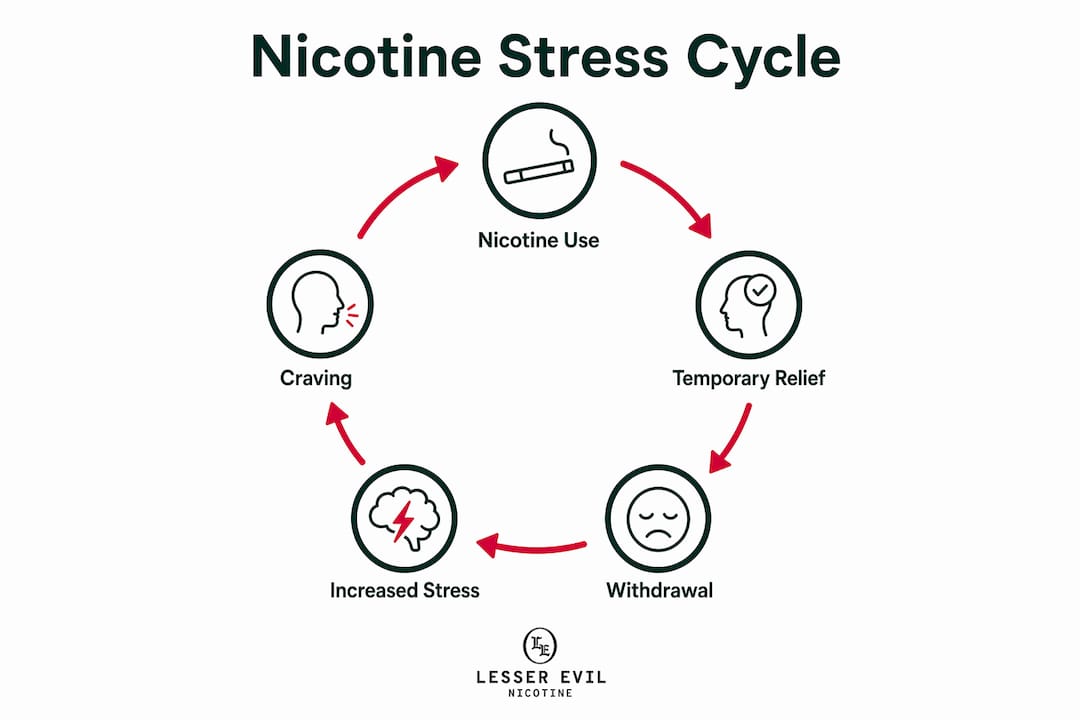
What is the nicotine withdrawal-stress cycle?
The nicotine withdrawal-stress cycle is the core reason so many people believe nicotine calms them down. It does not. Nicotine elevates cortisol and raises your heart rate every time you use it. Long-term smokers carry a higher baseline stress level than non-smokers as a direct result.
Here is how the cycle works:
- Dopamine spike. Nicotine triggers a brief dopamine release, creating a sensation of relaxation and reward.
- Rapid drop. That dopamine fades fast, pulling your mood below its previous baseline.
- Withdrawal kicks in. Irritability, restlessness, and anxiety build as your brain signals for another hit.
- False relief. You use again, cortisol spikes, and the perceived calm is just the withdrawal easing off.
- Elevated baseline. Over time, your resting stress level rises because your brain has stopped regulating mood independently.
Nicotine does not provide long-term stress relief. It perpetuates a cycle that makes stress worse. Recognising that a craving is a withdrawal symptom, not a genuine stress signal, is the single most important cognitive shift you can make. Once you see the cycle clearly, you stop mistaking the problem for the solution.
Which breathing techniques help manage stress without nicotine?
Structured breathing is the fastest non-nicotine tool available for acute stress. It works by activating the parasympathetic nervous system, which is the body’s built-in calm response. Box breathing and 4-7-8 breathing can shift your nervous system state within 60 seconds and, with consistent practice over 2–3 weeks, begin to rewire how your brain responds to stress triggers.
Here is how to practise each one:
- Box breathing (4-4-4-4). Inhale for 4 counts, hold for 4, exhale for 4, hold for 4. Repeat 4 cycles. Used by military and emergency services for acute stress control.
- 4-7-8 breathing. Inhale for 4 counts, hold for 7, exhale slowly for 8. The extended exhale is what drives the parasympathetic response.
- Practise before triggers, not just during them. Morning practice builds the neural pathway so the technique works faster when you actually need it.
- Combine with a physical anchor. Place one hand on your chest and one on your stomach. The tactile feedback reinforces the pattern and gives your hands something to do.
- Expect 2–3 weeks before it feels automatic. The adaptation period is real. Do not judge the technique on day two.
Pro Tip: Set a 2-minute breathing reminder on your phone for the times you would normally reach for a cigarette or vape. You are not just managing stress. You are replacing the ritual.
The advantage over nicotine is permanent. Nicotine’s relief lasts minutes and leaves you worse off. Consistent breathing practice builds a stress response that compounds over time.

How can behavioural methods break the stress-nicotine link?
Misinterpreting nicotine relief as genuine stress management is the main obstacle to breaking the habit. The brain has built a conditioned association: stress appears, nicotine follows. Behavioural methods work by interrupting that association before it completes.
The most practical starting point is the delay and redirect method. This technique works by pausing when the urge hits, labelling it out loud (“that’s a withdrawal signal, not a real need”), then engaging a physical reset. Cold water on the wrists, a 60-second stretch, or stepping outside without a cigarette all count. Habitual repetition of this sequence rewires the neural association between stress and nicotine over time.
Beyond the immediate pause, these behavioural tools build lasting change:
- Stress-trigger mapping. Write down the three situations that most reliably trigger use. Knowing your specific triggers lets you prepare a response in advance rather than reacting on autopilot.
- Sensory substitution. Replace the hand-to-mouth ritual with something physical: chewing gum, a cold drink, or a textured object you keep in your pocket.
- Mindfulness journalling. Spend 5 minutes after a strong urge writing what you felt and what you did instead. This builds self-awareness faster than any app.
- Cognitive Behavioural Therapy (CBT) principles. CBT reframes the thought “I need nicotine to cope” into “I am experiencing discomfort and it will pass.” You do not need a therapist to apply this. The reframe alone is powerful.
Pro Tip: Match your coping tool to the type of stress. Tailoring techniques to specific triggers consistently outperforms generic methods. Physical stress calls for movement. Mental overload calls for breathing or journalling. Do not use the same tool for every situation.
The goal is not willpower. It is replacing an automatic behaviour with a better one until the new behaviour becomes automatic instead.
What nicotine-free alternatives support stress management?
Lifestyle practices are not soft extras. They are the structural foundation that makes every other technique work better. Regular exercise releases endorphins and consistently outperforms medication for mild to moderate anxiety. Even a 20-minute walk changes your neurochemistry in ways nicotine never sustainably does.
The table below maps the most effective lifestyle practices to their stress-management role:
| Practice | How it helps | Frequency |
|---|---|---|
| Aerobic exercise | Releases endorphins, reduces cortisol | 3–5 times per week |
| Sleep consistency | Regulates emotional processing and mood | 7–9 hours nightly |
| Reduced caffeine | Lowers baseline anxiety and heart rate | Limit to morning only |
| Social connection | Activates oxytocin, reduces isolation-driven stress | Daily, even briefly |
| Creative outlets | Redirects mental energy away from urges | As needed |
Nicotine-free calming vapes using botanicals like L-theanine and lavender promote relaxation and replicate the deep breathing pattern of vaping without addictive substances. They are effective for everyday stress, not clinical anxiety, and they separate the hand-to-mouth ritual from chemical dependence. That separation matters enormously when you are trying to reduce reliance gradually. Diet also plays a role. Blood sugar crashes amplify irritability and make urges harder to resist. Eating regular meals with protein and complex carbohydrates keeps mood more stable throughout the day.
How to build a personal toolkit for managing nicotine stress
A personal toolkit works because it gives you a pre-planned menu of responses instead of improvising under pressure. Combining multiple approaches that address different nervous system states produces better outcomes than relying on a single method.
- List your top three stress triggers. Be specific. “Work” is not a trigger. “My 9AM inbox on Mondays” is.
- Assign one technique to each trigger. Box breathing for the inbox. A walk for afternoon slumps. Journalling for social tension.
- Choose a measured nicotine option if needed. If you are reducing rather than stopping immediately, mindful nicotine consumption means using a controlled, low-dose format instead of smoking or vaping.
- Track your progress weekly. Note which techniques worked and which did not. Adjust without judgement.
- Avoid over-reliance on any single tool. Rotating your responses prevents any one method from becoming a new crutch.
Consistency matters more than perfection. The toolkit does not need to work every time. It needs to work more often than nicotine did, which is a low bar to clear.
Key takeaways
Breaking the nicotine withdrawal-stress cycle requires replacing conditioned nicotine responses with evidence-based breathing techniques, behavioural methods, and consistent lifestyle practices.
| Point | Details |
|---|---|
| Nicotine raises baseline stress | Cortisol and heart rate increase with every use; perceived calm is just withdrawal easing. |
| Breathing techniques work fast | Box breathing and 4-7-8 patterns shift nervous system state within 60 seconds. |
| Behaviour change beats willpower | Delay and redirect, trigger mapping, and CBT reframes rewire conditioned responses. |
| Lifestyle is the foundation | Exercise, sleep, and diet stabilise mood and reduce the pull of nicotine urges. |
| Personalise your toolkit | Match coping tools to specific triggers for better results than generic approaches. |
What I have actually seen work
By Luke McLeod
The biggest misconception I encounter is that people think stress management is something you do after the urge hits. It is not. By the time the urge is loud, you are already behind. The techniques that actually work, breathing patterns, trigger mapping, physical resets, are all about building a response before the moment arrives.
The other thing nobody tells you is that the first two weeks of reducing nicotine feel harder, not easier. That is not failure. That is your nervous system recalibrating. People who understand that tend to stick with it. People who expect immediate calm tend to quit the process and blame the tools.
What I find genuinely encouraging is the evidence on ex-users. Mood stability improves significantly in the months after breaking the cycle. That is not a small thing. It means the discomfort of the early weeks is not permanent. It is the price of a lower baseline stress level for the rest of your life. That trade is worth making.
— Luke McLeod
Lesser Evil Nicotine: a cleaner option for your toolkit
If you are reducing rather than stopping cold, the format you use matters. Smoking and vaping both involve inhaling substances into your lungs. That is the part worth cutting out first.
Lesser Evil Nicotine is a sublingual nicotine gel. You place it under the tongue and nicotine absorbs through the oral mucosa. You do not breathe anything in. There is no combustion, no battery, and no e-waste. The formulation is tobacco-free, made with natural flavours and natural sweeteners, and available in Peppermint, Black Grape, and Green Apple. For people reducing nicotine intake as part of a wider stress management plan, it offers a controlled, discreet format without the lung tax. See the Lesser Evil Oral Mister for full product details.
FAQ
Does nicotine actually relieve stress?
No. Nicotine elevates cortisol and raises baseline stress over time. The perceived relief is the body returning from a withdrawal-induced stress state, not genuine relaxation.
How quickly do breathing techniques reduce stress?
Box breathing and 4-7-8 breathing can calm the nervous system within 60 seconds. Consistent practice over 2–3 weeks produces lasting changes in how the brain responds to stress.
What is the delay and redirect method?
It is a behavioural technique that involves pausing when an urge hits, labelling it as a withdrawal signal, and then engaging a physical reset such as cold water or stretching. Repeated use rewires the conditioned link between stress and nicotine.
What lifestyle changes support nicotine stress management?
Regular aerobic exercise, consistent sleep, reduced caffeine, and social connection all lower baseline anxiety and make urges easier to manage without nicotine.
How do I build a personal stress management toolkit?
List your specific stress triggers, assign a targeted coping technique to each one, and track what works weekly. Matching tools to triggers consistently outperforms using the same method for every situation.