

Oral nicotine delivery explained: how it works in 2026

TL;DR:
- Oral nicotine absorption occurs through the mouth’s mucosal lining without combustion or vapor. The speed and amount of nicotine absorbed depend on saliva pH and product formulation. Using the lowest effective dose and rotating placement reduces irritation and dependence risks.
Oral nicotine delivery is the process where nicotine absorbs directly through the lining of your mouth into your bloodstream, with no smoke, no vapour, and no combustion involved. The mouth’s lining, known as the oral mucosa, does the heavy lifting. Products like nicotine pouches, gums, lozenges, and sublingual gels all use this route. Each one differs in how fast nicotine hits your system, how much it delivers, and what it feels like to use. If you’re a vaper looking for something that doesn’t fry your lungs or fill a room with clouds, understanding oral nicotine delivery explained properly is the place to start.
How does nicotine absorption through the mouth work?
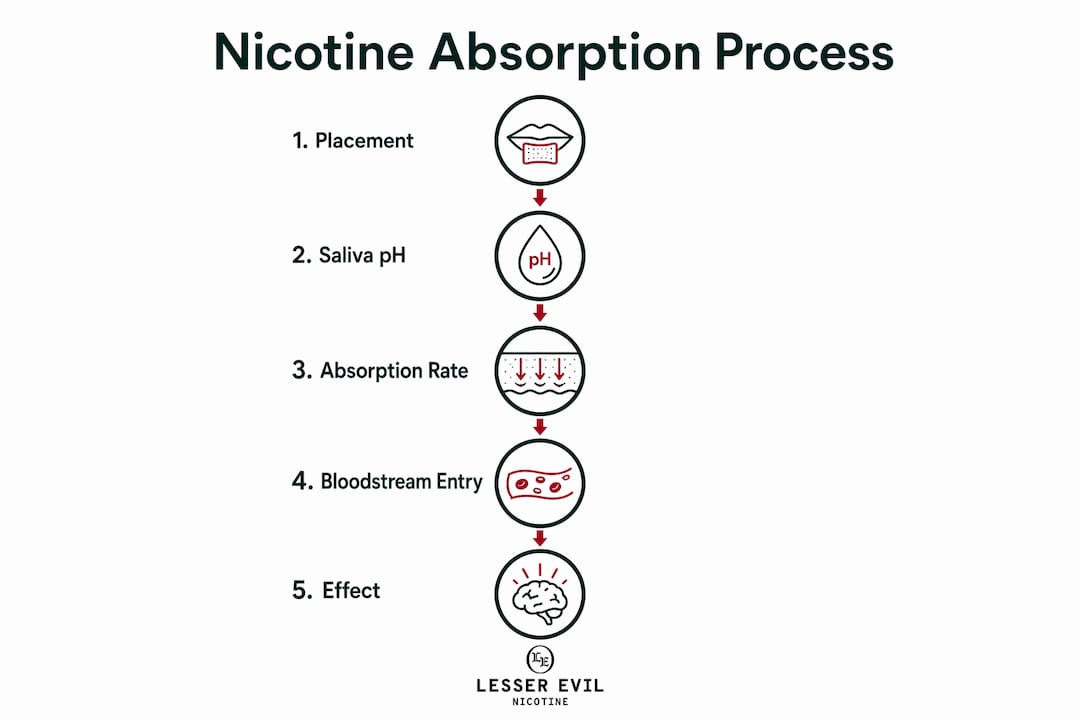
Nicotine enters your bloodstream through the buccal tissues, the soft inner lining of your cheeks and under your tongue. When you hold a pouch between your lip and gum, or place a gel under your tongue, nicotine passes through that tissue and into your blood. A 2026 systematic review confirms that nicotine pouches deliver nicotine via the oral mucosa, producing both local mucosal exposure and systemic nicotine effects. No burning required.

The speed and amount of nicotine you absorb depends heavily on your saliva’s pH. A 2026 Scientific Reports study used in vitro dissolution models and dynamic pH profiles to predict clinical pharmacokinetic outcomes for oral nicotine pouches. The finding is striking: your mouth’s chemistry can shift how much nicotine actually reaches your blood, even if two products have identical nicotine labels.
Pharmacokinetics is the science of how a substance moves through your body. Three numbers matter most here. Tmax is the time to peak nicotine concentration. Cmax is the peak level reached. AUC is the total exposure over time. A product with a fast Tmax delivers a sharper, quicker hit. A product with a high Cmax delivers a stronger peak. Comparing these figures tells you far more than just reading the milligram label on the pack.
Pro Tip: If you find one oral nicotine product underwhelming and another too intense, the difference is often pH and formulation, not just the nicotine strength printed on the label. Your saliva chemistry is part of the equation.
| Metric | What it measures |
|---|---|
| Tmax | Time to reach peak nicotine concentration |
| Cmax | Peak nicotine level in the blood |
| AUC | Total nicotine exposure over the use period |
Nicotine pouches vs gums vs lozenges vs gels: which is different?
Not all oral nicotine products are built the same. The format, dose, and regulatory status vary significantly across the category.
Nicotine pouches sit between the lip and gum. Brands like Velo, Zyn, and Nordic Spirit dominate the UK market. A 2026 Stanford Medicine report highlights that pouches vary wildly in nicotine content, often containing 9–12 mg per pouch, with some products reaching as high as 150 mg. Experts cited in the report suggest limiting products to 4 mg per pouch, in line with licensed nicotine replacement therapy (NRT) standards. That gap between what’s on shelves and what’s clinically considered safe is worth knowing.
Nicotine gum and lozenges are licensed NRT products. They come with structured dosing protocols. Mayo Clinic guidance specifies a maximum of 24 pieces of gum per day and a maximum of 20 lozenges per day, with deliberate reduction over time. These products are designed to taper nicotine intake, not maintain it indefinitely.
Nicotine gels are a newer format. Lesser Evil Nicotine’s sublingual gel sits under the tongue and absorbs through the oral mucosa. It’s tobacco-free, uses natural flavours and natural sweeteners, and requires no battery or device. You can read more about how gel compares to pouches and liquids in terms of oral delivery.
Here’s a quick comparison of the main formats:
| Format | Typical nicotine range | Usage method | Regulatory status |
|---|---|---|---|
| Nicotine pouch | 2–150 mg per pouch | Held between lip and gum | Consumer nicotine product |
| Nicotine gum | 2–4 mg per piece | Chew and park technique | Licensed NRT |
| Nicotine lozenge | 2–4 mg per lozenge | Dissolved in mouth | Licensed NRT |
| Nicotine gel | Low dose, varies by brand | Under the tongue | Consumer nicotine product |
Key differences beyond the table:
- Pouches and gels leave no smell on your breath, unlike gum.
- Gum and lozenges come with clinical step-down protocols. Pouches and gels do not.
- Local irritation is a known side effect across all formats, particularly with higher-strength products.
- Flavour variety is widest in the pouch and gel categories.
The UK regulatory framework treats licensed NRT and commercial nicotine products differently. Knowing which category your product falls into affects what claims can be made about it.
What are the benefits and risks of oral nicotine delivery?
The clearest benefit is what you’re not doing. You’re not breathing in combustion products. Switching from smoking to an oral nicotine product removes the tar, carbon monoxide, and thousands of other chemicals produced when tobacco burns. The systematic review confirms reduced exposure to combustion toxins, while also noting that health risks from oral nicotine itself persist and long-term outcome data remains limited.
The systemic effects of oral nicotine are real. Nicotine raises heart rate and blood pressure regardless of how it enters your body. That’s not unique to smoking. It’s a property of nicotine itself.
Local effects are worth taking seriously too. Mucosal irritation is a documented risk, particularly with high-strength pouches held in the same spot repeatedly. The tissue under your lip or tongue is not designed for sustained chemical contact. Rotating placement and choosing lower-strength products reduces this risk.
The addiction picture is more complicated than most people expect. UCHealth research highlights that nicotine from oral pouches reaches the brain within minutes, triggering dopamine release and reinforcing the habit quickly. This is faster than a patch, which delivers nicotine slowly through the skin. Speed of delivery matters for addiction potential. A fast hit trains your brain to want another one sooner.
“Users often underestimate mucosal irritation risk and addiction reinforcement cycles when switching to oral nicotine.” — Systematic review, 2026
Pro Tip: Rotate where you place your pouch or gel. Holding it in the same spot every time concentrates local irritation. Moving it around gives tissue time to recover.
How should you use oral nicotine products safely?
Start with the lowest effective dose. This is the single most useful rule across every oral nicotine format. Higher doses do not necessarily mean better results. They often mean more irritation and faster reinforcement of the habit.
For licensed products like nicotine gum, the chew-and-park technique matters. Chew until you taste it, then park it between your cheek and gum. Repeat. Do not chew continuously. Continuous chewing pushes nicotine into your stomach rather than through the oral mucosa, reducing absorption and increasing the chance of nausea. Mayo Clinic’s dosing guidance is structured around this technique.
For pouches and gels, the principles are similar even without a clinical protocol attached:
- Use the lowest strength that satisfies you. Moving up in strength is easy. Moving back down is harder.
- Space your uses. Avoid back-to-back sessions. Give your oral mucosa a break.
- Rotate placement. Do not hold a pouch or gel in the same spot every time.
- Avoid eating or drinking acidic things immediately before use. Acidic saliva lowers pH and can reduce nicotine absorption.
- Track how often you’re reaching for a product. Frequency is a useful signal for whether your habit is stable or escalating.
Managing nicotine intake at work is a common challenge. Oral products have a practical advantage in professional settings: they’re discreet, odourless, and require no device. That makes spacing and frequency easier to control than stepping outside for a vape.
Pro Tip: Set a loose daily limit before you start, not after. Deciding in advance how many uses you want in a day is far more effective than trying to count backwards at 9pm.
Key takeaways
Oral nicotine delivery works through the oral mucosa, and the format, dose, and your own saliva chemistry all shape the experience.
| Point | Details |
|---|---|
| Absorption is mouth-based | Nicotine enters the bloodstream via buccal tissues, with no combustion needed. |
| pH shapes your experience | Your saliva’s acidity affects how much nicotine absorbs, not just the label strength. |
| Dose ranges vary widely | Commercial pouches can range from 2 mg to over 100 mg; licensed NRT caps at 4 mg per unit. |
| Speed drives addiction risk | Faster nicotine delivery to the brain increases reinforcement and habit formation. |
| Low and slow is safer | Starting with the lowest effective dose and spacing use reduces both irritation and dependency risk. |
What I’ve learned from watching the oral nicotine category grow
The oral nicotine space has moved fast. A few years ago, pouches were a niche product most people in the UK had never heard of. Now they’re in every corner shop and petrol station. That speed of adoption has outpaced public understanding of how these products actually work.
What strikes me most is how few people think about pharmacokinetics when choosing a product. They look at the milligram number and assume higher means stronger. But as the 2026 Scientific Reports research shows, the oral environment, particularly pH, shifts absorption in ways the label cannot tell you. Two products with the same nicotine content can behave very differently in practice.
The addiction risk from fast oral delivery is also underestimated. A patch delivers nicotine slowly. A pouch or gel delivers it in minutes. That speed is what makes oral nicotine feel satisfying, and it’s also what makes it habit-forming. People switching from vaping sometimes assume they’ve solved the problem. They’ve changed the delivery method. The reinforcement loop is still running.
My honest view is that lower-dose, tobacco-free oral products are a more considered choice than high-strength pouches for most adults who vape. Not because they’re medically superior, but because they reduce the variables. Less nicotine, no tobacco, no device, no vapour. Fewer things going in. That’s a reasonable position for someone who wants to manage their habit rather than escalate it.
The regulatory picture in the UK is also shifting. Products that sit outside the licensed NRT category face increasing scrutiny. Adults who use these products should stay informed about what’s changing and why.
— Luke McLeod
Lesser Evil Nicotine: a different kind of oral nicotine

Lesser Evil Nicotine is a tobacco-free oral nicotine gel built for adults who are done with breathing in chemicals but aren’t interested in a pouch that tastes like industrial mint. The sublingual gel sits under the tongue and absorbs through the oral mucosa. No battery, no vapour, no e-waste. It comes in three flavours: Peppermint, Black Grape, and Green Apple, all made with natural flavours and natural sweeteners.
The formulation is low-dose and designed for people who want control over their habit, not a product that escalates it. A nicotine mouth spray is also in development. If you’re ready to try something that fits your life without the rubbish, the Lesser Evil Oral Mister is the place to start.
FAQ
What is oral nicotine delivery?
Oral nicotine delivery is the absorption of nicotine through the lining of the mouth, known as the oral mucosa, directly into the bloodstream without combustion or inhalation.
How is a nicotine gel different from a nicotine pouch?
A nicotine gel is placed under the tongue and absorbs sublingually, while a pouch sits between the lip and gum. Both use the oral mucosa, but the placement and formulation differ.
Does saliva pH affect how much nicotine I absorb?
Yes. Research shows that your saliva’s pH directly influences nicotine permeability through buccal tissues, meaning two identical products can deliver different results in different people.
Are nicotine pouches stronger than licensed nicotine gum?
Often significantly so. Licensed nicotine gum is capped at 4 mg per piece, while commercial pouches can contain 9–12 mg or higher per unit, with some products reaching far beyond that.
Why does oral nicotine feel more habit-forming than a patch?
Oral nicotine reaches the brain within minutes, triggering a fast dopamine response. Patches deliver nicotine slowly through the skin, which produces a weaker reinforcement signal and lower addiction potential.