

Nicotine regulation UK explained: 2026 guide

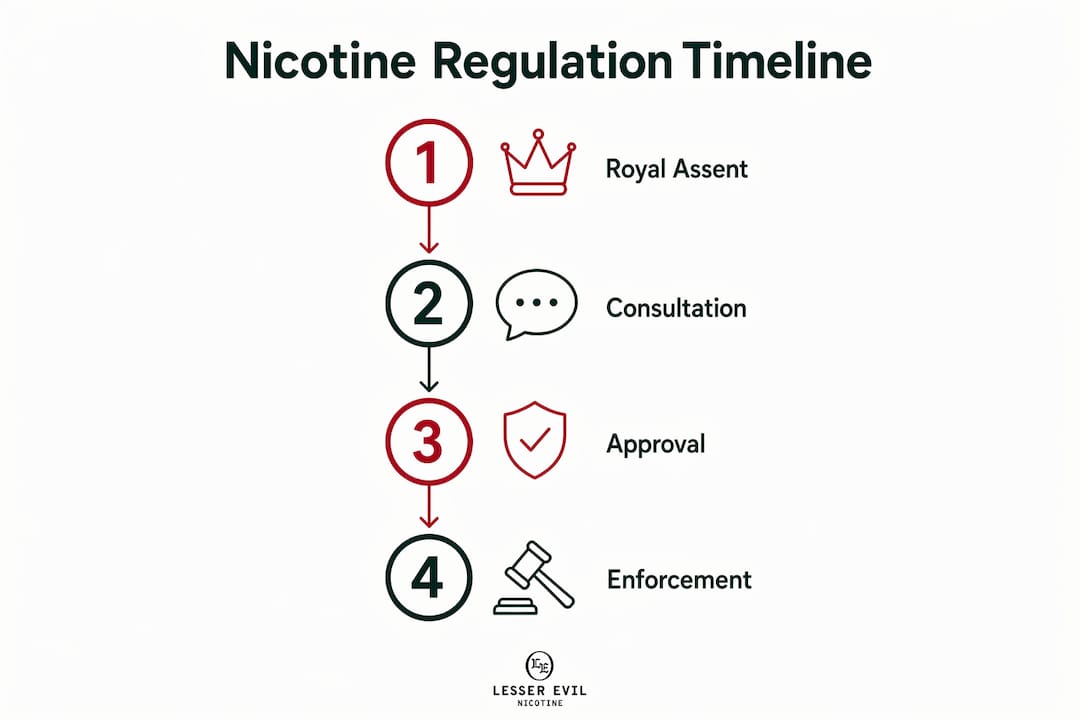
Nicotine regulation in the UK is a framework of laws governing the sale, advertising, and use of tobacco, vaping products, and nicotine alternatives. The Tobacco and Vapes Act received Royal Assent on 29 april 2026, making it the most significant shift in UK smoking laws in a generation. It raises the tobacco sale age annually, restricts vaping product access for under-18s, and introduces new duties on vaping liquids. If you vape, smoke, or sell nicotine products in the UK, this is the law that changes everything.
How does the Tobacco and Vapes Act shape nicotine regulation in the UK?
The Tobacco and Vapes Act is the cornerstone of current UK tobacco control policy. Its headline measure creates a smoke-free generation by making it permanently illegal to sell tobacco to anyone born on or after 1 january 2009. The sale age rises by one year every year from 2027, so it never resets. A 16-year-old today will never legally be able to buy cigarettes.

That is a genuinely novel approach. No other major economy has legislated a rolling age increase of this kind. Cancer Research UK confirms the Act does not criminalise smoking for adults who can already legally buy tobacco. Existing adult smokers are not affected. The law targets new uptake, not current habits.
Beyond tobacco, the Act extends controls to vaping and other nicotine products. Key provisions include:
- Sales to under-18s banned from late 2026 for vapes and nicotine products across the UK.
- Proxy purchasing banned, meaning adults cannot buy vaping products on behalf of under-18s.
- Vending machine sales banned for tobacco, vapes, and nicotine products.
- Advertising and sponsorship of vapes and nicotine products prohibited outright.
- Packaging and branding restrictions introduced, with powers to ban designs that appeal to children.
- Retail licensing under active consideration, with secondary legislation consultations planned through ASH-referenced government processes.
The government will consult on the detailed regulations for advertising and packaging before full rollout. Royal Assent is the start of the process, not the end. Many of the specific rules will land through secondary legislation over the coming months.
Pro Tip: Map your compliance calendar to specific commencement dates, not just the Royal Assent date of 29 april 2026. Consumer-facing changes kick in at different points through 2026 and 2027.
What do the new vaping products duty and duty stamps mean?
The Vaping Products Duty is a new tax applying to all vaping liquids sold in the UK from 1 october 2026. The rate is £2.20 per 10ml of liquid. That applies to both nicotine-containing and non-nicotine vaping liquids. There is no exemption for zero-nicotine products.
HMRC opened applications for duty stamp approval on 1 april 2026. The scheme works as follows:
- Manufacturers and importers must register with HMRC and apply for approval to use duty stamps.
- Duty stamps are affixed to vaping product packaging before the product enters the UK market.
- Digital activation is required. Physical stamps alone are not sufficient. Digital stamps replace physical stamps fully from 1 october 2026.
- Metadata capture is mandatory. Each stamp carries traceability data to authenticate the product’s supply chain.
- Unstamped stock already in the market has a grace period until 31 march 2027 for sell-through.
| Milestone | Date |
|---|---|
| HMRC approval applications open | 1 april 2026 |
| Vaping Products Duty begins | 1 october 2026 |
| Duty stamps mandatory on new stock | 1 october 2026 |
| Grace period ends for unstamped stock | 31 march 2027 |
Non-compliance carries financial penalties. HMRC treats unstamped vaping products as illicit goods after the grace period closes. The scheme is designed to protect the legal supply chain from counterfeit and untaxed products flooding the market.
Pro Tip: If you are a retailer, check your current stock levels now. Any vaping liquid purchased after 1 october 2026 must carry a valid, digitally activated duty stamp. Selling unstamped stock after 31 march 2027 is a compliance offence.
Are nicotine regulations the same across all UK regions?
No. The UK’s devolved structure means commencement dates and specific measures differ by nation. Northern Ireland is the clearest example of this.
From 29 october 2026, it becomes illegal in Northern Ireland to sell non-nicotine vapes and other nicotine products to under-18s. The Act also extends additional powers to Northern Ireland specifically, including:
- Proxy purchase bans covering adults buying vaping products for minors.
- Vending machine bans for vapes and nicotine products.
- Free distribution bans, preventing promotional giveaways of vaping products.
- Smoke-free and vape-free place powers, giving local authorities additional tools to restrict use in public spaces.
Scotland, Wales, and England each have their own commencement timelines for secondary legislation. Some provisions roll out UK-wide simultaneously. Others are subject to devolved consultation before they take effect locally. Assuming a single UK-wide date for every rule is a mistake that could leave retailers non-compliant or consumers misinformed.
The practical takeaway is straightforward. If you are based in Northern Ireland, the under-18 sale ban for vapes lands on 29 october 2026. If you are in England, Scotland, or Wales, check the specific commencement orders for your nation as secondary legislation is published.
How does nicotine regulation affect you vs retailers?
The rules split clearly into two groups: what applies to you as a consumer, and what applies to businesses selling nicotine products.
What consumers need to know
Adult tobacco use and possession remain entirely legal. The Act does not restrict where you can smoke beyond existing smoke-free place rules. Vaping in public is subject to local and venue-specific rules, not a blanket national ban. The Tobacco and Related Products Regulations cap nicotine e-liquid strength at 20mg/ml and limit containers to 10ml. Those limits already apply and are unchanged by the new Act.
The age of sale is the most direct consumer-facing change. If you are under 18, you cannot legally buy vapes, tobacco, or nicotine products. If you were born on or after 1 january 2009, you will never legally be able to buy tobacco in the UK, regardless of your age at the time of purchase.
For adults managing nicotine cravings, the legal landscape for nicotine replacement and oral nicotine products remains accessible. Products sold to adults through compliant retail channels are unaffected by the youth-focused restrictions.
What retailers must do
| Obligation | Detail |
|---|---|
| Age of sale compliance | No sales of tobacco, vapes, or nicotine products to under-18s |
| Duty stamp affixing | All vaping liquids must carry HMRC-approved duty stamps from 1 october 2026 |
| Product registration | Vaping products must be registered under TRPR before sale |
| Advertising restrictions | No advertising or sponsorship of vaping or nicotine products |
| Retail licensing | Consultation underway; licensing regime expected through secondary legislation |
Retailers face the heaviest compliance burden. Product registration under the Tobacco and Related Products Regulations is already a legal requirement. The new duty stamp scheme adds a further layer of supply chain accountability. Businesses that import or manufacture vaping liquids should have applied to HMRC for duty stamp approval already.
Key takeaways
UK nicotine regulation now combines a generational tobacco sale ban, new vaping duties, and tighter advertising controls into a single legislative framework that affects consumers and retailers differently.
| Point | Details |
|---|---|
| Smoke-free generation law | The Tobacco and Vapes Act bans tobacco sales to anyone born on or after 1 january 2009. |
| Vaping duty from october 2026 | All vaping liquids attract £2.20 per 10ml duty, with mandatory HMRC duty stamps required. |
| Regional differences matter | Northern Ireland’s under-18 vape sale ban starts 29 october 2026, with additional devolved measures. |
| Adults remain unaffected | Tobacco use and possession by existing adult smokers is not criminalised under the new Act. |
| Retailers carry the compliance load | Duty stamps, product registration, and forthcoming licensing obligations fall on businesses, not consumers. |
The regulation is right, but the communication is failing
I have watched nicotine legislation evolve for years, and the Tobacco and Vapes Act is genuinely impressive in its ambition. A rolling age increase is clever policy. It avoids the political backlash of a hard cutoff while achieving the same long-term outcome. The public health case is solid.
What concerns me is the gap between law and understanding. Most adult vapers I speak to have no idea the vaping duty applies to zero-nicotine liquids. Most retailers are not clear on whether their current stock will need duty stamps before or after the grace period ends. That confusion is not the public’s fault. The government has done a reasonable job publishing guidance on GOV.UK, but the secondary legislation pipeline is long and the messaging has not reached everyday consumers.
The other issue is the assumption that all nicotine products are equivalent. Oral nicotine products, nicotine replacement therapies, and vaping liquids sit in different regulatory boxes. Treating them as one category creates unnecessary anxiety for adults who are actively trying to reduce harm. The law is nuanced. The public conversation rarely is.
My honest view is that the next 18 months will be messy. Retailers will struggle with duty stamp compliance. Regional differences will catch people out. And a wave of secondary legislation consultations will keep the rules in flux. The best thing you can do right now is track specific commencement dates, not headlines.
— Luke McLeod
A compliant nicotine option worth knowing about

Lesser Evil Nicotine is launching in the UK in 2026 with a tobacco-free oral nicotine gel built for adults who want to manage their habit without breathing garbage. The Lesser Evil Oral Mister is battery-free, discreet, and formulated with natural flavours and natural sweeteners. No vaporised chemicals. No e-waste. No rubbish in your body.
The product is designed for adult vapers who want a cleaner alternative that sits comfortably within the current UK nicotine regulatory framework. It is sold to adults only, in line with UK age of sale requirements. Available in Peppermint, Black Grape, and Green Apple, it is the kind of product the regulations were never designed to restrict. See what customers are saying about making the switch.
FAQ
What is the Tobacco and Vapes Act?
The Tobacco and Vapes Act is UK legislation that received Royal Assent on 29 april 2026. It creates a smoke-free generation by banning tobacco sales to anyone born on or after 1 january 2009 and introduces controls on vaping products, advertising, and nicotine product sales.
When does the vaping products duty start?
The Vaping Products Duty applies from 1 october 2026 at a rate of £2.20 per 10ml of vaping liquid. All vaping products entering the UK market from that date must carry HMRC-approved duty stamps.
Does the new law make smoking illegal for adults?
No. The Act does not criminalise tobacco use or possession for adults who can already legally buy tobacco. It targets new uptake by preventing future generations from ever legally purchasing tobacco products.
Are vaping regulations different in Northern Ireland?
Yes. Northern Ireland has specific commencement dates and additional measures including proxy purchase bans and free distribution bans. The under-18 sale ban for vapes and nicotine products in Northern Ireland starts on 29 october 2026.
What is the maximum nicotine strength allowed in UK vaping products?
The Tobacco and Related Products Regulations cap nicotine e-liquid at 20mg/ml with a maximum container size of 10ml. These limits remain in force and are unchanged by the Tobacco and Vapes Act.