

The role of flavour in nicotine acceptance: 2026 guide

TL;DR:
Flavour is the main factor influencing adult acceptance of nicotine products and long-term switching success.
Initially, flavours like tobacco reduce nicotine exposure but adults compensate over time by adjusting puffing behaviour.
Flavour is the single biggest driver of nicotine product acceptance among adults switching away from combustible tobacco. The role of flavour in nicotine acceptance goes far beyond taste preference. It determines whether a product feels tolerable enough to use consistently, whether someone sticks with a noncombustible format, and how much nicotine they actually absorb. Research published in 2026 confirms that tobacco-flavoured products result in lower plasma nicotine levels and fewer puffs compared to fruit or menthol alternatives. That single finding reframes the entire conversation around flavour regulation, product design, and adult smoker choice.
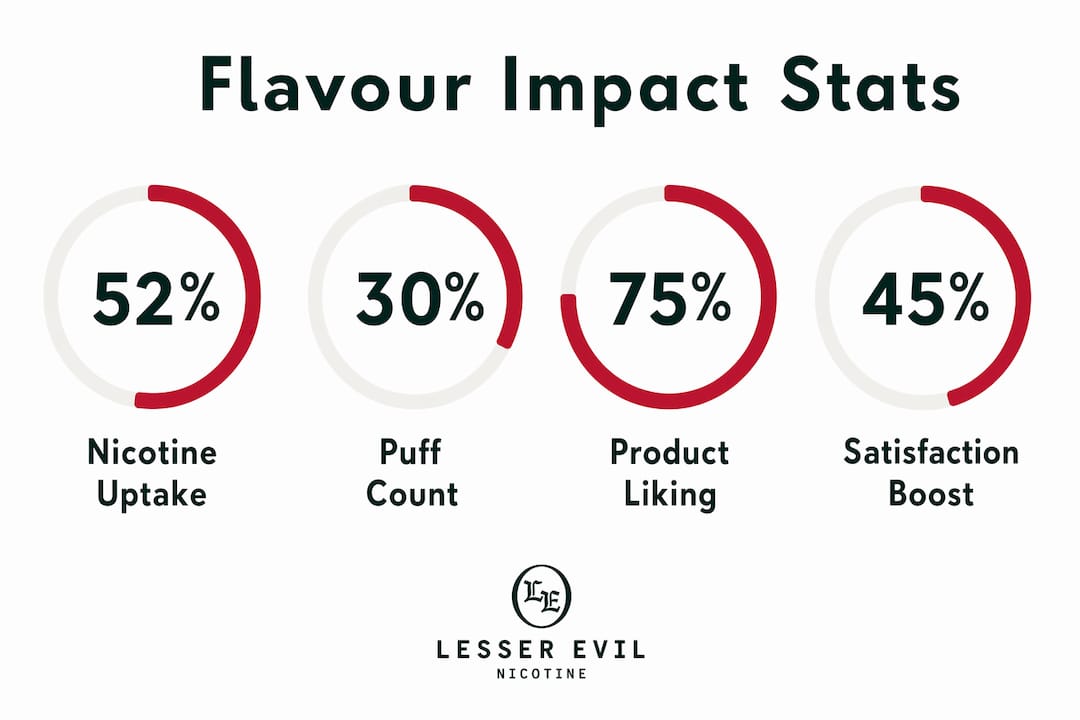
How does flavour influence nicotine intake and puffing behaviour?
Flavour directly changes how people use nicotine products, not just how much they enjoy them. A 2026 study of 52 regular e-cigarette users found that tobacco flavour lowered nicotine exposure and puff count compared to fruit and menthol options. People rated tobacco-flavoured products lower on liking, and that lower liking translated into measurably different use patterns.

What makes this finding genuinely surprising is what happens next. Once people establish a usage habit, they compensate. A study of 90 adults in New Zealand showed no difference in daily nicotine consumption across flavours once habits were set. People adjust puff duration and volume to hit their preferred nicotine level, regardless of which flavour they are using. The flavour shapes the initial experience, but the body finds its level.
This has real implications for how you think about flavour choices. Switching to a less appealing flavour does not automatically reduce your nicotine intake long term. Your body regulates puff frequency to compensate. What flavour does is influence how pleasant the process feels, which affects whether you stick with a noncombustible format at all.
Pro Tip: If you are trying to reduce how much you use overall, the format matters as much as the flavour. Oral nicotine products like sublingual gels deliver nicotine via the oral mucosa without inhalation, which changes the absorption curve entirely compared to vaping.
| Flavour category | Puff count | Nicotine exposure | Product liking rating |
|---|---|---|---|
| Tobacco | Lower | Lower | Lower |
| Menthol | Higher | Higher | Higher |
| Fruit/sweet | Higher | Higher | Higher |
| Mixed/other | Variable | Variable | Moderate to high |
Why do certain flavours feel more satisfying? The biology behind it
The sensory appeal of flavour is not just psychological. It is neurochemical. Preclinical research shows that menthol and green apple flavours combined with nicotine increase dopamine signalling in brain reward pathways, actively enhancing use-related behaviours. Menthol, specifically, enhances nicotinic acetylcholine receptor function, which potentiates nicotine reinforcement beyond what nicotine alone produces. That is not a small effect.
Flavour perception in vaping is also primarily retronasal and multisensory. You are not just tasting with your tongue. Aroma compounds travel up the back of the nasal passage during exhalation, and the brain integrates those signals with texture, temperature, and even visual cues from the device itself. Research from Wageningen University found that device colour can bias perceived sweetness, which is a genuinely counterintuitive finding. The product’s appearance shapes what you taste.
For oral nicotine formats, the sensory picture is different again. Research from Ohio State University shows that gum-format oral nicotine products are rated sweeter and more appealing than pouch formats, with fruit flavours enhancing sweetness perception more than mint. The format itself changes how the flavour lands.
Here is what this means practically:
-
Menthol and fruit flavours activate reward pathways more strongly than tobacco flavours, which is why they drive higher product acceptance among new users.
-
Retronasal aroma accounts for a large portion of what people describe as “flavour.” Products that release aroma compounds slowly, as sublingual gels do, create a different sensory experience than inhaled vapour.
-
Oral aversion to nicotine’s natural bitterness is a real barrier to adoption. Flavours that mask that bitterness, particularly sweet and mint profiles, lower the barrier significantly.
-
Device and packaging design influence perceived flavour through crossmodal sensory effects. This is not marketing fluff. It is documented sensory science.
Pro Tip: If you find nicotine pouches too harsh or gum too sweet, a sublingual gel with a natural flavour profile sits in a different sensory category entirely. The oral nicotine delivery mechanism changes how flavour and nicotine interact in the mouth.
What are the real trade-offs of flavour regulation?
Flavour bans are the most contested area of nicotine policy right now. The argument for banning flavours is straightforward: sweet and fruit flavours attract young people who would not otherwise use nicotine products. The argument against is equally direct: flavour availability is often the deciding factor enabling adult smokers to switch away from combustible tobacco.
The Anselm Nicotine Prescription 2026 highlights this tension explicitly. Restricting flavours reduces youth appeal, but it also removes one of the most effective tools adult smokers use to make noncombustible products feel worth switching to. That is not a theoretical concern.
The Dutch 2024 flavour ban provides the clearest real-world data. After the ban, many users reduced nicotine use or quit vaping rather than reverting to smoking. That sounds like a win. But cross-border purchasing undermined enforcement significantly, and the long-term impact on smoking rates remains unclear. The Dutch case shows that flavour bans do not automatically push people back to cigarettes, but they do not eliminate nicotine use either.
For the UK, where nicotine regulation is evolving ahead of the 2026 landscape, the policy question is genuinely difficult. Adult smokers who have successfully switched to vaping or oral nicotine often cite flavour as the reason they stayed switched.
| Flavour regulation approach | Potential benefit | Potential drawback |
|---|---|---|
| Full flavour ban | Reduces youth uptake | May deter adult switchers |
| Youth-targeted restrictions only | Protects adults’ access | Harder to enforce at retail |
| Flavour licensing by category | Balances access and control | Complex to administer |
| No restriction | Maximum adult choice | Increases youth exposure risk |
Research also shows that flavour preferences shift as adult smokers progress through their quitting process. Early on, fruit and sweet flavours dominate. As people become more committed to reducing smoking, preferences move toward menthol and tobacco flavours. A blanket ban on fruit flavours could remove the very products that get people started on switching in the first place.
How flavour shapes satisfaction and long-term use patterns
Flavour-driven satisfaction is the mechanism that makes noncombustible nicotine products actually usable for adults who are used to the full sensory hit of a cigarette. Combustion delivers heat, aroma, throat hit, and nicotine simultaneously. Any alternative format has to compensate for what it removes.
Research on oral nicotine product appeal confirms that sensory characteristics, not just nicotine strength, determine whether adults find a product worth using again. Flavour is the primary sensory variable that product developers can actually control. Nicotine strength matters, but a product that tastes genuinely good is more likely to become a consistent habit.
Consumer behaviour around flavour also changes over time. Adults who are actively trying to reduce their smoking tend to:
-
Start with familiar, appealing flavours like mint, fruit, or green apple to make the switch feel less like deprivation.
-
Gradually shift toward cooler, cleaner profiles like menthol as their palate adjusts to noncombustible formats.
-
Settle on one or two preferred flavours that they use consistently, rather than rotating widely.
-
Respond poorly to formats that taste harsh or medicinal, which increases the risk of reverting to smoking.
The practical implication is that flavour choices in oral nicotine are not trivial preferences. They are the difference between a product someone uses once and one they use instead of lighting up. Natural flavours that do not taste synthetic or chemical matter more than marketing language suggests. Adults who have quit smoking are often more sensitive to artificial aftertastes precisely because they are no longer masking everything with tobacco smoke.
Key takeaways
Flavour is the primary sensory driver of nicotine product acceptance, shaping puffing behaviour, neurochemical reward, and long-term switching success for adult smokers.
| Point | Details |
|---|---|
| Flavour changes puff behaviour | Tobacco flavour reduces puff count and nicotine exposure compared to fruit or menthol options. |
| Bodies compensate over time | Adults regulate daily nicotine intake by adjusting puff duration regardless of flavour once habits form. |
| Flavours activate reward pathways | Menthol and fruit flavours increase dopamine signalling, making products feel more satisfying neurochemically. |
| Flavour bans carry real trade-offs | Restricting flavours may reduce youth uptake but also removes a key tool that helps adult smokers switch. |
| Preferences shift during quitting | Adults tend to move from sweet and fruit flavours toward menthol and tobacco profiles as they reduce smoking. |
Flavour, regulation, and the bit nobody talks about honestly
I have spent a lot of time reading the research on flavour and nicotine acceptance, and the thing that strikes me most is how rarely the conversation acknowledges adult smokers as rational people making considered choices. The public debate treats flavour almost entirely as a youth protection issue. That framing is not wrong, but it is incomplete.
Adult smokers who switch to noncombustible formats are not doing it because they love the product. They are doing it because the product is tolerable enough to use instead of something worse. Flavour is what makes it tolerable. Removing flavour options in the name of youth protection is a real cost, paid by real adults who are trying to change their habits. The Dutch data shows people do not automatically go back to cigarettes when flavours disappear, but that is not the same as saying the ban was costless.
What I think gets missed is that flavour innovation and responsible regulation are not opposites. The most credible path forward is age-verified access to a broad flavour range for adults, combined with genuine enforcement at the point of sale. That is harder than a blanket ban, but it is the only approach that takes both problems seriously at once.
— Luke McLeod
Lesser Evil Nicotine: flavour that actually works
If the research on flavour acceptance has you thinking about what you are actually putting in your body, that is exactly the right question.

Lesser Evil Nicotine is built on the world’s first low-burn oral nicotine gel, delivered sublingually via the oral mucosa. No combustion, no vapour, no e-waste. The formulation uses natural flavours and natural sweeteners across three profiles: Peppermint, Black Grape, and Green Apple. Each one is designed to mask nicotine’s natural bitterness without tasting synthetic or medicinal. A nicotine mouth spray is also in development. If you want to explore what naturally flavoured oral nicotine actually feels like, the Lesser Evil Oral Mister is the place to start.
FAQ
What is the role of flavour in nicotine acceptance?
Flavour increases product appeal by masking nicotine’s natural bitterness and activating sensory reward pathways, making noncombustible nicotine products more tolerable and consistent to use for adult switchers.
Does flavour change how much nicotine you absorb?
Initially yes. Tobacco-flavoured products produce lower plasma nicotine levels and fewer puffs than fruit or menthol alternatives. Over time, adults adjust their puffing behaviour to maintain their preferred nicotine level regardless of flavour.
Why do menthol and fruit flavours feel more satisfying?
Preclinical research shows menthol and fruit flavours increase dopamine signalling in brain reward pathways when combined with nicotine, producing stronger reinforcement than nicotine alone.
Do flavour bans stop people going back to smoking?
Dutch data from the 2024 flavour ban shows most users reduced nicotine use or quit vaping rather than reverting to smoking. However, cross-border purchasing was widespread, and long-term effects on smoking rates remain under study.
How do flavour preferences change during quitting?
Research shows adult smokers tend to start with fruit and sweet flavours when first switching, then shift toward menthol and tobacco profiles as their intention to reduce smoking becomes more established.