

What is clean living nicotine? A plain guide for 2026

What does “clean living nicotine” actually mean?
Clean living nicotine is nicotine consumed without tobacco combustion or inhalation. No smoke, no tar, no burning plant material going into your lungs. The term covers a range of tobacco-free or synthetic nicotine products, most commonly nicotine pouches, sublingual gels, lozenges, and strips, all designed to deliver nicotine through the mouth rather than the airways.
The word “clean” here is a marketing descriptor, not a regulated classification. No official UK body defines it. What it signals in practice is the absence of combustion by-products: smoke, ash, and the hundreds of chemicals produced when tobacco burns. It does not signal that nicotine itself is safe or harmless.
Common forms of clean nicotine products include:
- Tobacco-free nicotine (TFN): synthesised in a lab, with no tobacco plant material
- Purified tobacco-derived nicotine: extracted and refined from tobacco, but without the leaf
- Nicotine pouches: small sachets placed between the lip and gum
- Sublingual nicotine gels: placed under the tongue for absorption through the oral mucosa
- Nicotine lozenges and strips: dissolve in the mouth without inhalation
Regulatory bodies including the Medicines and Healthcare products Regulatory Agency (MHRA) and the NHS draw a firm line between nicotine replacement therapy (NRT) prescribed or sold for cessation, and recreational nicotine products marketed as clean or tobacco-free. Lesser Evil Nicotine sits firmly in the latter category: a consumer product, not a medicine.
Table of Contents
- Why people are switching to clean nicotine products
- The risks you need to know before you buy
- How “clean” became a marketing word
- Lesser Evil Nicotine: what a clean nicotine gel actually looks like
- What the science actually says about clean nicotine
- How to verify a clean nicotine product is what it claims
- Lesser Evil Nicotine: a different way to use nicotine
- Key takeaways
Why people are switching to clean nicotine products
The practical case for going smoke-free is straightforward. When you stop burning things and inhaling the result, a lot of the friction around nicotine use disappears.
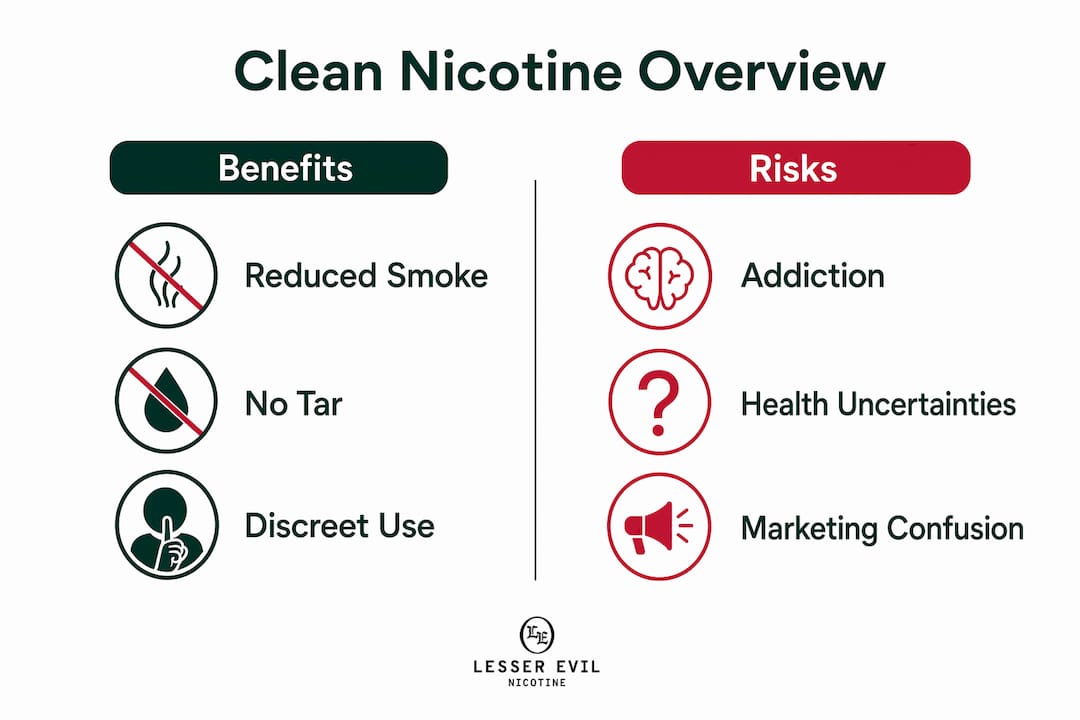
Key benefits users report:
- No smoke or vapour: nothing to breathe in, no residual smell on clothes or breath
- Discreet use: a gel or pouch is invisible in a meeting, on a commute, or in a restaurant
- No combustion by-products: sublingual delivery avoids the tar and carbon monoxide associated with smoking
- No battery, no device: gels and pouches need no hardware, no charging, no e-waste
- Social acceptability: no second-hand smoke, no vape cloud, no one asking you to step outside
- Reduced environmental footprint: no cigarette butts, no disposable vape cartridges
For professionals who vape at the moment, the shift is significant. Vaping heats liquid and you inhale the vapour. With a sublingual gel, you place it under the tongue and the nicotine absorbs through the oral mucosa. You don’t breathe anything in.
Pro Tip: If you currently vape throughout the day, try substituting your mid-morning and mid-afternoon sessions with a clean nicotine gel first. Keeping your routine but removing the inhalation step is an easier transition than going cold turkey on timing.
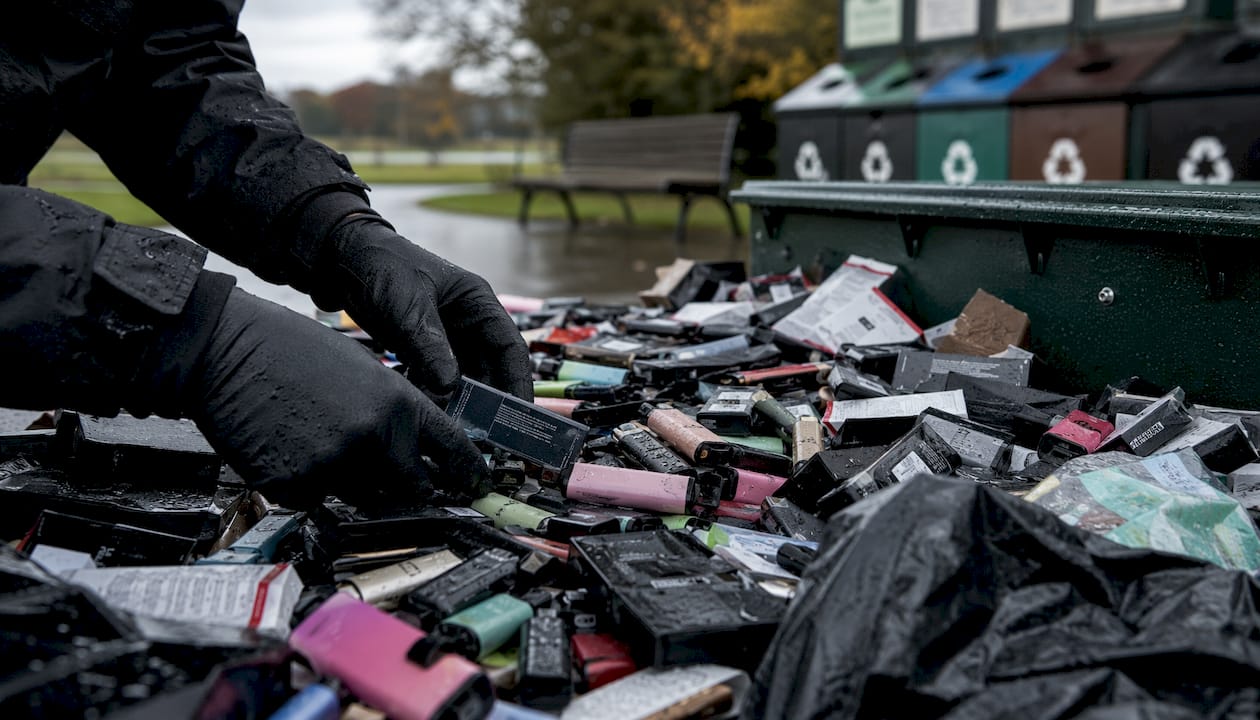
The sustainability angle matters too. Disposable vapes have become a genuine environmental problem in the UK. A battery-free, packaging-minimal gel format sidesteps that entirely.
The risks you need to know before you buy
Here is where the marketing gets slippery. “Clean” does not mean harmless, and health experts are clear on this: removing smoke from nicotine does not remove nicotine’s addictive properties.
Nicotine, regardless of its source, is a stimulant. It acts on the brain’s reward system and creates dependence over time. Switching from cigarettes to a nicotine gel means you are still consuming an addictive substance. The NHS distinguishes sharply between NRT as drug therapy for people trying to stop using nicotine altogether, and recreational nicotine products that are not medically regulated.
Risks to keep in mind:
- Addiction: nicotine dependence does not care how it was delivered
- Cardiovascular effects: nicotine raises heart rate and blood pressure regardless of delivery method
- Misperception risk: “clean” branding can lead users to underestimate how much they are consuming
- Overuse: the discretion of a gel or pouch makes it easy to use more frequently than you would with a cigarette
- No safety guarantee: tobacco-free does not mean tested, approved, or health-promoting
Research published in peer-reviewed literature found that consumers who see products labelled “non-tobacco nicotine” tend to perceive them as less harmful and less addictive than products labelled “nicotine from tobacco.” That perception gap is a real risk. The nicotine is the same; the label is different.
Respiratory and cardiovascular risks from combustion are reduced when you stop inhaling. That is a genuine, meaningful difference. But nicotine’s effect on the brain and heart remains.
How “clean” became a marketing word
The language around clean nicotine is doing a lot of heavy lifting. Terms like “tobacco-free,” “synthetic,” “modern,” and “clean” are deliberately positioned to align nicotine use with professional, health-conscious lifestyles. They reduce social friction and make the habit feel compatible with a gym membership and a green smoothie.
Common marketing terms and what they actually mean:
| Term | What it means | What it does not mean |
|---|---|---|
| Clean nicotine | No combustion or tobacco plant material | Safe, health-promoting, or regulated |
| Tobacco-free nicotine | Synthesised or extracted without tobacco leaf | Free from addiction risk |
| Synthetic nicotine | Lab-made, not derived from tobacco plant | A different or safer form of nicotine |
| Non-tobacco nicotine | Same as tobacco-free; a labelling variant | Medically approved or tested |
| Natural flavours | Flavouring from natural sources | The nicotine itself is natural or benign |
The industry motivation is clear: positioning nicotine as compatible with modern, smoke-free living opens a much larger market than traditional tobacco ever could. That is not inherently dishonest, but it does require consumers to read past the branding.
Lesser Evil Nicotine: what a clean nicotine gel actually looks like
Lesser Evil Nicotine is preparing its UK launch in 2026 with what it describes as the world’s first low-burn oral nicotine gel. The product is sublingual, meaning it sits under the tongue and absorbs through the oral mucosa, without inhalation, combustion, or any battery requirement.
The formulation is tobacco-free, made with natural flavours and natural sweeteners, available in three variants: Peppermint, Black Grape, and Green Apple. The brand was built specifically for adult users who vape and want a discreet, cleaner alternative without switching to the male-coded pouch formats that dominate the current market.
Key product attributes:
| Feature | Detail |
|---|---|
| Delivery method | Sublingual gel (under the tongue) |
| Nicotine source | Tobacco-free |
| Flavours | Peppermint, Black Grape, Green Apple |
| Sweeteners | Natural |
| Battery required | No |
| E-waste produced | None |
| Combustion | None |
- No inhalation: the gel absorbs through the mouth, not the lungs
- Discreet format: no device, no cloud, no smell
- Natural ingredients: no artificial sweeteners or synthetic flavourings
- Battery-free: no charging, no disposable hardware
The brand is positioned for UK nicotine users who are health-conscious but not ready to stop using nicotine entirely. It sits in a gap the pouch category has not addressed: a product that feels premium, discreet, and designed with women in mind.
What the science actually says about clean nicotine
The evidence base here is honest rather than flattering. Switching from inhaled tobacco products to oral nicotine formats does reduce respiratory exposure to combustion by-products. That is supported by the literature. What the science does not support is the idea that clean nicotine is safe, health-neutral, or beneficial.
Nicotine’s addictive mechanism is the same regardless of whether it arrives via smoke, vapour, or a sublingual gel. The cardiovascular stimulant effects persist. What changes is the route of exposure, and with it, the specific harms associated with combustion and inhalation.

Radiocarbon analysis is currently the most reliable method for verifying nicotine source in commercial products, distinguishing tobacco-derived from synthetic nicotine at a molecular level. This matters for regulatory assessment, but most consumers will never access that data directly.
The honest summary: oral nicotine products remove the lung exposure. They do not remove the addiction.
How to verify a clean nicotine product is what it claims
The UK market for tobacco-free nicotine products is growing faster than the regulatory framework around it. That means some products make claims their formulations do not fully support. Here is how to check before you buy:
- Look for MHRA compliance: products sold as consumer nicotine goods in the UK must comply with relevant trading standards; check the manufacturer’s compliance statements
- Check the ingredient list: natural flavours and sweeteners should be listed; vague “flavouring” entries are a flag
- Verify tobacco-free status: a reputable brand will state clearly whether nicotine is synthetic or tobacco-derived
- Avoid unverified online sellers: buy from established UK retailers or direct from the brand’s own site
- Check for nicotine content labelling: the strength per unit should be clearly stated
- Research the brand’s manufacturing standards: look for transparency about where and how the product is made
- Be sceptical of health claims: no recreational nicotine product is approved as a health product in the UK
Pro Tip: If a product’s website leads with health benefit claims rather than product facts, treat that as a red flag. Legitimate clean nicotine brands state what the product is and how it works, not what it will do for your wellbeing.
Lesser Evil Nicotine: a different way to use nicotine
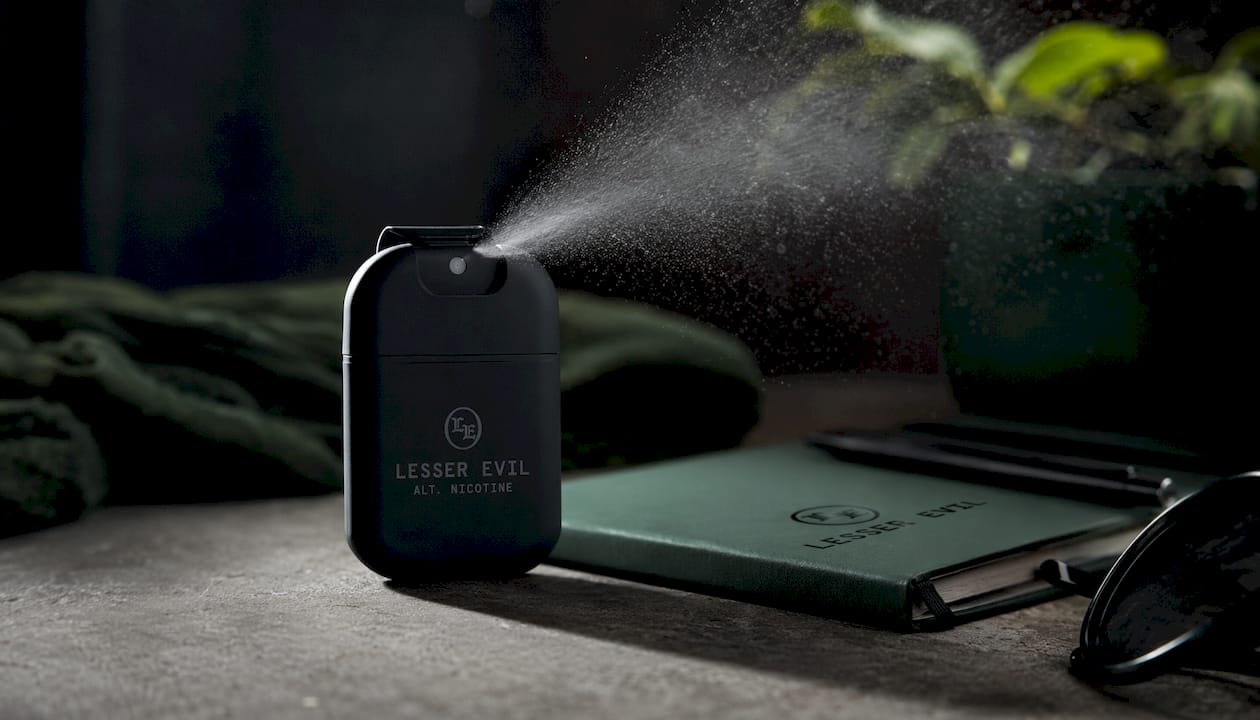
If you vape and you are tired of the hardware, the vapour, and the nagging feeling that you are breathing something you probably shouldn’t, the Lesser Evil Oral Mister is worth a look. It is a sublingual nicotine gel: tobacco-free, battery-free, and made with natural flavours and sweeteners. You place it under the tongue. That is it. No device to charge, no cloud to exhale, no e-waste to feel guilty about.
Lesser Evil Nicotine was built for the urban professional who vapes and wants something more discreet, more considered, and less messy. The pouch category was not designed with her in mind. This was.
Available in Peppermint, Black Grape, and Green Apple, launching in the UK in 2026 through premium independent retailers and direct. Head to lesserevil.store to find out when it lands near you.
Key takeaways
Clean living nicotine means nicotine delivered without combustion or inhalation, typically through tobacco-free gels or pouches, but it does not eliminate nicotine’s addictive properties or guarantee safety.
| Point | Details |
|---|---|
| “Clean” is a marketing term | No UK regulatory body defines clean nicotine; it signals no combustion, not no risk. |
| Addiction risk remains | Nicotine is addictive regardless of whether it comes from tobacco, a lab, or a gel. |
| Oral delivery removes inhalation | Sublingual gels and pouches avoid lung exposure to smoke or vapour by-products. |
| Verify before you buy | Check ingredient lists, nicotine content labelling, and MHRA compliance before purchasing. |
| Lesser Evil Nicotine | A tobacco-free, battery-free sublingual gel launching in the UK in 2026 for adults who vape. |