

Clean nicotine alternatives 2026: your no-vape guide

TL;DR:
- Clean nicotine alternatives are tobacco-free products that deliver nicotine without smoking or combustion. Synthetic nicotine now accounts for most global pouch sales, with oral and sublingual formats gaining popularity for indoor and discreet use. These products offer a tobacco- and e-waste-free way to manage nicotine habits while emphasizing ingredient transparency and better environmental impact.
Clean nicotine alternatives are tobacco-free products that deliver nicotine without smoking, vaping, or combustion. The category has grown sharply in 2026, driven by adults who want the hit without breathing garbage into their lungs. Synthetic nicotine now accounts for a projected 70% of global pouch sales by late 2026, following a 44% year-over-year sales increase for clean nicotine brands. That number tells you everything about where consumer appetite is heading. This guide covers the main product types, how they work, and how to pick the right one for your life.
What are the main clean nicotine alternatives in 2026?
The category splits into a few distinct formats. Each one delivers nicotine differently, and the differences matter more than most people realise.
Nicotine pouches with synthetic nicotine sit between your gum and lip. They release nicotine through the oral mucosa without any tobacco leaf, smoke, or vapour. The FDA granted Modified Risk Tobacco Product orders for 20 nicotine pouch products, recognising their reduced exposure potential compared to combustible cigarettes. That regulatory acknowledgement is significant. It means regulators have formally accepted that switching to these products may reduce exposure to harmful chemicals.
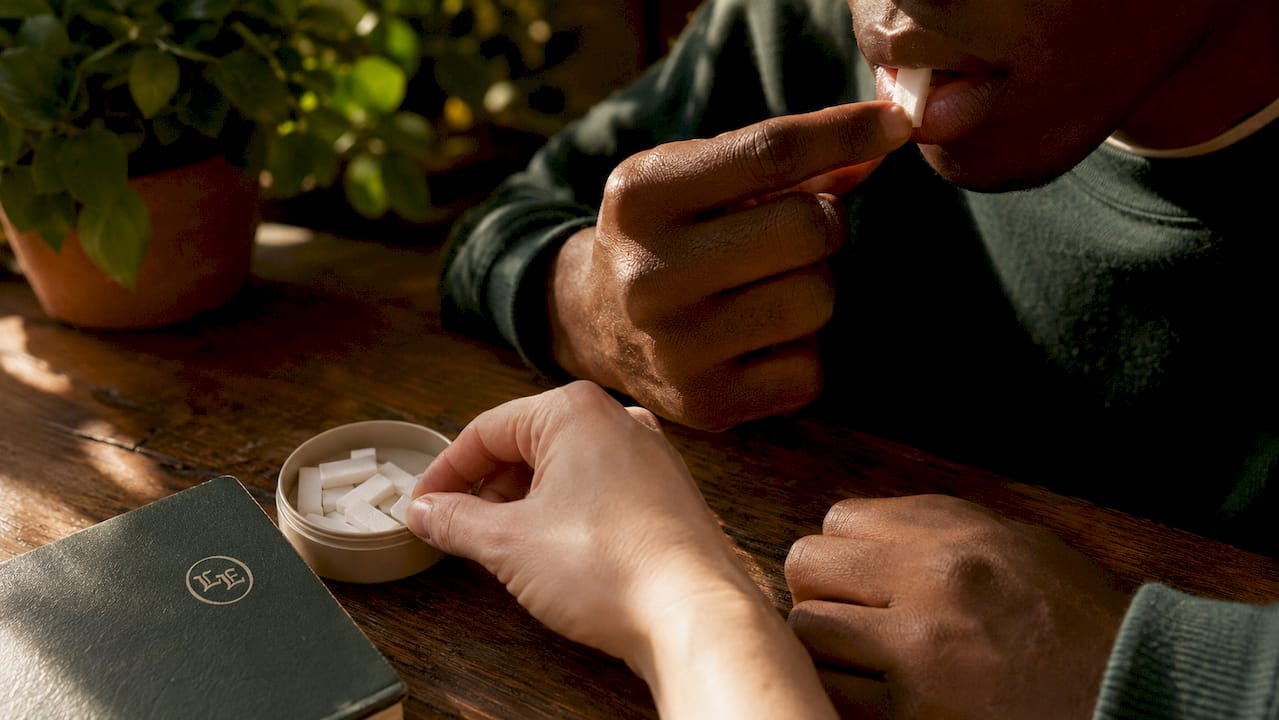
Sublingual nicotine gels are newer and arguably more interesting. You place a small amount under the tongue, and the nicotine absorbs directly through the oral mucosa. Lesser Evil Nicotine’s patent-pending gel format works exactly this way. It is tobacco-free, battery-free, and uses natural flavours and sweeteners. No device, no cartridge, no bin full of dead pods.
Nicotine mouth sprays are a fast-delivery format sprayed directly onto the oral mucosa. Lesser Evil Nicotine has one coming. They suit people who want a quick, discreet hit without any physical object to hold or dispose of.
Energy pouches are a non-nicotine option worth knowing about. They deliver 30–80mg of caffeine plus nootropic compounds like L-Theanine to manage stimulation without nicotine dependency. They are not a nicotine product, but they occupy the same physical ritual space, which matters for people trying to step away from nicotine entirely.
| Format | Delivery method | Nicotine | Device needed | Waste produced |
|---|---|---|---|---|
| Nicotine pouch | Oral mucosa | Yes | No | Minimal |
| Sublingual gel | Under tongue | Yes | No | Minimal |
| Mouth spray | Oral mucosa | Yes | No | Minimal |
| Energy pouch | Oral mucosa | No | No | Minimal |
| Vape kit (refillable) | Inhalation | Yes | Yes | Battery + coils |
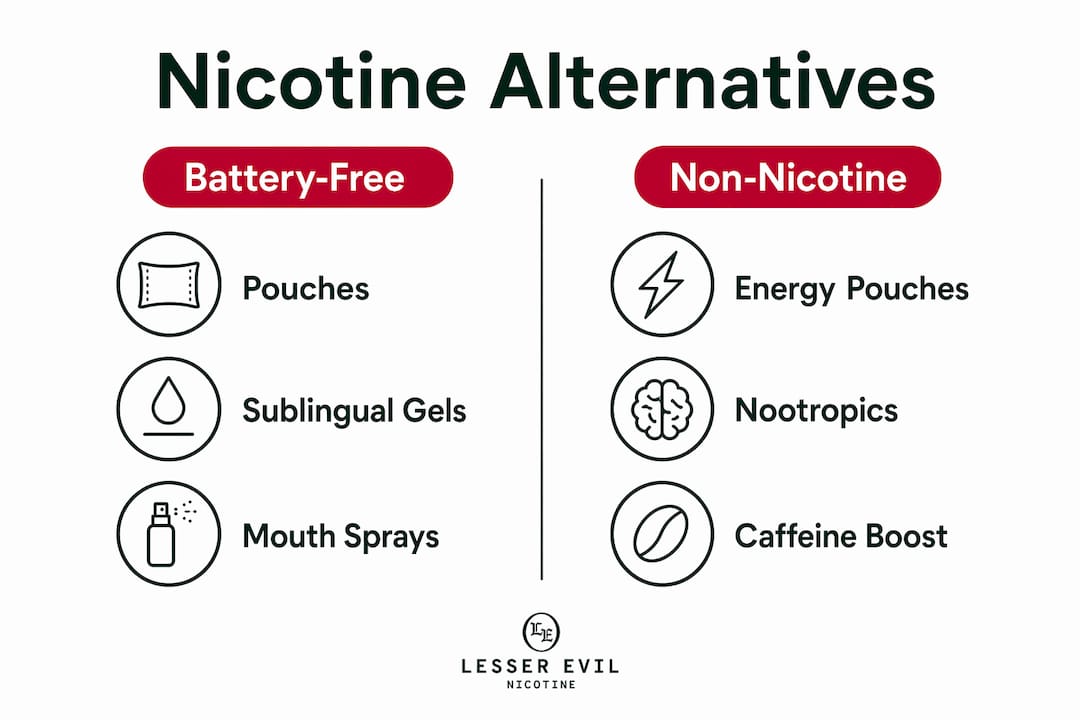
The top smokeless nicotine products in 2026 share one feature: no combustion. That single fact removes the lung tax that smoking and vaping both charge.
How do clean nicotine alternatives work?
Sublingual and oral nicotine delivery works through the oral mucosa, the thin tissue lining your mouth. Nicotine passes through that tissue directly into the bloodstream. You do not breathe it in. That is the core factual difference from vaping, where you inhale heated vapour into your lungs. The oral nicotine delivery mechanism is well established and distinct from inhalation in every meaningful way.
Synthetic nicotine adds another layer of cleanliness. Synthetic nicotine reaches 99.9% purity, compared to 95–98% for tobacco-derived nicotine. That higher consistency is why clean-label brands prefer it. You are getting a more predictable product with fewer tobacco-associated compounds in the mix.
The physiological mechanism also differs from caffeine-based alternatives. Nicotine stimulates acetylcholine receptors, while caffeine blocks adenosine receptors. Both produce alertness, but through entirely different pathways. Knowing this helps you understand why an energy pouch does not feel the same as a nicotine product, even if the ritual looks identical.
Behavioural design matters too. The handling and usage ritual is a core part of why people stick with an alternative or drift back. Products that replicate the physical routine of reaching for something, placing it, and feeling a response tend to hold attention better. This is not a minor point. It is one of the main reasons format choice affects long-term satisfaction.
Pro Tip: If you are switching from vaping, choose a format that keeps some physical ritual intact. A gel or pouch gives your hands and mouth something to do. That continuity reduces the friction of changing habits.
How to choose the right clean nicotine alternative for your lifestyle
The right product depends on four things: how much nicotine you want, where you use it, what you do with the waste, and how much faff you are willing to tolerate.
- Nicotine strength. Sublingual gels and pouches come in low and standard doses. If you currently vape at low nicotine levels, start low. Lesser Evil Nicotine’s gel is formulated at a low dose by design, which suits people who want control without a sharp hit.
- Indoor use. The best nicotine alternatives for indoor use are formats that produce no vapour, no smell, and no visible output. Gels, pouches, and sprays all qualify. You can use them in an office, on a train, or in a meeting without anyone noticing.
- Battery-free formats. Top battery-free nicotine alternatives produce no e-waste. No coils, no pods, no dead batteries in landfill. If that matters to you, and it should, gels and pouches are the obvious answer. Refillable vape kits reduce waste compared to disposables, but they still require a device and regular coil changes.
- Usage ritual. Think about when and where you reach for nicotine. If it is during a commute, a gel or pouch fits without drawing attention. If it is a social moment, a spray is fast and discreet. Match the format to the moment.
For a broader look at how these formats compare, the types of nicotine replacement products guide on the Lesser Evil Nicotine site breaks down the category clearly.
Consumer demand in 2026 is driven by transparency and tobacco-free identity. People want to know what is in their product. Synthetic nicotine’s clean-label positioning is the direct response to that demand. If you care about ingredients, look for products that list them plainly and use natural flavourings rather than artificial ones.
Tips for using clean nicotine alternatives effectively
Getting the most from a smokeless nicotine product comes down to technique, timing, and realistic expectations.
- Place it correctly. For sublingual gels, apply under the tongue and hold. Do not swallow immediately. The nicotine absorbs through the oral mucosa, not the stomach. Rushing this reduces the effect.
- Start with the lowest dose. If you are new to oral nicotine formats, begin with the lowest available strength. You can always use more. You cannot un-use what you have already absorbed.
- Give it time. Oral nicotine delivery is not as instant as inhaling vapour. Allow a few minutes for absorption before deciding the product is not working.
- Do not mix formats. Using a gel and a pouch simultaneously doubles your intake unpredictably. Pick one format per session.
- Read the label. These products are for adult use only. The FDA’s MRTP authorisation explicitly states that nicotine pouches are intended for smokers switching completely, not for non-users picking up a new habit.
“The behavioural loop of handling and using a nicotine product is a core part of satisfaction. Products that replicate this ritual have significantly lower relapse rates than those that ignore it entirely.”
Avoid the expectation mismatch trap. A gel does not feel like a vape. It is not supposed to. The sensation is different, the timing is different, and the ritual is different. Give yourself a week to adjust before drawing conclusions.
Key takeaways
Clean nicotine alternatives in 2026 are tobacco-free, battery-free oral formats that deliver nicotine through the oral mucosa without combustion, inhalation, or e-waste.
| Point | Details |
|---|---|
| Synthetic nicotine dominates | Synthetic nicotine is projected to reach 70% of global pouch sales by late 2026. |
| Sublingual delivery skips the lungs | Oral mucosa absorption means you do not breathe anything in, unlike vaping. |
| Format affects satisfaction | Products that preserve a physical ritual have better long-term adoption rates. |
| Battery-free means no e-waste | Gels, pouches, and sprays require no device, coil, or battery disposal. |
| Start low on dosage | Begin with the lowest available strength and adjust based on your response. |
Why I think the pouch category is missing half its audience
I have watched the oral nicotine category grow for a few years now, and one thing consistently frustrates me. The marketing is almost entirely aimed at men. The branding is dark, aggressive, and sport-coded. The flavours lean towards mint and menthol in ways that feel clinical rather than enjoyable. And the result is a category that talks loudly to one demographic while ignoring the millions of women who vape and would genuinely benefit from a cleaner alternative.
The data backs this up. The urban professional woman who vapes is not being spoken to by most pouch brands. She is not the target on the packaging, in the advertising, or in the flavour development. Lesser Evil Nicotine was built specifically to address that gap, with an apothecary aesthetic, natural ingredients, and flavours like Black Grape and Green Apple that feel considered rather than generic.
What I find genuinely interesting about the gel format is the environmental angle. Battery-free nicotine is not just a convenience feature. It is a meaningful reduction in the e-waste problem that disposable vapes have made significantly worse. A product that leaves no dead device behind is a better product on that metric alone, regardless of anything else.
The future of this category belongs to brands that take ingredient transparency seriously, design for people who have been overlooked, and build products that fit into a real life rather than a marketing brief. The oral nicotine vs smoking comparison is not even close on the facts. The gap is in communication, not in the product.
— Luke McLeod
Lesser Evil Nicotine: tobacco-free, battery-free, no rubbish
If you are done breathing in vaporised chemicals and ready to try something that does not require a charger or a bin full of dead pods, Lesser Evil Nicotine is worth a look.

The Lesser Evil Oral Mister is a sublingual nicotine gel in three natural flavours: Peppermint, Black Grape, and Green Apple. It is tobacco-free, uses natural sweeteners, and leaves zero e-waste. No device, no cartridge, no faff. Just a discreet, low-dose gel that fits in your pocket and your life. It is built for the person who wants to manage their nicotine habit without putting crap in their body. UK launch is coming in 2026. Get on the list.
FAQ
What does “clean nicotine” actually mean?
Clean nicotine refers to tobacco-free nicotine, typically synthetic, that is delivered without combustion, smoke, or inhalation. Synthetic nicotine reaches 99.9% purity, compared to 95–98% for tobacco-derived nicotine.
Are nicotine pouches and gels safe for indoor use?
Yes. Pouches and sublingual gels produce no vapour, no smoke, and no smell, making them the best nicotine alternatives for indoor use in offices, public transport, and other enclosed spaces.
What is the difference between a nicotine pouch and a sublingual gel?
A nicotine pouch sits between the gum and lip and releases nicotine slowly over time. A sublingual gel is applied directly under the tongue for absorption through the oral mucosa, with no physical pouch to dispose of.
Do battery-free nicotine products produce e-waste?
No. Gels, pouches, and sprays require no device, battery, or coil. They are among the top battery-free nicotine alternatives precisely because they leave no electronic waste behind.
Are clean nicotine alternatives suitable for non-smokers?
No. These products contain nicotine and are intended for adult smokers or vapers only. The FDA’s MRTP framework explicitly states that nicotine pouches are for people switching away from combustible products, not for non-users.