

6 Habits Urban Women Use to Keep Teeth Clean with Stain Free Nicotine

Nicotine itself has no colour. Those yellow-brown marks on fingers, teeth, and walls come from tar and other combustion by-products released when tobacco burns, not from nicotine. Swap the cigarette for a smoke-free, tobacco-free oral option and you remove the main staining source in one move. From there, a few daily habits (hydration, timing, gentle brushing) do the rest.
TL;DR:
- Switching to smoke-free, tobacco-free oral nicotine products significantly reduces the risk of staining, as these contain no tar or combustion by-products.
- Vaping and heated tobacco products cause much less material discoloration than cigarettes, with e-vapour aerosols producing minimal or no immediate staining.
- Implementing daily habits like water rinsing, rotating placement, and delaying brushing can further prevent buildup of stains from any nicotine format.
- Existing stains on skin, fabric, or surfaces require gentle, specific cleaning methods, and patience, as removal is often gradual.
- Good oral hygiene, hydration, and regular dental visits help minimize stain buildup beyond switching product types.
Table of Contents
- What causes the yellow-brown staining people call “nicotine stains”?
- Which smoke-free formats carry the lowest staining risk?
- Daily habits and oral-care rules that cut staining risk
- How do you remove stains that are already there?
- What else affects your smile beyond visible stains?
- A quick note for anyone building a stain-conscious routine
- Where an oral gel spray fits into a stain-conscious routine
- Sources
- FAQ
What causes the yellow-brown staining people call “nicotine stains”?
Nicotine is a clear liquid. The colour blame sits with tar and the oxidised residue that forms when tobacco combusts, the sticky brown film that settles on teeth, fingertips, and paintwork over time. A controlled chamber study comparing exposure types found cigarette smoke caused far greater colour change to indoor materials than heated tobacco products or e-vapour aerosols, with the vapour-based options producing minimal or no immediate change by comparison.
That is the whole case for calling some formats “stain-free nicotine”: no burning means no tar, and no tar means far less pigment left behind. But chemistry doesn’t stop there. A few other things still shape how much staining you see:
- Combustion residue, not nicotine, carries the yellow-brown pigment.
- Frequency of use compounds even small amounts of residue over weeks and months.
- Diet and drinks (coffee, tea, red wine) layer their own staining on top of any nicotine-related discolouration.
- Oral hygiene habits determine how much of that daily buildup actually sticks.
Which smoke-free formats carry the lowest staining risk?
Staining risk runs roughly on a scale, with combustion at the top. Cigarettes come first, because burning tobacco generates the most tar. Vapes and heated tobacco products come next: less tar overall, but still capable of leaving residue depending on the device and how often you use it. Tobacco-leaf pouches sit lower again, since there’s no smoke involved, though the tobacco leaf itself can carry tannins. All-white pouches and oral nicotine gels or sprays tend to sit at the bottom of that risk scale, since they contain no tobacco leaf and no combustion at any stage.
Absence of combustion is the biggest lever here. Tar is the main pigment source, so removing it removes most of the problem in one go. But product chemistry still matters within that “smoke-free” bracket. A few checks help you judge any option quickly:
- Look for “tobacco-free” or “all-white” on the label, not just “smoke-free.”
- Check whether the product has a visibly dark juice or leaf, a sign of tannins that can still tint gum tissue over time.
- Note how often and where you place it, since concentrated daily use on the same spot compounds any pigment exposure.
Pro Tip: Hold the product up to natural light before use. A genuinely tobacco-free gel or spray should run clear or lightly tinted from its flavouring, never dark or syrupy.
Daily habits and oral-care rules that cut staining risk
Switching format handles most of the problem. The rest comes down to small, repeatable habits that fit into an already busy week.
- Sip water often, especially after removing a pouch or using an oral spray, to rinse away residue before it sits on tissue.
- Rotate placement daily, alternating sides of the gum line rather than using the same spot every time.
- Wait around 30 minutes before brushing. Enamel softens briefly after any oral product use, and brushing too soon can abrade it rather than clean it.
- Choose a soft brush and a low-abrasivity toothpaste to protect enamel over the long run rather than scrubbing harder.
- Book a professional cleaning periodically and mention your nicotine use, since a hygienist can catch early discolouration before it sets in.
- Space out high-pigment drinks like coffee, tea, or red wine around your nicotine use rather than combining them back to back.
None of this is about chasing perfection. It’s about stacking small wins so the visible effects never build up in the first place. Vapers switching habits often find the biggest shift comes simply from breaking the coffee-then-nicotine-then-no-water routine that many city mornings run on.
Pro Tip: Keep a travel toothbrush and a small bottle of water in your bag. The habit only sticks if it’s easier than not doing it.
How do you remove stains that are already there?
Existing stains need a different approach depending on the surface, and patience matters more than harsh scrubbing.
On skin: gentle exfoliation with a baking soda paste or a light rub of lemon juice can lift surface tint from fingertips, though both can irritate sensitive skin, so patch-test first and don’t repeat daily. Practical guides also note that skin renewal over time is often the most reliable factor in fading these marks, more so than any single product.
On fabric: soak the item in warm water with detergent and white vinegar first, since this combination lifts light, recent residue without heat-setting the stain into the fibres. For tougher marks, sodium perborate bleach or rubbing alcohol can work, applied with blotting rather than rubbing. Never tumble-dry a stained item before treatment. Heat locks the pigment in.
On walls and surfaces: a sugar soap solution degreases painted surfaces effectively for light staining. Heavier, years-old staining may need trisodium phosphate or a specialist cleaner, followed by a stain-blocking primer before repainting to stop old pigment bleeding through new paint.
- Light, fresh residue: warm water, detergent, or white vinegar.
- Moderate fabric staining: sodium perborate bleach or rubbing alcohol, applied gently.
- Heavy wall staining: TSP-strength cleaner, then a stain-blocking primer.
The PMI Science chamber comparison found e-vapour and heated tobacco aerosols caused minimal or no immediate colour change to test materials, versus a marked shift from cigarette smoke exposure, which is the clearest evidence yet that combustion, not nicotine, drives most visible staining.
What else affects your smile beyond visible stains?
Staining isn’t the only cosmetic factor worth watching. Nicotine can reduce salivary flow, and saliva is what naturally washes food and drink pigments off your teeth through the day. Less saliva means coffee, tea, and red wine linger longer and stain more easily, even when your nicotine source itself is tobacco-free.
Repeated placement of any oral product in the same spot can also irritate gum tissue over time, sometimes leading to localised recession. Rotating where you place a pouch, gel, or spray daily helps limit that concentrated contact, and it’s worth paying attention to any change in colour or sensitivity along the gum line.
A few signs are worth a dental check rather than a home remedy:
- Persistent discolouration that doesn’t shift with normal brushing.
- New sensitivity around the gum line.
- Visible gum recession or a change in gum shape at your usual placement site.
Hydration and consistent brushing remain the foundation here. Guidance from the New Zealand Ministry of Health points to regular brushing, good hydration, and routine dental visits as the baseline for healthy-looking teeth and gums, whatever nicotine format you’re using.
A quick note for anyone building a stain-conscious routine
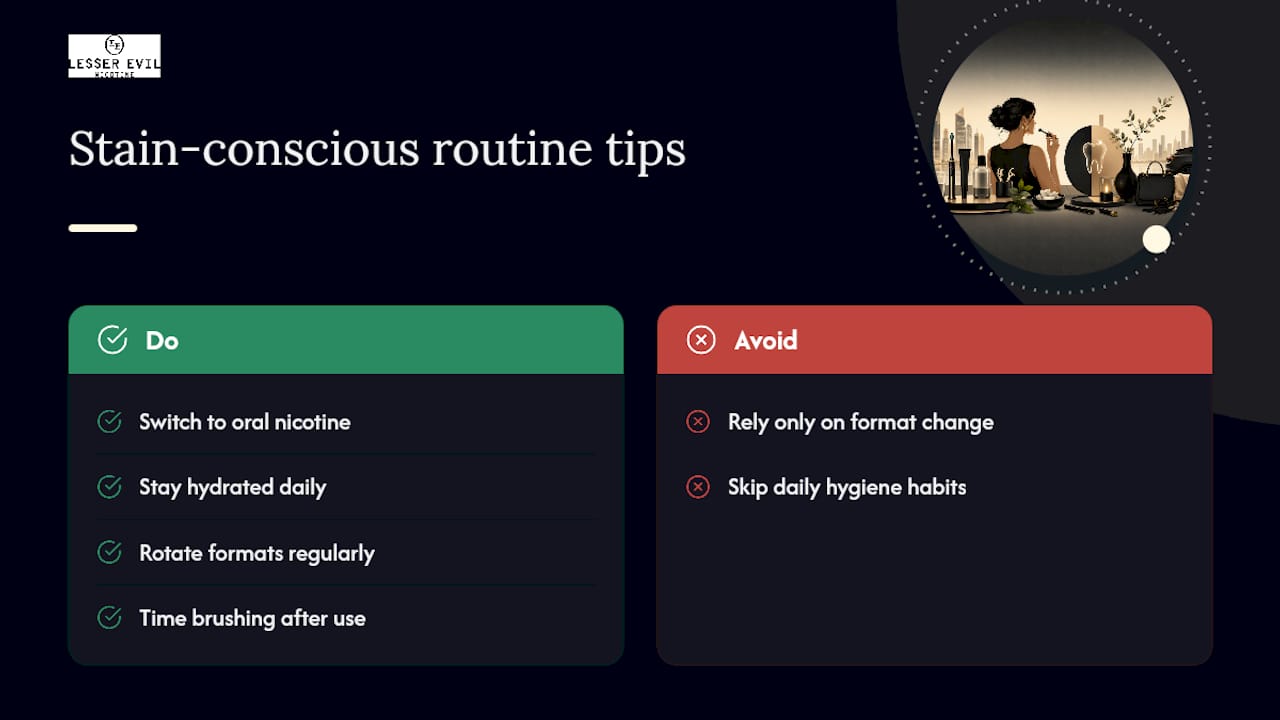
Nobody wants their nicotine habit written across their fingers or their smile. That’s the honest trade-off worth naming: switching format solves the biggest chunk of the staining problem, but daily habits still carry real weight. Hydration, rotation, and brushing timing aren’t glamorous, but they’re what separate someone who switched formats and still stains from someone who switched and actually sees the difference.
For more on the practical side, our piece on oral nicotine versus smoking breaks down the cosmetic differences in more depth. Lesser Evil Nicotine publishes this kind of thing because we’d rather you make an informed swap than guess.
— Luke McLeod
Where an oral gel spray fits into a stain-conscious routine
Cigarettes leave tar behind. Vapes still involve inhaling something into your lungs. If you’re after a genuinely smoke-free, tobacco-free option that doesn’t ask you to breathe anything in at all, the Lesser Evil Oral Mister is built around exactly that gap.
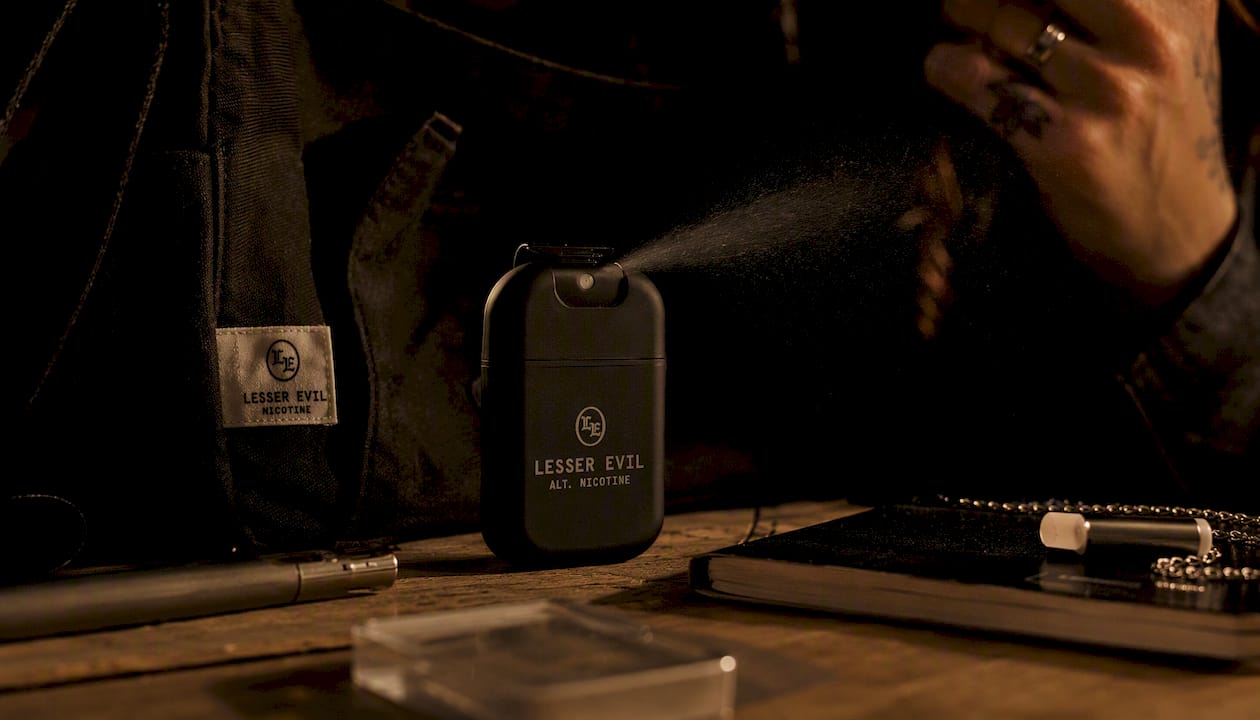
It’s a sublingual nicotine gel spray, used under the tongue, tobacco-free, battery-free, and made with natural flavours across three options: Peppermint, Black Grape, and Green Apple. There’s no burning, no tar, and no dark juice sitting in the bottle waiting to tint anything. The water-based formula and discreet spray format mean you can use it on the move without the ritual (or the residue) that comes with smoking or vaping.
If a stain-conscious routine matters to you, check the Lesser Evil Oral Mister product page for ingredients and current availability, priced as a one-off purchase; current prices are on the pricing page. You can also browse the full range on the Lesser Evil Nicotine store to see what fits your day.
Sources
- Simple Green — Smoke and soot cleaning tips
- University of Georgia Extension — Remove stains from nicotine
- New Zealand Ministry of Health — healthy teeth and gums guidance
- PMI Science — comparison of material staining following exposure to heated tobacco and e‑vapour aerosols versus cigarette smoke
FAQ
Does nicotine itself cause yellow stains?
No. Nicotine is colourless; the yellow-brown pigment comes from tar and other combustion by-products released when tobacco burns.
Are vapes really less staining than cigarettes?
Chamber testing found e-vapour and heated tobacco aerosols caused far less colour change to materials than cigarette smoke, though vapes can still leave some residue with heavy daily use.
How do I remove nicotine stains from fabric?
Soak the item in warm water with detergent and white vinegar for light marks, or try sodium perborate bleach or rubbing alcohol for tougher staining, always blotting rather than rubbing.
What’s the fastest way to stop new stains forming?
Switch to a smoke-free, tobacco-free format and pair it with simple habits: sip water often, rotate placement, and wait roughly 30 minutes before brushing.
Does Lesser Evil Nicotine’s product stain teeth or fingers?
The Lesser Evil Oral Mister is a tobacco-free, water-based gel spray with no combustion involved, which removes the tar source most associated with visible staining.