

What is a clean beauty nicotine habit? A discreet gel, explained

A “clean beauty nicotine habit” refers to using a tobacco‑free, sublingual nicotine gel rather than a cigarette, vape, or pouch. You place a small metered dose under your tongue, it absorbs through the oral mucosa, and that’s it. No smoke, no vapour, no battery, no tobacco leaf.
This is a consumer product, not a treatment. It isn’t licensed as a nicotine replacement therapy and it doesn’t treat anything. Think of it the way you’d think of switching from a sugary energy drink to sparkling water with electrolytes. Same category, different ingredients, different experience.
The FDA’s overview of non-combustible nicotine products lists gels as one of several oral formats, alongside gum, lozenges, and pouches. Lesser Evil Nicotine makes one of these: the Lesser Evil Oral Mister, a sublingual gel spray built around a water base, natural flavours, and precision dosing.
- Tobacco‑free formulation, no combustion, no vapour to inhale.
- Battery‑free design, so there’s no e‑waste sitting in a landfill.
- Metered doses, so you know roughly what you’re getting each time.
- Natural flavours and sweeteners instead of synthetic candy‑style additives.
The whole point of “clean” here isn’t a wellness buzzword. It means fewer additives, no combustion byproducts, and a formulation you can actually read and understand on the label.
Key Takeaways
A clean beauty nicotine habit means using a tobacco‑free, sublingual nicotine gel with a metered dose, absorbed through the oral mucosa rather than inhaled or chewed.
| Point | Details |
|---|---|
| Core definition | A tobacco‑free, sublingual nicotine gel placed under the tongue, delivered in a metered dose. |
| Safety basics | Always follow the label’s dosing and timing instructions rather than guessing at amounts. |
| Format differences | Gel absorbs faster than gum or lozenges but slower than inhaled vapour, with less waste than a vape. |
| Choosing checklist | Look for clear dosing, disclosed nicotine source, natural flavours, and no battery component. |
| Lesser Evil Nicotine | The Lesser Evil Oral Mister is a metered, tobacco‑free, battery‑free gel spray in three natural flavours, a consumer good rather than a medical treatment. |
This article is general information, not a substitute for advice from a qualified doctor. Consult a qualified healthcare professional about your own circumstances before acting on anything here.
Table of Contents
- What is a clean beauty nicotine habit and how does the gel work?
- How do you use a sublingual nicotine gel safely?
- How does gel compare with pouches, gum, and vapes?
- What does using a sublingual gel actually feel like?
- How do you choose a clean formulation and spot red flags?
- Lesser Evil Oral Mister: a practical example of the format
- Why this format resonates with people managing their own habit
- Ready to try a tobacco‑free, low‑waste alternative?
- Sources
What is a clean beauty nicotine habit and how does the gel work?
The gel itself is simple: a water‑based carrier, nicotine (either tobacco‑derived or synthetic), natural flavouring, and a sweetener. No tobacco leaf goes into it at all. You place a metered dose under your tongue, where the tissue is thin and rich in blood vessels, and the nicotine moves into your bloodstream through the oral mucosa rather than your lungs or your stomach.
This is the same basic mechanism used by sublingual nicotine tablets, which typically deliver around 2mg per tablet and dissolve under the tongue for mucosal absorption. A gel format works on the same principle but doesn’t need to dissolve solid material first, which is part of why users report a quicker sense of onset compared with a lozenge that has to break down in the mouth.
Onset speed varies by format. A 2025 study comparing pouches with traditional oral products found that a 9mg pouch got nicotine into the bloodstream more slowly than a cigarette but at higher levels than gum or lozenges, with levels approaching cigarette territory in about 15 minutes for the sample studied. A sublingual gel works on a similar principle, with an onset speed generally faster than solid oral formats like lozenges or gum, but slower than inhaling smoke or vapour.
| Component | What it typically is |
|---|---|
| Gel base | Water‑based carrier, no tobacco leaf |
| Nicotine source | Tobacco‑derived or synthetic |
| Flavouring | Natural flavours and sweeteners |
| Dose format | Single metered spray or application |
Here’s the plain definition worth repeating: in this context, a “clean beauty nicotine habit” means a tobacco‑free, sublingual nicotine gel, formulated with natural flavours and sweeteners, delivered in a metered dose. Nothing more mysterious than that.
How do you use a sublingual nicotine gel safely?
Following the label isn’t optional here, it’s the whole system. Metered dosing only works as intended when you stick to the amounts and timing the product specifies. Mayo Clinic’s guidance on oral nicotine dosing for gum and lozenges lays out the same principle: dose limits exist for a reason, and step‑down use over time is standard practice for adults managing their own nicotine intake.
- Check the label for the metered dose amount before your first use.
- Apply a single dose under the tongue and let it sit rather than swallowing straight away.
- Wait the recommended interval before considering another dose.
- Keep track of your daily total against whatever maximum the label states.
- Store it well away from children and pets, and never combine it with another nicotine product unless the label explicitly allows it.
Following the label isn’t fussy small print. It’s the difference between controlling your dose and guessing at it.
If you have questions about how nicotine interacts with your own health, particularly if you’re pregnant or managing another condition, that’s a conversation for a clinician, not a label. This product is a consumer good, not a treatment plan, and it should be used with that understanding front and centre.
How does gel compare with pouches, gum, and vapes?
Every oral nicotine format solves the same basic problem differently, and the differences actually matter once you’re choosing between them daily.
Nicotine pouches are cellulose sachets packed with nicotine powder, flavourings, and binders, placed between the lip and gum rather than under the tongue. Truth Initiative’s breakdown of pouches confirms they contain no tobacco leaf, which puts them in the same broad “tobacco‑free” bracket as gel, even though the format and mouthfeel are completely different. Frontiers’ review of pouch composition notes that pouches often include salts and texture binders like xanthan gum to help nicotine absorb, and that nicotine source (tobacco‑derived versus synthetic) affects the impurity profile, including tobacco‑specific nitrosamines.
Gum and lozenges rely on chewing or dissolving solid material, which generally means a slower, steadier release than a sublingual gel. Vapes work through inhalation, heating a liquid and requiring you to breathe in the resulting vapour, which is a fundamentally different delivery route from anything placed in the mouth.
| Format | Delivery & onset | Ingredients | Discreetness | Waste | Dosing control |
|---|---|---|---|---|---|
| Nicotine pouch | Buccal absorption, moderate onset | Cellulose, nicotine powder, salts | High, no smoke or vapour | Sachet waste, no battery | Fixed strength per pouch |
| Gum/lozenge | Oral, slower onset than gel | Sweeteners, binders, nicotine | Moderate | Wrapper waste | Fixed dose per unit |
| Sublingual gel | Oral mucosa, faster onset than solids | Water base, natural flavours | High, compact format | Minimal, no battery | Metered dose per spray |
| Vape | Inhaled, fast onset | E‑liquid, heating element | Low, visible vapour | Battery and cartridge waste | Variable, harder to measure |
Regulatory treatment isn’t uniform either. Health Canada exempted certain sublingual tablets at or below 4mg from prescription requirements, under specific conditions, while MD Anderson notes that pouches are widely marketed but not authorised as cessation therapies in most places, and long‑term oral health data on them is still thin. None of these formats are interchangeable, and none should be assumed to carry the same regulatory status just because they’re all tobacco‑free.
What does using a sublingual gel actually feel like?
Expect a mild tingle or slight numbing sensation where the gel sits, plus a bit of extra mouth moisture or dryness depending on the flavour and your own chemistry. None of that is alarming, it’s just how oral mucosal absorption tends to feel compared with inhaling something.
Onset is noticeable within a few minutes for most users, though how long the effect lasts depends on the dose and the individual. That’s roughly in line with what the pouch delivery research found: oral absorption sits somewhere between the near‑instant hit of inhalation and the slow build of a solid lozenge.
- Compact packaging means it slips into a coat pocket or handbag without announcing itself.
- Natural flavours like peppermint or fruit avoid the artificial “vape shop” smell that lingers on clothes.
- No smoke, no cloud, no obvious ritual, which matters in a meeting or on a commuter train.
Pro Tip: If a strong initial tingle puts you off, try applying the dose slightly further back from the tip of the tongue. It can soften that first‑second sensation without changing how much nicotine you’re taking.
How do you choose a clean formulation and spot red flags?
Scanning a product page takes two minutes if you know what to look for.
- Check the label states an exact metered dose, not a vague “contains nicotine” line.
- Confirm it’s explicitly tobacco‑free, not just “reduced tobacco.”
- Look for a full ingredient list, including flavour and sweetener sources.
- Check the packaging gives disposal guidance, particularly for battery‑free claims.
- Verify the nicotine source is disclosed (tobacco‑derived or synthetic).
Red flags are just as easy to spot once you know what they look like:
- No dosing information anywhere on the packaging or product page.
- Candy‑style branding or flavour names clearly aimed at younger buyers.
- No disclosure of where the nicotine actually comes from.
- Vague or missing disposal instructions.
The most trustworthy signals sit in plain sight: a clear ingredient list, a stated dose, and honest packaging that doesn’t try to disguise what the product is. If you want a broader sense of how oral formats stack up before you commit to one, this breakdown of oral nicotine product types covers the category in more depth.
Lesser Evil Oral Mister: a practical example of the format
The Lesser Evil Oral Mister is a sublingual gel spray built on exactly the principles above: water‑based, tobacco‑free, battery‑free, with a metered dose and natural flavours across three options, Peppermint, Black Grape, and Green Apple.
It’s designed with a specific everyday user in mind: someone who wants a discreet alternative to vaping or smoking during a commute, between meetings, or on a flight, without carrying a device that needs charging or produces visible vapour. No cloud to explain, no battery to worry about running flat in your bag.
Checking it against the choosing criteria above: the dosing is metered per spray, the ingredient list is disclosed on the product page, and there’s no battery component to dispose of. As with any nicotine product, the exact dosing figures and any regional disclaimers sit on the product page itself, which is worth reading properly before you buy rather than skimming.
A tobacco‑free format doesn’t mean “no nicotine.” It means no combustion, no tobacco leaf, and a formulation you can actually read.
Why this format resonates with people managing their own habit
I’ve spent enough time looking at oral nicotine formats to notice a pattern: the products that get recommended by word of mouth are rarely the ones with the flashiest marketing. They’re the ones that fit invisibly into someone’s actual day, a meeting, a train platform, a five‑minute gap between calls.
What’s underrated about sublingual gel specifically is how little it asks of you. There’s no device to charge, no lighter to lose, no cloud to explain to a colleague. That’s not a health claim, it’s just a practical observation about a format built around discretion rather than ritual. The professional women I’d expect to gravitate toward this format aren’t looking for a wellness statement. They’re looking for something that works quietly and doesn’t leave a battery in a drawer somewhere.
Where I’d push back on the wider category is the assumption that “tobacco‑free” automatically means “thoughtfully made.” It doesn’t. Some pouches on the market lean on candy branding and vague dosing, which tells you more about the marketing department than the formulation. Read the label. Check the dose. That’s the whole exercise, and it’s one most people skip until something goes wrong.

Ready to try a tobacco‑free, low‑waste alternative?
If you’ve read this far, you already understand the format better than most people browsing a vape shop shelf. The next question is simple: do you want to keep carrying a device that needs charging and leaves e‑waste behind, or switch to something metered, tobacco‑free, and small enough to disappear into a coat pocket?
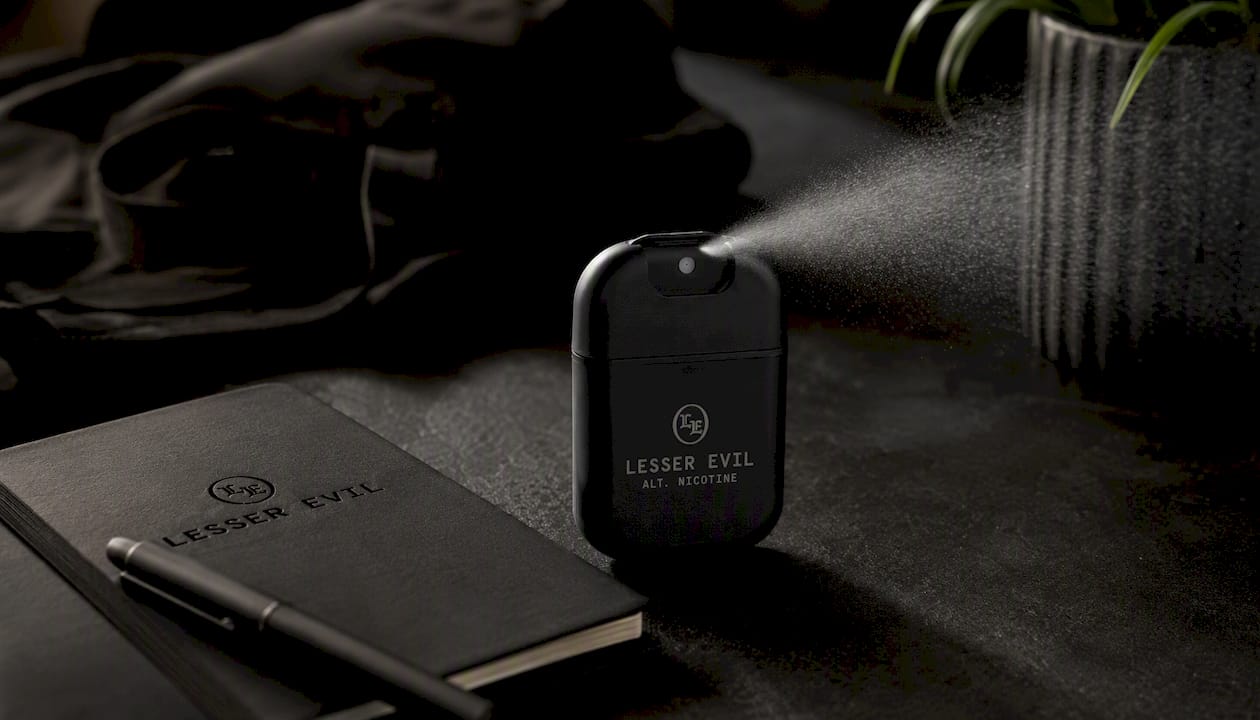
The Lesser Evil Oral Mister gives you that option in three natural flavours, Peppermint, Black Grape, and Green Apple, each built on a water‑based, tobacco‑free formulation with a metered dose so you’re not guessing at how much you’re using. Before you buy, take two minutes to read the full product specs and dosing details on the page itself. It’s a small habit that’s worth building, checking the label before checking out.
Sources
- Nicotine (oral route, oromucosal route) - Side effects & dosage - Mayo Clinic
- Nicotine pouches: composition and public‑health considerations — Frontiers in Public Health
- What to know about nicotine pouches — MD Anderson
- Other Tobacco Products | FDA