

3 Things Vapers Can Do This Week to Stop Teeth Stains

Yes, vaping can discolour your teeth, though usually less than smoking does. The pigments come from nicotine oxidation, dry mouth, and flavour compounds sticking to enamel rather than from tar, which is what makes cigarette staining so much darker and faster. The good news: stopping the residue at the source with better hygiene and smarter product choices works. The sections below cover exactly how.
TL;DR:
- Vaping causes teeth staining primarily through nicotine oxidation, dehydration from propylene glycol and vegetable glycerin, and surface deposits from darker flavorings.
- Compared to smoking, vaping results in smaller but still measurable enamel discoloration, with the extent depending on e-liquid composition and individual vaping habits.
- Daily prevention routines like rinsing with water, brushing with fluoride toothpaste, chewing sugar-free gum, and choosing lighter e-liquids significantly reduce staining risk.
- Surface stains from vaping can fade within weeks after stopping, but intrinsic discoloration requires professional whitening or restorative procedures for correction.
- Using tobacco-free in-mouth nicotine products like sublingual gels minimizes staining and avoids vapour residue, but hygiene remains the most effective way to prevent enamel discoloration.
Table of Contents
- Does vaping stain teeth? What’s actually happening to your enamel
- Is vaping better or worse than smoking for staining?
- How can you prevent vaping teeth stains day to day?
- Can you remove stains once vaping has already discoloured your teeth?
- If you stop vaping, will your teeth actually get lighter?
- What Lesser Evil Nicotine’s own research says about oral care for vapers
- Three things to do this week
- Why most staining advice online misses the point
- A tobacco-free way to manage nicotine without the vapour residue
- Sources
Does vaping stain teeth? What’s actually happening to your enamel
Here’s the mechanism, stripped of the marketing fluff you’ll find on most dental sites. Nicotine itself has no colour. But the moment it hits oxygen in your mouth, it starts converting into yellow and brown pigments, and those pigments are small enough to work their way into the microscopic pores on your enamel surface. That’s the same basic chemistry behind nicotine’s effects on dental tissue, whether it arrives via smoke, vapour, or anything else.
Vaping adds two extra staining pathways on top of that. Propylene glycol and vegetable glycerin, the base liquids in most e-liquids, are humectants that pull moisture out of your mouth. Less saliva means less natural rinsing, so pigments and plaque sit on your teeth longer instead of getting washed away. Flavourings and colourants in darker juices, particularly the deep berry, cola and coffee flavours, can leave their own surface deposits on top of the nicotine pigment.
Lab evidence backs this up in more detail than most vapers realise. One in vitro study using spectrophotometer measurements found e-cigarette vapour visibly darkened and yellowed both enamel and dentine, and picked up 72 volatile organic compounds and 26 metals in the vapour samples, eight of which exceeded WHO tolerance limits in that study.
Pro Tip: If you’ve had a filling or a crown, check it more often than your natural teeth. Composite resin absorbs pigment differently to enamel, so a restoration can end up visibly darker while the tooth next to it looks fine.
The main contributors, in order of how much they typically matter:
- Nicotine oxidation: yellow/brown pigments that penetrate porous enamel over time.
- Dry mouth from PG/VG: less saliva means pigments and plaque linger longer.
- Flavour colourants: dark juices deposit more surface pigment than clear ones.
- Vapour particulates and trace metals: shown in lab studies to affect both colour and how well dental bonding materials hold their shade.
- Restorative materials: resin composites often stain more visibly than natural enamel.
Is vaping better or worse than smoking for staining?
Cigarette smoke wins the staining contest, and not by a small margin. A systematic review of tobacco and nicotine products pooling laboratory and in vitro data found cigarette smoke produces large colour shifts on enamel and restorative materials using CIELAB measurement, the standard scale dentists use to quantify how far a shade has drifted (∆E). Vaping and heated tobacco products caused smaller but still measurable shifts on the same scale.
That’s a meaningful difference in staining intensity, but it isn’t a free pass. A few caveats matter here:
- Most of this evidence comes from lab studies exposing extracted teeth or synthetic surfaces to concentrated vapour, not from tracking real vapers over years.
- Real-world exposure varies enormously depending on how often someone vapes, which e-liquid they use, and how they clean their teeth.
- E-liquid composition matters a lot. A clear peppermint liquid and a dark cola-flavoured one are not staining your teeth at the same rate, even from the same device.
Switching from cigarettes to vaping tends to reduce staining intensity, but it does not remove the risk entirely. If your main goal is a whiter smile rather than managing nicotine use, comparing exposure patterns across products, including the differences covered in this switching guide from cigarettes to vaping, gives a clearer picture of what actually changes when you switch.
How can you prevent vaping teeth stains day to day?
Prevention here isn’t complicated. It’s mostly about not letting pigment sit on your teeth long enough to bind, and keeping your mouth wet enough that it can rinse itself.
- Brush twice daily with fluoride toothpaste. Use a soft-bristle brush. Skip the baking soda and charcoal “hacks” you see online. Those are abrasive enough to scratch enamel, which actually makes future staining worse because pigment has more surface to grip onto.
- Rinse with water straight after vaping. A quick swill clears residue before it has a chance to settle. Keep water on hand and drink it throughout the day, not just after sessions.
- Chew sugar-free gum between vapes. Chewing stimulates saliva flow, and saliva is your mouth’s own rinsing system. This matters more for vapers than most people realise, since PG and VG are known to dry the mouth out more than smoking does.
- Choose clearer, lighter-coloured e-liquids where you can. Dark berry, cola and coffee flavours deposit more pigment than clear or lightly tinted liquids. Keep your device clean too. A grimy tank or coil can leave its own residue in the vapour.
- Avoid vaping straight after coffee, red wine, or other staining drinks. Pigments compound. Vaping on top of a staining drink gives your enamel a double dose before saliva gets a chance to clear either one.
See a dentist if you notice early yellowing that doesn’t shift with brushing, gum changes, or dry mouth that persists throughout the day. Those are signs worth getting checked rather than managing with more toothpaste.
Can you remove stains once vaping has already discoloured your teeth?
This depends entirely on whether you’re dealing with surface staining or something that’s worked its way into the tooth itself, and the difference matters for both cost and expectations.
- Professional scale and polish: removes surface pigment and plaque buildup. Most dentists recommend this every six months regardless of vaping, and it’s usually the first, cheapest step.
- In-office bleaching: dentist-applied whitening gel, typically one to three sessions, gives a visible shade improvement for most surface and light intrinsic staining.
- Dentist-supervised take-home trays: custom-fitted trays with professional-grade gel, worn over one to two weeks, offer a slower but still reliable result for similar cases.
- Over-the-counter whitening strips and pens: work for mild surface staining but have real limits, and overuse risks enamel sensitivity and, ironically, more visible future staining since a damaged surface holds pigment more easily.
- Restorations and veneers: if a filling or crown has picked up disproportionate staining, or if intrinsic discolouration is deep, replacement or veneers may be the only route to an even shade, since whitening gel doesn’t work on composite the way it works on natural enamel.
Costs and timeframes vary by provider and by how much correction is needed, so treat any figure you see online as a rough guide rather than a quote. A single scale and polish session is generally the fastest and least expensive option; whitening trays and veneer work sit at the other end of both scales. Whichever route you’re considering, home remedies involving baking soda or charcoal are worth avoiding. Dental guidance consistently flags them as abrasive enough to do more harm than good.
If you stop vaping, will your teeth actually get lighter?
Surface staining tends to fade once the residue stops recurring, especially after a professional clean, and improvement in surface colour can show up within a few weeks as saliva flow normalises and less pigment builds up day to day. Intrinsic staining, the kind that’s worked into the tooth structure itself, doesn’t reverse on its own. That needs whitening or, for restorations, replacement. Stopping removes the ongoing cause. It doesn’t undo damage that’s already set in.
What Lesser Evil Nicotine’s own research says about oral care for vapers
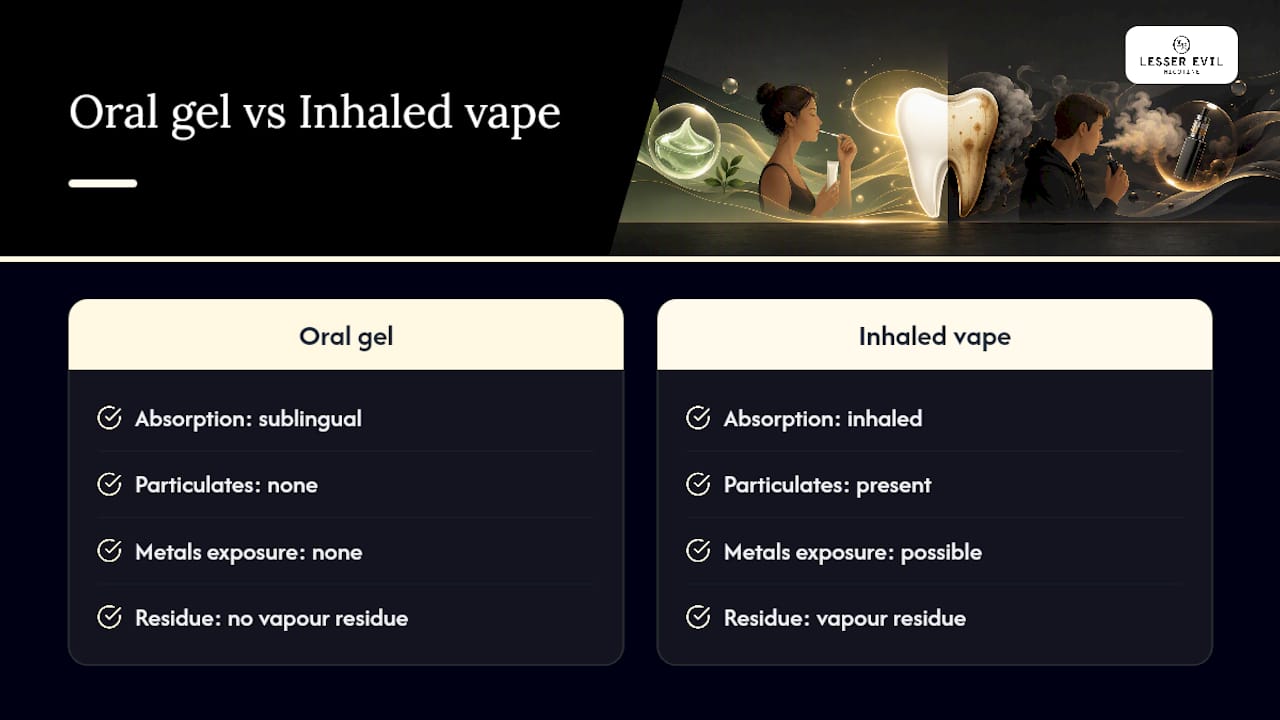
We’ve written a fair bit about this because our customers ask about it constantly. The short version: an oral nicotine gel like the Lesser Evil Oral Mister works sublingually, meaning it sits under the tongue and absorbs through the oral mucosa. You’re not inhaling vapour, so the particulate and metal exposure that lab studies link to enamel darkening simply isn’t part of how it works.
That doesn’t make it a magic fix for staining, and we’re not claiming it treats or reverses anything. It’s tobacco-free, battery-free, and made with natural flavours (Peppermint, Black Grape, Green Apple) and natural sweeteners, so there’s no vapour residue to rinse away in the first place. Our own guidance on managing dry mouth as a vaper covers the same hydration and saliva-stimulation basics dental sources recommend, because that advice holds regardless of which product someone uses. If you’re weighing up how oral formats differ from inhaled ones more broadly, our breakdown of oral nicotine products covers that in plain terms.
Three things to do this week
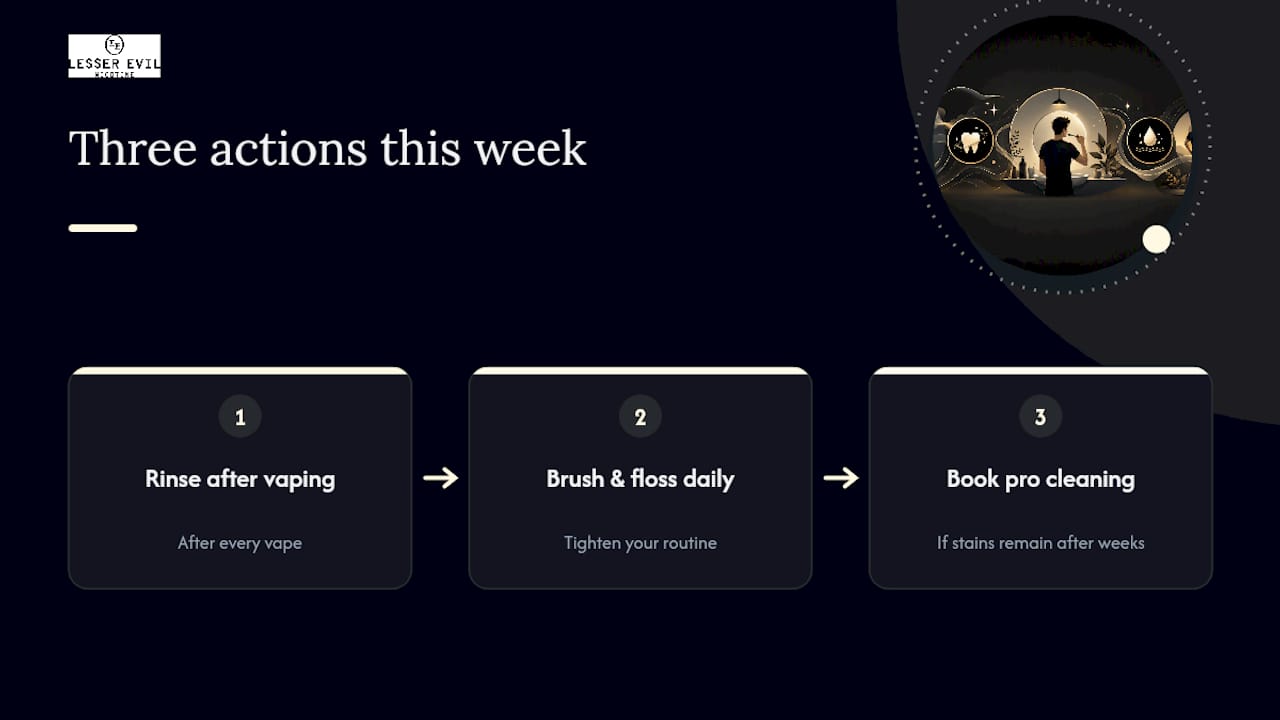
Vaping stains teeth less aggressively than smoking, but the mechanism is real and manageable. Rinse with water after every vape, tighten up your daily brushing and flossing routine, and book a professional cleaning if stains haven’t shifted in a few weeks.
Why most staining advice online misses the point
Most articles on this topic treat teeth whitening like the main event and hygiene like a footnote. That’s backwards. The lab evidence is clear that staining is a slow accumulation problem, pigment binding to enamel pores over weeks and months, not a single dramatic event. Whitening gel treats the symptom. Rinsing habits and saliva flow treat the cause.
The bit conventional advice underplays: dry mouth. Most dental pages mention it in passing, but PG and VG genuinely do reduce saliva output, and saliva is doing more work than people give it credit for. It’s your mouth’s built-in rinse cycle. Kill that, and every other prevention step works harder than it needs to.
If I had to rank priorities for someone worried about this, hydration and rinsing come first, flavour choice second, and whitening products a distant third, only once the habit causing the problem is actually under control. Chasing a whiter smile while ignoring dry mouth is like mopping a floor with the tap still running.
— Luke McLeod
A tobacco-free way to manage nicotine without the vapour residue
Lesser Evil Nicotine is the alternative to inhaled vaping for anyone who wants their nicotine without the vapour, the particulates, or the staining mechanisms covered above. The product uses a sublingual gel that sits under the tongue and works through the oral mucosa, so there’s no vapour to trap pigment against enamel and no device to keep clean.
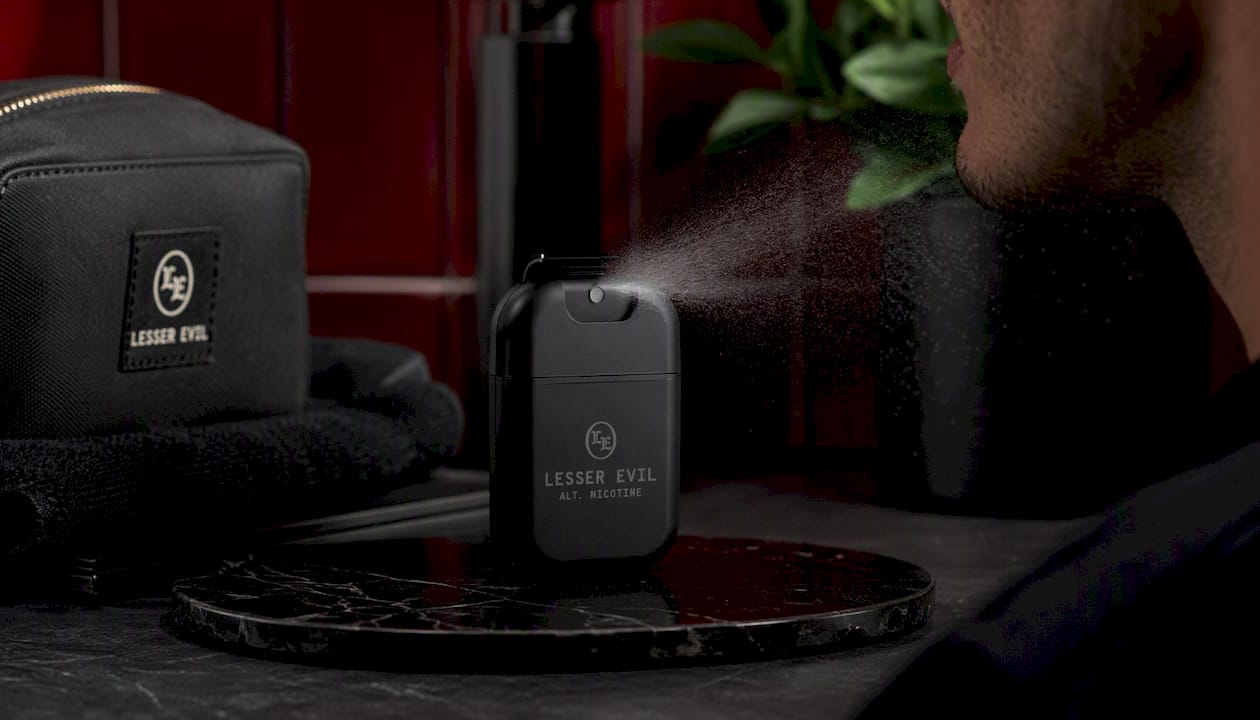
It comes in three natural flavours, including Peppermint, Black Grape, and Green Apple, made with natural sweeteners rather than the intense colourants found in many dark e-liquids. It is also battery-free, so it does not produce e-waste. If you’re looking for a tobacco-free, low-burn format that fits into a bag or pocket without drawing attention, the Lesser Evil Oral Mister is worth a look. Head to the product page to see the flavours and check it fits how you use nicotine day to day.
This article is general information, not a substitute for advice from a qualified doctor. Consult a qualified healthcare professional about your own circumstances before acting on anything here.
Sources
- Systematic review: staining effects of tobacco and nicotine products on dental hard tissues and materials
- Experimental in vitro simulation of the impact of e‑cigarette vapours on enamel and dentin