

Vaping dry mouth: causes, remedies, and prevention

Yes, vaping commonly causes dry mouth, and the fix starts with three things you can do right now: drink a large glass of water, chew a piece of xylitol gum, and cut your next session shorter than usual.
Research tracking e-cigarette users over six months found that 34% reported dry mouth after just one week. The mechanism is a double hit: nicotine constricts the blood vessels feeding your salivary glands, while propylene glycol (PG) in your e-liquid actively pulls moisture from the tissues lining your mouth. Water helps in the short term, but gland function needs reduced exposure to properly recover.
Immediate actions to take right now:
- Drink at least 250ml of water straight away
- Chew sugar-free xylitol gum for 5–10 minutes to stimulate saliva
- Reduce the length or intensity of your next vaping session
- Avoid alcohol and caffeine for the next few hours, as both worsen dehydration
Key takeaways
Vaping causes dry mouth through two compounding mechanisms: nicotine-driven vasoconstriction in salivary glands and PG’s hygroscopic effect on oral mucosa, with a significant proportion of exclusive vapers reporting symptoms early after use.
| Point | Details |
|---|---|
| Hydrate consistently | Drink at least 2 litres of water daily and time intake around vaping sessions for best effect. |
| Use xylitol gum after sessions | Xylitol stimulates saliva and has antimicrobial properties that protect against caries. |
| Adjust your device and liquid | Lower wattage, higher VG ratio, and reduced nicotine strength each reduce the drying effect. |
| See a dentist if symptoms persist | Persistent dryness beyond 2–4 weeks, white patches, or enamel loss all warrant a clinical check. |
| Lesser Evil Oral Mister | A tobacco-free, battery-free sublingual nicotine gel for adults who want to use something instead of their vape. |
Table of Contents
- What is dry mouth (xerostomia) and what is ‘vaper’s tongue’?
- Why vaping causes dry mouth: the physiology behind it
- How long does vaping-related dry mouth typically last?
- What reduced saliva actually does to your teeth and gums
- How to prevent and manage dry mouth from vaping
- When should you see a dentist or GP?
- What the research actually shows about vaping and dry mouth
- A note from us at Lesser Evil Nicotine
- The Lesser Evil Oral Mister: a tobacco-free alternative to inhaled vapour
- Sources
What is dry mouth (xerostomia) and what is ‘vaper’s tongue’?
These two terms get mixed up constantly, and they are not the same thing. Xerostomia is the clinical term for a subjective sensation of oral dryness caused by genuinely reduced saliva production. Vaper’s tongue is different: it describes a temporary loss or dulling of taste sensitivity, often after extended vaping, without necessarily involving a measurable drop in saliva.
| Xerostomia (dry mouth) | Vaper’s tongue | |
|---|---|---|
| Primary cause | Reduced salivary gland output | Sensory receptor fatigue or flavour overload |
| Main signs | Sticky mouth, difficulty swallowing, cracked lips | Flat or absent taste, flavours tasting “off” |
| Typical duration | Persists while exposure continues; may take weeks to improve | Usually resolves in days with a flavour break |
Knowing which one you have matters, because the fixes differ. Xerostomia needs saliva stimulation and reduced exposure. Vaper’s tongue usually just needs a break from your usual flavour.
Signs you have true salivary reduction rather than just a taste blip:
- Persistent stickiness or a “cotton wool” feeling in your mouth
- Difficulty chewing or swallowing dry foods
- Waking up with a dry, sore throat
- Cracked corners of the mouth or chapped lips
- Bad breath that does not clear with brushing
Why vaping causes dry mouth: the physiology behind it
Two separate mechanisms are at work, and they compound each other. Nicotine and the carrier liquids in your vape each reduce saliva by a different route.
Nicotine acts as a sympathomimetic, stimulating adrenergic receptors and causing vasoconstriction in the blood vessels that supply your salivary glands. Less blood flow means less raw material for saliva production. This is not a minor effect: gland perfusion drops meaningfully with regular nicotine exposure, and simply drinking water gives short-term relief without restoring gland function.
PG (propylene glycol) adds a second layer of damage. Dental and clinical commentary describes PG as hygroscopic, meaning it actively draws moisture from the mucosal tissues lining your mouth. Every inhale deposits a hygroscopic compound directly onto those tissues. VG (vegetable glycerin) is also hygroscopic, though to a lesser degree.
Other contributors that make things worse:
- High wattage or temperature settings, which increase vapour density and mucosal contact
- Long, frequent sessions with minimal breaks
- Mouth-breathing during inhalation, which bypasses nasal humidification
- High-nicotine e-liquids, which amplify the vasoconstrictive effect
- Certain flavouring chemicals (particularly menthol and some fruit concentrates) that may irritate mucosal tissue
The result is a chronic cycle: nicotine-driven vasoconstriction reduces gland perfusion while PG pulls moisture from the mucosa. Water gives short relief, but gland function needs reduced exposure to restore normal saliva output.
Pro Tip: Switching to a higher VG ratio (70:30 VG/PG or above) reduces the amount of hygroscopic PG hitting your mucosa per puff. It will not eliminate the issue, but many vapers notice a meaningful difference within a week.
How long does vaping-related dry mouth typically last?
Dry mouth from vaping tends to be worst early on and often improves if you reduce exposure, though it can become chronic with continued heavy use.
Timeline of typical symptom progression:
- During and immediately after a session: Mouth feels sticky or parched; saliva is noticeably reduced
- Hours later: Symptoms usually ease with hydration, but may return with the next session
- Days to weeks: With continued vaping, symptoms can become a background constant rather than a post-session spike
- Months of continued use: Research found 34% of exclusive e-cigarette users reported dry mouth at one week, dropping to 18% at six months, suggesting some adaptation occurs, though a significant proportion remain symptomatic
Population-level survey data show daily e-cigarette use carries an adjusted odds ratio of approximately 1.8 for frequent xerostomia compared with non-use. That is not a trivial increase in risk.
If your dry mouth is persistent despite cutting back and staying hydrated, skip ahead to the section on when to see a dentist.
What reduced saliva actually does to your teeth and gums
Dry mouth is not just uncomfortable. Saliva is your mouth’s primary defence against acid, bacteria, and enamel erosion. When it drops, the consequences for your teeth are real and measurable.
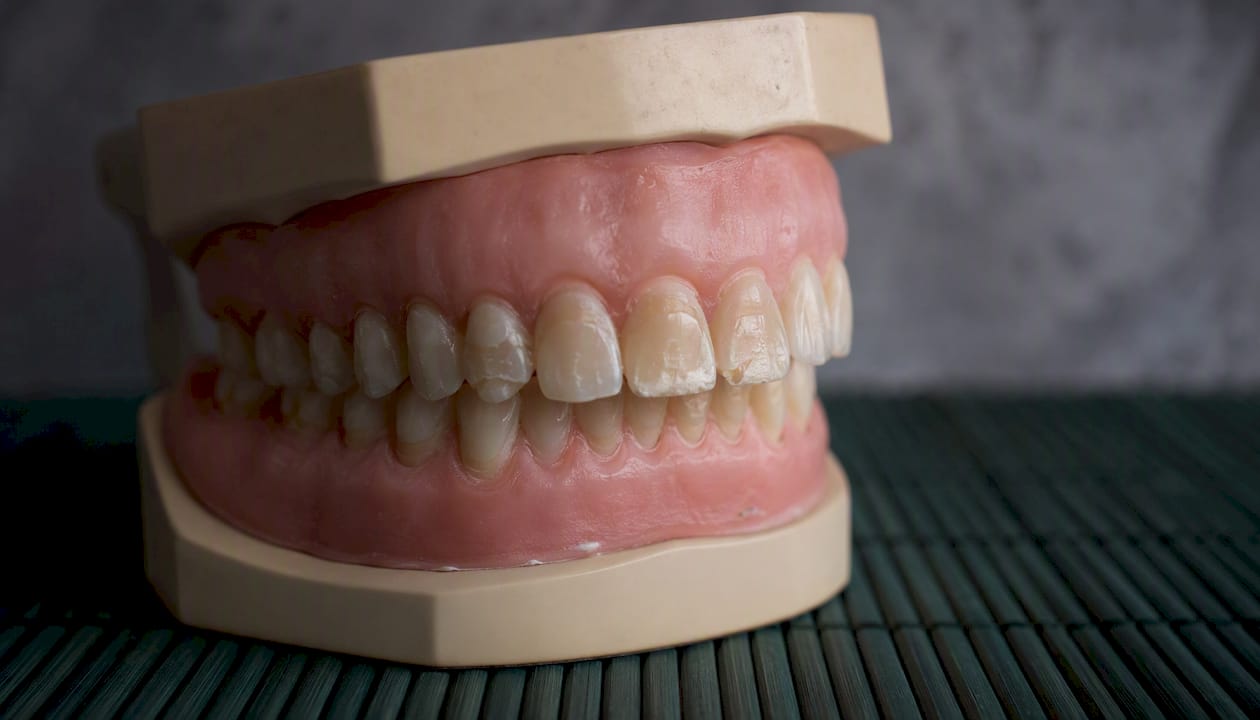
A cross-sectional pilot study found that 92.9% of vapers had an acidic salivary pH compared with 7.1% of non-users, and 36.8% of vapers had low buffering capacity versus 1.2% of non-users. Buffering capacity is your saliva’s ability to neutralise acid after eating or drinking. Without it, your enamel sits in an acidic environment for far longer after every meal.
Specific oral-health risks from reduced saliva:
- Enamel erosion: Acidic pH softens enamel; without buffering, acid exposure is prolonged after every meal
- Faster caries progression: Saliva normally washes away fermentable sugars and remineralises early lesions; reduced flow removes both protections
- Higher plaque and gingivitis risk: Saliva has antimicrobial properties; less saliva means more bacterial colonisation. Dry mouth is a direct driver of gingivitis risk
- Oral candidiasis: A dry oral environment favours fungal overgrowth
- Halitosis: Reduced saliva flow allows odour-causing bacteria to thrive
Pro Tip: Use a high-fluoride toothpaste (1,450ppm fluoride, standard in UK pharmacies) last thing at night and do not rinse after brushing. This leaves a protective fluoride film on enamel overnight, which is especially useful when saliva flow is low.
How to prevent and manage dry mouth from vaping
The highest-impact change is reducing vaping frequency and session length. Everything else below supports that, but nothing replaces it.
Ranked action checklist:
- Drink water consistently throughout the day, not just after sessions. Aim for at least 2 litres daily.
- Chew xylitol gum for 5–10 minutes after vaping. Xylitol stimulates saliva and has an antimicrobial effect on caries-causing bacteria.
- Lower your device wattage or temperature. Cooler vapour is less drying and less irritating to mucosa.
- Switch to a higher VG ratio (70:30 or above) to reduce PG contact with oral tissues.
- Reduce nicotine strength to lower the vasoconstrictive load on your salivary glands.
- Use an alcohol-free saliva substitute or oral moisturiser (available from UK pharmacies such as Boots or Lloyds Pharmacy) between sessions.
- Switch to nasal inhalation where your device allows, to reduce direct mucosal drying.
- Avoid alcohol and caffeine on heavy vaping days; both compound dehydration.
| Do | Don’t |
|---|---|
| Drink water regularly throughout the day | Rely on sugary lozenges or sweets to stimulate saliva |
| Use xylitol gum or lozenges | Use mouthwash containing alcohol, which dries mucosa further |
| Try alcohol-free saliva substitutes (e.g. BioXtra, Biotène) | Vape at high wattage for extended sessions |
| Use high-fluoride toothpaste at night | Skip dental check-ups because symptoms seem mild |
| Lower device temperature and PG ratio | Drink caffeinated drinks as your main hydration source |
Clinical resources recommend xylitol gum, saliva substitutes, and alcohol-free mouthwashes as first-line management for symptomatic dry mouth in people who continue using nicotine products. These are not cures, but they meaningfully reduce discomfort and protect teeth while you make bigger changes.
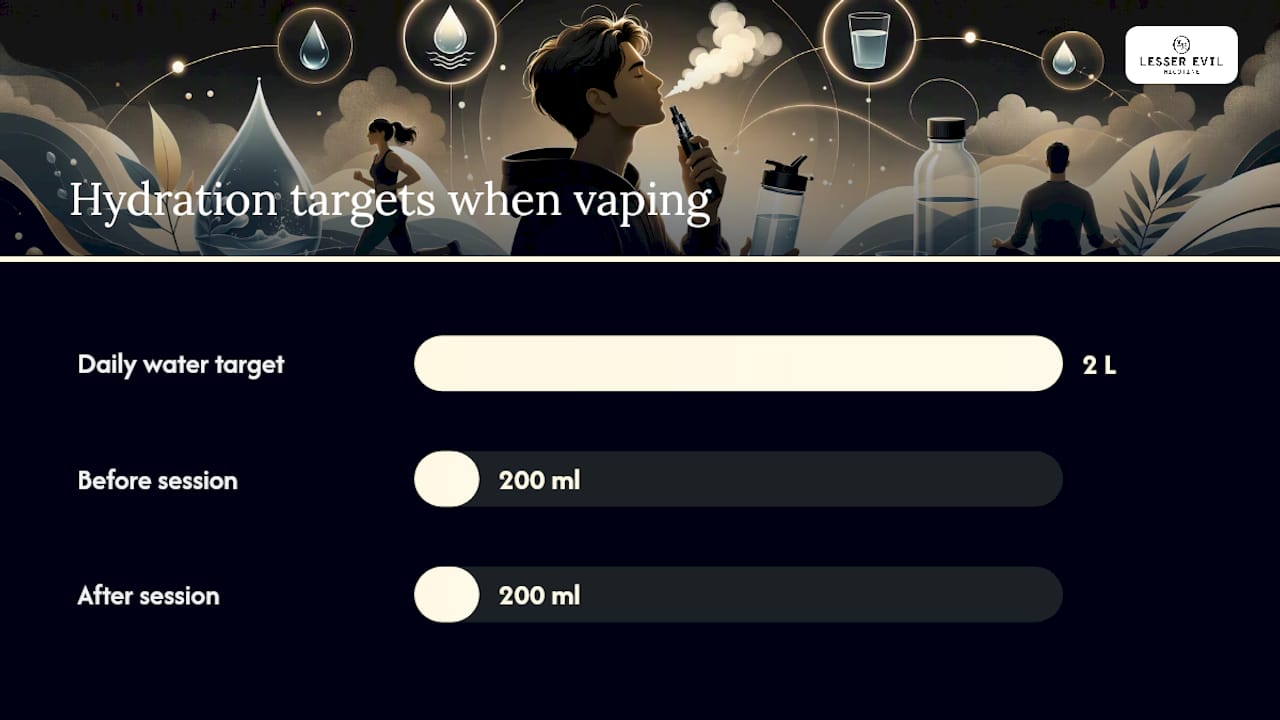
Pro Tip: Time your water intake: drink 200ml immediately before a session and another 200ml straight after. This pre-loads your mucosa and flushes residual PG before it can draw moisture from tissue for an extended period.
When should you see a dentist or GP?
Self-care works for most people, but some situations need a professional. See a dentist or GP if:
- Dryness persists for more than 2–4 weeks despite reducing vaping and staying hydrated
- You have difficulty swallowing or speaking
- You notice white patches inside your mouth (possible oral candidiasis)
- You have unexplained tooth sensitivity or visible enamel loss
- Your gums bleed regularly or you have persistent bad breath
- You have swollen glands in your neck or jaw
At an appointment, your dentist is likely to check salivary flow rate (a simple chairside test), inspect your oral mucosa and enamel, and review any medications that may compound dryness. Saliva-check kits that measure pH and buffering capacity are increasingly used in dental practice to motivate behaviour change and tailor fluoride or remineralisation plans.
Bring a note of your vape device, typical wattage, e-liquid PG/VG ratio, nicotine strength, and roughly how many sessions you have per day. That information helps your clinician give specific rather than generic advice.
What the research actually shows about vaping and dry mouth
The evidence base is growing, though it has real limitations worth knowing about.
A large multinational cross-sectional study found exclusive ENDS (electronic nicotine delivery system) users had significantly higher xerostomia symptom scores than non-users after adjustment for confounders. The association was the strongest among exclusive ENDS users, with a standardised β of 0.385 (p < 0.001).
The cohort study tracking adverse symptoms over six months found 34% of exclusive e-cigarette users reported dry mouth at one week, falling to 18% at six months. This decline likely reflects some physiological adaptation, though it does not mean the underlying salivary changes resolve.
The cross-sectional pilot study measuring salivary parameters found 92.9% of vapers had acidic salivary pH and 36.8% had low buffering capacity, compared with 7.1% and 1.2% respectively in non-users. These are measured physiological changes, not just self-reported symptoms.
Limitations of the current evidence:
- Several studies use convenience samples and cross-sectional designs, so causality cannot be definitively established
- Confounders (prior smoking history, diet, medications) are difficult to fully control
- Most studies are relatively small; larger longitudinal trials are still limited
What is robust: measured salivary parameter changes (pH, buffering capacity, flow rate) in vapers are consistent across multiple independent studies. The association between ENDS use and xerostomia symptoms is well-replicated. The physiological mechanisms (nicotine vasoconstriction, PG hygroscopicity) are pharmacologically well-understood.
A note from us at Lesser Evil Nicotine
We built Lesser Evil Nicotine because we got tired of the trade-offs that come with vaping. The dry mouth, the vapour, the battery, the e-waste. Our position is straightforward: the Lesser Evil Oral Mister is a consumer product for adult nicotine users, not a medicine, not an NRT, and not a cessation device. We make no health claims.
What we can say factually: you do not breathe it in. It is a sublingual nicotine gel delivered under the tongue via the oral mucosa. Tobacco-free, battery-free, no vapour, no e-waste. Natural flavours and natural sweeteners. If you use it instead of vaping, you are not inhaling vapour or PG into your lungs. That is a fact about the format, not a medical claim.
This article is general information, not professional advice. If you have persistent oral symptoms, please see a dentist or GP.
The Lesser Evil Oral Mister: a tobacco-free alternative to inhaled vapour
If vaping dry mouth is something you are done putting up with, the root cause is the vapour itself. No vapour, no PG hitting your mucosa, no hygroscopic compounds drawing moisture from your oral tissues with every hit.

The Lesser Evil Oral Mister is a sublingual nicotine gel for adult nicotine users who want to use something instead of their vape. Here is what it actually is:
- Format: Oral gel delivered under the tongue, absorbed via the oral mucosa. Not inhaled.
- Tobacco-free: No tobacco, no tar, no combustion.
- Battery-free: No device, no charging, no e-waste.
- Flavours: Peppermint, Black Grape, and Green Apple, with natural flavours and natural sweeteners.
- Water-based formula: No vaporised chemicals entering your airway.
It is not a medicine. It will not treat your dry mouth. But if you use it instead of vaping, you are simply not doing the thing that causes the problem. For adult nicotine users who want a discreet, oral nicotine alternative without the vapour, the battery, or the PG, it is worth a look. Visit the product page to see what is available ahead of the UK launch.
Sources
- Adverse symptoms attributed to e-cigarettes over 6 months (Nicotine and Tobacco Research)
- Correlation between e-cigarette use and salivary flow rate, pH, and buffering capacity: a cross-sectional pilot study (PubMed / BMC Oral Health)
- Study on nicotine effects on salivary gland perfusion and oral health (BMC Oral Health / Springer)
- Associations of cigarette, e‑cigarette and cannabis use with xerostomia (survey analysis)
- The hidden consequences of vaping on oral health (AAO information)
This article is general information, not a substitute for advice from a qualified doctor. Consult a qualified healthcare professional about your own circumstances before acting on anything here.