

Peppermint oral nicotine benefits: an evidence-aware guide

TL;DR:
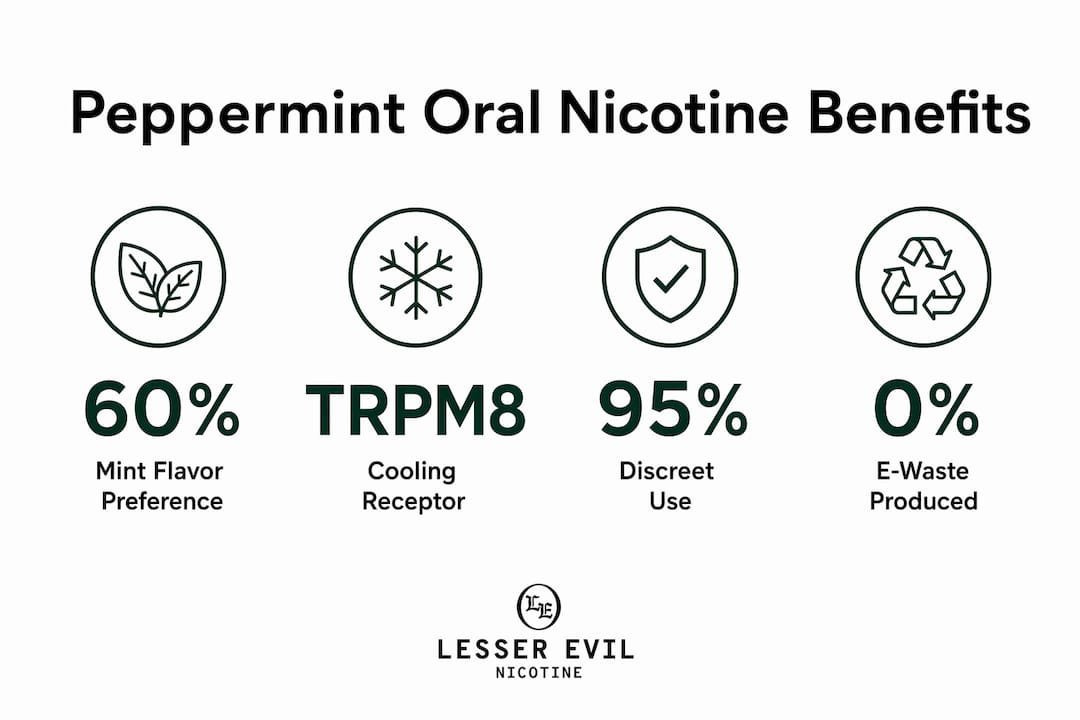
- Peppermint oral nicotine activates the TRPM8 receptor to create a cooling sensation that masks bitterness and soothes irritation.
- It offers a smoother, discreet, and fresh oral experience but does not change nicotine’s pharmacology or safety profile.
Peppermint oral nicotine produces a cooling, bitterness-masking effect by activating the TRPM8 cold/menthol receptor in the mouth. For adult nicotine users, that means the experience can feel smoother and more palatable. It is not a medicine, not nicotine replacement therapy, and it does not make nicotine safe. Peppermint is a sensory modifier. Full stop.
Here is what people typically report:
- Cooler, less harsh sensation compared to unflavoured products
- Bitterness from nicotine is partially masked
- Fresher aftertaste, which many users prefer
- Feels more discreet in social settings
- No vapour, no battery, no e-waste
And the limits you should know upfront:
- Effects vary by individual and menthol preference history
- Peppermint does not change nicotine’s pharmacology
- Not suitable for non-users, pregnant people, or under-18s
- Limited clinical human data exist specifically on peppermint oral gel formulations
Pro Tip: Try a single low-dose application under the tongue first. Wait a few minutes before deciding whether you need more. Intermittent placement, rather than constant contact, reduces the chance of local irritation.
Table of Contents
- How does peppermint change the oral nicotine experience?
- What do people actually report using peppermint oral nicotine?
- What are the risks and the UK regulatory situation?
- How do you use peppermint oral nicotine gel in practice?
- How does peppermint gel compare to other flavours and delivery methods?
- What does the science actually say about peppermint oral nicotine?
- Can peppermint oral nicotine interact with health conditions or medications?
- What UK users are saying: the honest picture
- Key takeaways
- A note from Lesser Evil Nicotine
- Try the peppermint oral gel from Lesser Evil Nicotine
- Where to check the evidence and UK rules
How does peppermint change the oral nicotine experience?
The cooling sensation is not a trick of the mind. Peppermint activates TRPM8, the cold/menthol receptor, producing a counterirritant effect that reduces perceived oral irritation and masks nicotine’s naturally bitter taste. Animal and in-vitro research confirms TRPM8 is necessary for menthol’s reduction of oral nicotine aversion.
Concentration matters more than most people realise. At low, well-formulated levels, peppermint reduces aversion through TRPM8. Push the concentration too high and a second receptor, TRPA1, gets involved, which can itself become irritating. This is why formulation quality is not a marketing detail — it is the difference between a product that feels good and one that burns.
Key mechanisms at work:
- TRPM8 activation: produces the cooling counterirritant sensation
- Bitterness masking: peppermint’s flavour compounds partially suppress nicotine’s bitter taste profile
- Reduced perceived irritation: lower oral discomfort at product-relevant concentrations
- Concentration dependency: low doses reduce aversion; excessive concentrations may trigger TRPA1-mediated irritation
Research note: Animal studies show menthol’s effect on oral nicotine aversion does not desensitise in the first days of exposure, which helps explain why mint flavours can be particularly appealing to new users of these products.
What do people actually report using peppermint oral nicotine?
Users most often describe a smoother, cooler hit with less of the throat-scratch that unflavoured products can produce. The refreshing sensation is the headline benefit, but the practical advantages go further than taste.
Reported advantages include:
- Smoother taste: the cooling effect makes each application feel less harsh
- Reduced throat hit: less irritation compared to vaping or unflavoured gels
- Discreet use: no vapour, no smell, nothing visible — you can use it in a meeting or on the Tube
- Refreshing aftertaste: leaves the mouth feeling clean rather than stale
- No inhalation: you are not breathing anything in, which users frequently cite as a reason they prefer it
Menthol’s effects are not uniform across everyone. A controlled study found menthol enhanced some aversive effects in people who did not prefer menthol, while reducing discomfort in those who did. Your history with mint products shapes how this lands for you.
“I don’t miss the vape at all — the peppermint one actually slaps, it’s fresh and I don’t feel like I’m doing something gross anymore.” — customer opinion, Lesser Evil Nicotine user
Mint flavour is also the most popular category in the oral nicotine pouch market, which reflects genuine consumer preference rather than marketing spin.
What are the risks and the UK regulatory situation?
Peppermint modifies sensation but carries the same pharmacology as any nicotine product. The sensory experience is different; the underlying substance is not.
Common side effects to know:
- Oral irritation or a burning sensation, especially with overuse
- Heartburn or mild indigestion from back-to-back applications
- Nausea, particularly at higher doses or for first-time users
- Local gum or mucosal sensitivity with prolonged contact
Placement and pacing guidance from clinical drug information consistently highlights shifting the product around the mouth and avoiding continuous contact as the main tactics for reducing these effects.
Who should avoid peppermint oral nicotine entirely:
- Pregnant or breastfeeding people
- Anyone who does not currently use nicotine
- Under-18s (age restrictions apply in the UK)
- People with known sensitivity to menthol or nicotine
In the UK, oral nicotine products are consumer goods, not licensed medicines. They are regulated under the Tobacco and Related Products Regulations 2016 and subject to age-of-sale restrictions. The MHRA and local trading standards are the right places to check current rules before buying.
The Cochrane review on oral nicotine pouches states the evidence for cessation is limited and low-certainty. These products are not a licensed stop-smoking aid.
Pro Tip: Check the MHRA website and your local trading standards guidance for the most current UK rules on oral nicotine products before purchasing.
How do you use peppermint oral nicotine gel in practice?
The gel goes under the tongue, where nicotine absorbs through the oral mucosa. It is not inhaled, not topical, and not swallowed. A metered dose means each application delivers a consistent amount.

Typical user-reported onset is within a few minutes of sublingual placement, with effects generally lasting for a short duration, though these are user-reported averages rather than clinical claims.
Dosing technique:
- Apply a single metered dose under the tongue or to the inside of the cheek
- Shift placement side to side across applications to avoid irritating one spot
- Pace applications — back-to-back use increases heartburn and local irritation risk
- Do not eat or drink immediately before or after to allow proper absorption
Pro Tip: For your first session: one application, wait five minutes, note how you feel. Do not stack doses. The sublingual absorption method is efficient, so less is usually enough.
How does peppermint gel compare to other flavours and delivery methods?
Peppermint primarily changes the sensory profile. It does not fundamentally alter how nicotine behaves in the body, but it does change how the experience feels moment to moment.
| Format | Sensory profile | Throat hit | Discreet? | E-waste |
|---|---|---|---|---|
| Peppermint oral gel | Cool, fresh, low bitterness | Low | Yes | None |
| Unflavoured oral gel | Neutral to bitter | Low to moderate | Yes | None |
| Nicotine pouches | Varies by flavour | Low | Yes | Minimal |
| E-cigarettes | Flavour-dependent | Moderate to high | No | Battery waste |
On the question of switching from cigarettes: a six-month prospective cohort study found increased mint-flavoured oral nicotine product use was independently associated with smoking reduction, though fruit/other flavours showed a stronger association with quitting outright. Worth knowing if you are comparing flavour options.
For UK buyers, oral nicotine vs smoking comes down to one practical fact: you are not breathing anything in.
What does the science actually say about peppermint oral nicotine?
Honest answer: the direct human evidence on peppermint oral gel specifically is thin. Most of what we know is extrapolated from menthol research in vaping, pouches, and animal models.
What the evidence does support:
- TRPM8-mediated cooling is a real, receptor-confirmed mechanism
- Mint/menthol flavours reduced short-term smoking urges versus tobacco flavour in a small pilot study of adults who smoked menthol cigarettes (N=17)
- Menthol’s effects on reward and aversion differ by individual menthol preference history
What it does not yet support: long-term comparative health outcomes for peppermint oral gel versus other formats, or clinical evidence that peppermint gel specifically outperforms unflavoured gel on any health measure. The science is promising but incomplete.
Can peppermint oral nicotine interact with health conditions or medications?
Nicotine itself has known interactions regardless of flavour. Peppermint adds a separate, smaller layer of consideration.
Nicotine can affect cardiovascular function and may interact with certain medications including theophylline, clozapine, and some blood pressure medicines. If you take regular medication, check with a pharmacist before starting any nicotine product.
Peppermint specifically can aggravate acid reflux and GERD symptoms in some people, particularly with frequent use. Anyone with a history of oesophageal or gastric conditions should be cautious. Menthol can also interact with certain skin patches and topical medications, though this is less relevant for sublingual gel.
This article is general information, not medical advice. Confirm your own situation with a qualified health professional or your GP.
What UK users are saying: the honest picture
Positive reports from UK users of peppermint oral nicotine products tend to cluster around three things: the freshness of the sensation, the discretion of use, and the absence of vapour. People who have switched from vaping frequently mention that not breathing anything in feels like a meaningful change to their daily routine.
Negative experiences are also consistent. The most common complaints are oral irritation after heavy use, heartburn from back-to-back applications, and a sensation that is too intense for people who are not used to menthol. A minority of users find the cooling effect overwhelming rather than pleasant, particularly those who have never used menthol products before.
The pattern that emerges: peppermint oral nicotine tends to work well for people who already enjoy mint flavours and are looking for a discreet, vapour-free option. It tends to disappoint people who expect it to feel identical to vaping, or who use it too frequently in one session.
Key takeaways
Peppermint oral nicotine works by activating the TRPM8 receptor to produce a cooling, bitterness-masking effect — making the experience feel smoother for many adult users, without changing nicotine’s underlying pharmacology.
| Point | Details |
|---|---|
| TRPM8 cooling mechanism | Peppermint activates the cold/menthol receptor, reducing perceived oral irritation and masking bitterness. |
| Sensory tool, not a medicine | Peppermint modifies the experience only; it does not make nicotine safe or act as a licensed therapy. |
| Side effect risk with overuse | Back-to-back applications increase heartburn and local irritation; paced, intermittent use reduces this. |
| Individual variation matters | Menthol’s effects differ by preference history; non-menthol users may find the sensation less pleasant. |
| Lesser Evil Oral Mister | A sublingual, tobacco-free, battery-free peppermint gel with metered dosing and natural flavours. |
A note from Lesser Evil Nicotine
We built the Oral Mister because we were tired of the options on the market. Pouches that burn your gums. Vapes that mean you’re breathing garbage all day. Products that feel like they were designed for someone else entirely.
The Oral Mister is a sublingual nicotine gel. Tobacco-free. Battery-free. No e-waste. Natural flavours and natural sweeteners. The peppermint formulation uses a patent-pending low-burn approach that we believe delivers the most palatable oral nicotine gel available. It is a consumer product, not a medicine, and we are not here to make health claims. We are here to give adult nicotine users something that does not feel like a compromise.
Lesser Evil Nicotine is launching in the UK in 2026, London-first. This guide was written to give you the honest picture before you decide.
Try the peppermint oral gel from Lesser Evil Nicotine
If you have read this far and want to try a peppermint oral nicotine gel that is actually designed with care, here is what you need to know about the Lesser Evil Oral Mister.
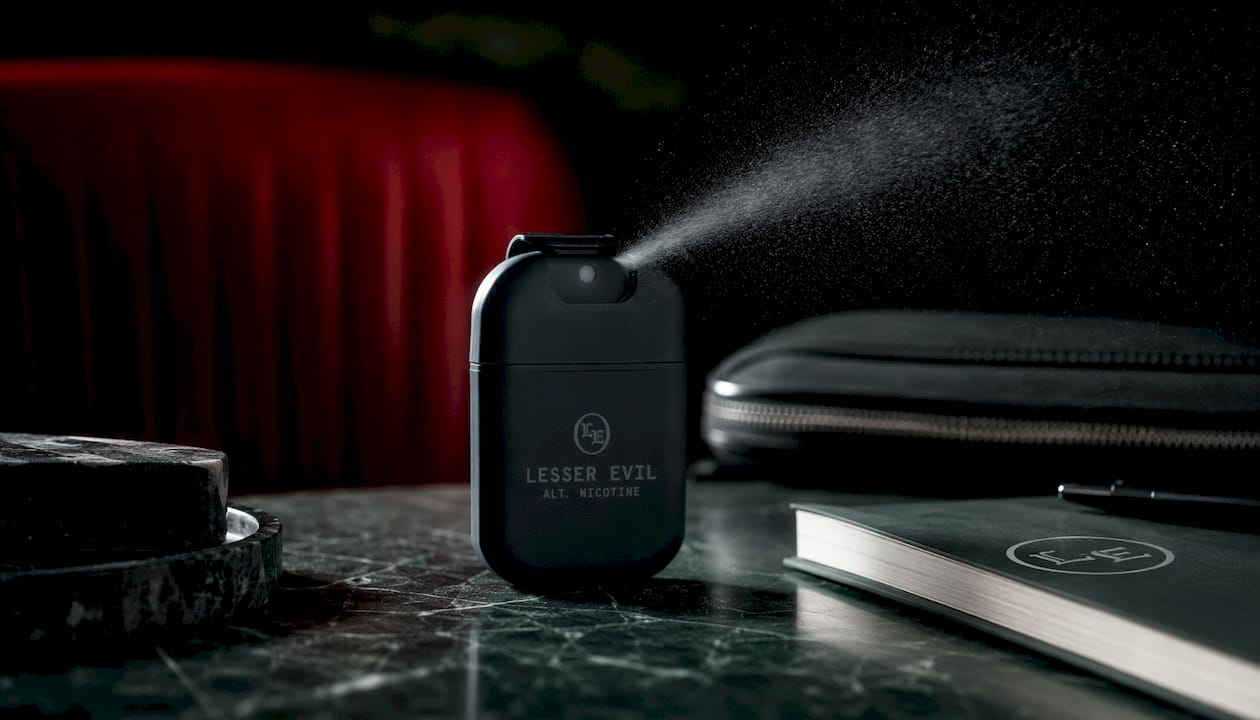
The Oral Mister is a sublingual gel with metered dosing, available in Peppermint, Black Grape, and Green Apple. Tobacco-free. Battery-free. Natural flavours and sweeteners. No vapour, no e-waste, no rubbish in your body. It is designed for adult nicotine users who want a discreet, clean-feeling alternative to vaping or pouches.
Lesser Evil Nicotine is launching in the UK in 2026. You can view the full product details and get early access on the product page now.
Where to check the evidence and UK rules
The science behind peppermint oral nicotine draws on several types of research: animal studies (which confirm receptor mechanisms but cannot be directly applied to humans), small human pilot studies (useful for direction, not definitive), and systematic reviews (the most reliable summary of available evidence). Treat each type accordingly.
Core research sources:
- TRPM8 and menthol oral nicotine aversion study — animal model confirming the receptor mechanism
- Mint/menthol e-cigarette pilot study — small human study on urge reduction (N=17)
- Cochrane review on oral nicotine pouches — systematic review, limited and low-certainty cessation evidence
- Flavoured ONP and smoking reduction cohort study — six-month prospective study on mint vs fruit flavour use
UK regulatory resources:
- MHRA — for current UK rules on nicotine products
- Trading Standards — for age-of-sale enforcement and consumer rights
Lesser Evil Nicotine resources:
- Oral nicotine products benefits breakdown — company guide to oral nicotine advantages
- Lesser Evil Oral Mister product page — product facts, flavours, and purchase