

Peak Day 2–3: Evidence Based Nicotine Withdrawal Timeline for Adults

Nicotine withdrawal usually kicks off within 4 to 24 hours of your last hit, hits its worst around day two or three, and then eases off over the following 3 to 4 weeks. Cravings and low mood can hang around longer for some people, sometimes months, but the sharpest physical symptoms are usually done within the first few weeks. None of it is dangerous. It’s just deeply uncomfortable while your body recalibrates.
TL;DR:
- Cravings and physical symptoms peak around days two and three, then gradually diminish over the course of three to four weeks.
- Most withdrawal symptoms, including irritability and headaches, are strongest in the first week and often settle within a month.
- Behavioral strategies such as delaying cravings, staying hydrated, and routine adjustments can help manage withdrawal discomfort.
- Severe depression, thoughts of suicide, or persistent insomnia warrant immediate consultation with a healthcare professional.
- Using nicotine alternatives like the Lesser Evil Oral Mister offers a non-inhalation option for reducing nicotine intake or quitting vaping or smoking.
Table of Contents
- How long does nicotine withdrawal last, hour by hour?
- What are the physical, mental and cognitive symptoms of nicotine withdrawal?
- What actually helps during nicotine withdrawal?
- When should you get medical or mental-health help?
- What does the author know about managing a nicotine habit day to day?
- A publisher’s note on quitting more than once
- Where the Lesser Evil Oral Mister fits into all this
- Sources
How long does nicotine withdrawal last, hour by hour?
Your body starts noticing the absence of nicotine faster than most people expect. Within 4 to 24 hours of the last cigarette, vape, or pouch, the first cravings and restlessness show up, driven by dropping nicotine levels hitting receptors that had gotten used to regular top-ups. This isn’t gradual. It can feel like flicking a switch.
Here’s how the weeks typically unfold:
- Hours 4 to 24: The earliest cravings arrive, often alongside irritability and a nagging urge to “just have one.” This is your brain noticing the gap.
- Days 1 to 3: Physical intensity and craving frequency both climb, usually peaking around day three. Concentration takes a hit here too. Many people describe this stretch as the hardest.
- Days 4 to 7: Physical symptoms like headaches and nausea start to fade, though mood swings and irritability can still flare unpredictably.
- Weeks 2 to 4: Physical symptoms drop off sharply. Cravings become less frequent but sharper when triggered by specific situations, a pub, a coffee, a stressful call.
- Months beyond: Cue-driven cravings can resurface occasionally, but they’re shorter and less intense. This reflects the slow normalisation of nicotine receptors, which built up during regular use and take time to settle back down.
Peak withdrawal typically lands on day two or three, according to a peer-reviewed review of nicotine withdrawal, with most symptoms tapering over the following month.
The NHS confirms symptoms are usually strongest in the first week, particularly the first three days, and that most people see things settle within 3 to 4 weeks, though some feel echoes for longer. This isn’t a flaw in your quit attempt. It’s just how the brain’s nicotine receptors work: they multiplied while you were smoking or vaping regularly, and they need time to return towards normal once the nicotine stops arriving.
What are the physical, mental and cognitive symptoms of nicotine withdrawal?
Withdrawal isn’t one thing. It’s a cluster of physical, psychological, and cognitive symptoms that show up on different schedules and hit people with varying force.
Physical symptoms tend to dominate the first week:
- Strong urges or cravings, often the most noticeable symptom
- Increased appetite, since nicotine had been suppressing hunger signals
- Sleep disruption, including trouble falling asleep or waking through the night
- Headaches and mild nausea in some people
- Restlessness that can feel like low-grade agitation
Psychological symptoms often overlap with the physical ones but linger differently:
- Irritability and a shorter fuse than usual
- Anxiety, sometimes mild, sometimes sharp
- Low mood or flatness
- A general sense of unease or edginess
Cognitive symptoms are less talked about but genuinely disruptive: poorer concentration, slower reaction times, and short-term memory hiccups. The NCI’s withdrawal fact sheet lists concentration problems and restlessness alongside cravings and irritability as common, with headaches, nausea, and dizziness showing up less often.
One distinction matters here: a single craving episode usually lasts only a few minutes, while irritability or low mood can simmer for hours or days. Individual timelines vary quite a bit too, shaped by how dependent you were, how you used nicotine, and even genetic factors that influence how hard withdrawal hits.
Pro Tip: Write down what time of day your cravings actually spike. Most people find a pattern (mornings, after meals, mid afternoon) and that pattern is far easier to plan around than a vague sense of “sometimes.”
What actually helps during nicotine withdrawal?
Cravings behave like waves, not floods. Each one typically peaks and fades within a few minutes, which is why the “ride the wave” technique works for so many people: delay for ten minutes, do something with your hands, and let it pass rather than fighting it head-on.
Behavioural tactics worth building into your day:
- Delay any decision to smoke or vape by at least ten minutes when a craving hits
- Swap the habit for something physical, walking, chewing gum, fidgeting with something
- Identify your specific triggers (a drink, a break, a certain friend) and plan around them in advance
- Keep your hands and mouth occupied during your usual smoking windows
Lifestyle changes that genuinely reduce symptom load:
- Prioritise sleep, since poor rest amplifies irritability and cravings
- Eat small, regular meals to offset the appetite increase nicotine had been masking
- Stay hydrated, particularly if headaches are an issue
- Get moving, even a short walk measurably eases restlessness
Clinical options exist too. Nicotine replacement therapies and certain prescription medicines are available through a GP or pharmacist, and combining behavioural support with pharmacotherapy tends to work better than either alone, with a clinician tailoring the choice to your dependence level and any other health conditions. If you’re weighing up your options, a practical, product-neutral quitting guide can help you build a plan before you start.
One warning worth repeating: a single cigarette can restart the entire cycle. It doesn’t just “top you up,” it resets the clock on receptor normalisation, which is why so many quit attempts fail on day four or five out of a moment of overconfidence.
When should you get medical or mental-health help?
Withdrawal is uncomfortable, but it isn’t usually dangerous. Most symptoms fade within the timeline above without any intervention. Certain signs, though, mean it’s time to talk to someone rather than push through alone.
Watch for:
- Severe or worsening depression
- Any thoughts of suicide or self-harm
- Insomnia that persists for weeks rather than days
- Symptoms that are still getting worse after several weeks instead of easing
If any of these show up, contact your GP, a local smoking-cessation service, or a mental health service. A clinician can assess what’s going on, talk through medication options if appropriate, and refer you on to counselling or specialist support if needed.
What does the author know about managing a nicotine habit day to day?
Luke McLeod writes on nicotine habit management for Lesser Evil Nicotine. His interest is practical: how people actually navigate cravings, triggers, and routine, not textbook theory. Lesser Evil Nicotine’s own product is a sublingual oral nicotine gel, taken under the tongue via the oral mucosa, tobacco-free and battery-free, in Peppermint, Black Grape, and Green Apple.
Some adults look for a way to use less nicotine, or a way to stop breathing in vaporised chemicals altogether, without giving anything up cold. A tobacco-free, battery-free gel fits into that kind of transition for some people, alongside whatever else they’re already doing to manage their habit.
— Luke McLeod
A publisher’s note on quitting more than once
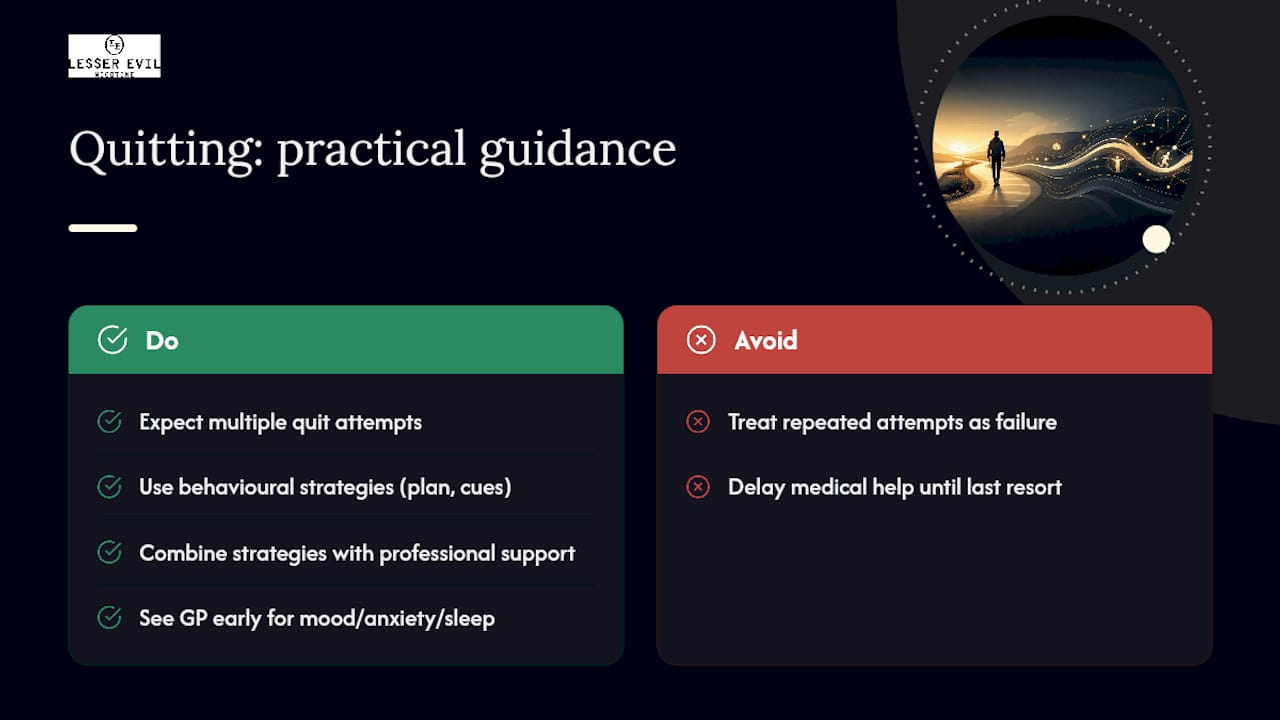
Most people who eventually stop smoking or vaping tried, and stopped trying, more than once first. That’s not failure, it’s just how habit change usually goes. The brand is positioned around harm reduction for adults who use nicotine, not judgement about how many attempts it takes.
Combine behavioural strategies with professional support where it makes sense. If low mood, anxiety, or sleep problems are dragging on, a GP or a smoking-cessation service is worth involving early, not as a last resort.
Where the Lesser Evil Oral Mister fits into all this
If you’re vaping and want to breathe in less vaporised chemical while cutting down how much nicotine you’re actually taking, the Lesser Evil Oral Mister is a factual alternative worth knowing about. It’s a sublingual nicotine gel, absorbed under the tongue rather than inhaled, so there’s no vapour to breathe in and no battery involved, which also means no e-waste. It comes in Peppermint, Black Grape, and Green Apple, made with natural flavours and natural sweeteners rather than tobacco.
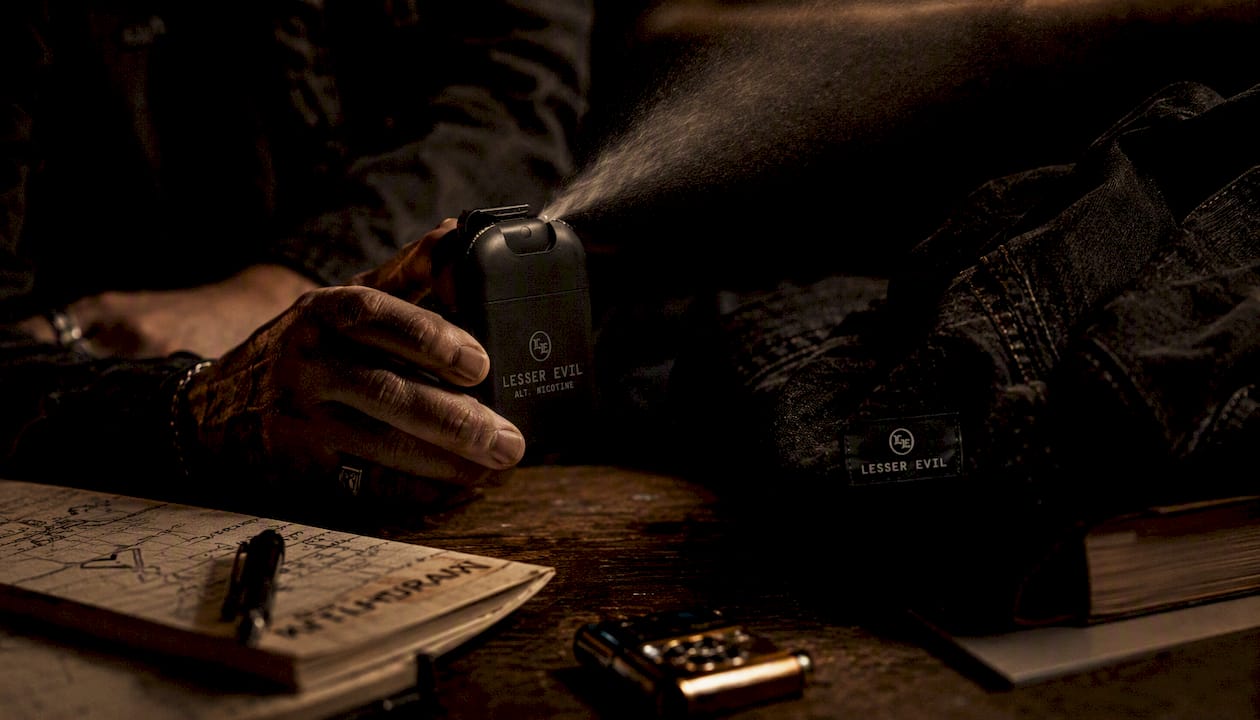
To be clear: this is a consumer product, not a nicotine replacement therapy or medicine, and it isn’t sold as a treatment for anything. It’s simply another route for adults who want to swap out vaping or smoking for something that doesn’t involve inhaling anything. If your pattern of use is built around the ritual of vaping, whether that’s at your desk, on a work break, or during a commute, our guide on managing cravings at work walks through how a gel format slots into those specific moments. Head to the Lesser Evil Oral Mister page to see flavours, pricing, and how the dosing works before you decide if it’s right for you.
This article is general information, not a substitute for advice from a qualified doctor. Consult a qualified healthcare professional about your own circumstances before acting on anything here.
Sources
- Nicotine Withdrawal - PMC
- Tips for quitting: Withdrawal fact sheet — National Cancer Institute (NCI)
- Managing nicotine withdrawal symptoms — NHS
- Nicotine dependence — Mayo Clinic