

Common nicotine myths debunked: what the evidence says

Nicotine is the addictive substance in tobacco, but it is not identified by major health bodies as the primary cause of smoking-related cancer. That distinction matters enormously for how you think about risk. NHS Inform is clear: the real damage comes from combustion products, tar, and carbon monoxide, not nicotine itself. MD Anderson echoes this, noting that nicotine’s short-term stimulant effects are real but transient, and that addiction risk, not direct toxicity, is nicotine’s main health concern.
Three things to hold onto as you read:
- Nicotine is highly addictive. That is not a myth.
- Combustion, not nicotine, drives most smoking-related cancer and lung disease.
- Products that deliver nicotine without burning tobacco carry a different, generally lower risk profile, though none are risk-free.
Table of Contents
- Common nicotine myths debunked, one by one
- Why do these myths about tobacco keep spreading?
- What the evidence actually says about nicotine and health
- How do nicotine-containing products actually differ?
- How to spot nicotine misinformation before it fools you
- Key takeaways
- A note from Luke McLeod
- Useful sources and further reading
- Lesser Evil Nicotine: a different way to get your nicotine
Common nicotine myths debunked, one by one
1. Nicotine causes cancer
The myth: Nicotine is the carcinogen in cigarettes.
The reality: Nicotine is not considered a primary carcinogen in humans. Cigarette smoke contains over 7,000 chemicals produced by combustion, including 70 known cancer-causing agents. Nicotine causes addiction; it is the tar, carbon monoxide, and other combustion by-products that drive cancer risk.
Takeaway: Conflating nicotine with carcinogens is one of the most damaging pieces of nicotine misinformation around.
2. Nicotine relieves stress
The myth: Smoking calms you down.
The reality: NHS Inform explains that people who do not smoke typically report lower overall stress levels than those who do. The perceived relief is nicotine restoring your baseline, not genuinely reducing stress. You feel calmer because you were in mild withdrawal, not because nicotine is a stress remedy. More on the nicotine and stress relationship if you want the full picture.

Takeaway: The stress-relief effect is a loop, not a benefit.
3. Light cigarettes are safer
The myth: Switching to “mild” or “light” cigarettes cuts your health risk.
The reality: There is no meaningful evidence that light cigarettes reduce harm. Research shows smokers compensate by inhaling more deeply or smoking more cigarettes, negating any machine-measured yield difference. NHS Inform confirms that only complete cessation demonstrably reduces smoking-related disease risk.
Takeaway: “Light” is a marketing label, not a health claim.
4. Vaping is just as harmful as smoking
The myth: E-cigarettes are no better than cigarettes.
The reality: Vaping heats liquid and you inhale the vapour; there is no combustion, so the tar and carbon monoxide produced by burning tobacco are absent. That does not make vaping risk-free, and long-term data are still evolving. But equating it with smoking ignores the mechanism that causes most smoking-related disease. See oral nicotine vs smoking for a breakdown of what actually differs.
Takeaway: Different delivery, different risk profile. Not the same thing.
5. Nicotine is harmless on its own
The myth: Strip out the tobacco and nicotine is fine.
The reality: Nicotine is not harmless. It is highly addictive, raises heart rate and blood pressure, and carries real risks during pregnancy and for adolescent brain development. MD Anderson notes that any short-term stimulant effects are outweighed by addiction-related harms. The point is not that nicotine is safe; it is that nicotine’s harms are distinct from combustion harms.
Takeaway: Addictive and cardiovascularly active. Not something to be casual about.
6. Non-inhalation products are just as harmful as smoking
The myth: Pouches, gums, and oral nicotine products carry the same risk as cigarettes.
The reality: Removing combustion removes the primary driver of smoking-related cancer and lung disease. Non-combustible delivery is not risk-free, but the evidence base for combustion-related harm is far stronger than for oral or transmucosal nicotine. The non-inhalation nicotine methods guide covers the practical differences.
Takeaway: Route of delivery changes the risk equation significantly.
7. Secondhand smoke is just annoying, not dangerous
The myth: It bothers non-smokers but does not really harm them.
The reality: NHS Inform cites a 20–30% increased risk of lung cancer or stroke for non-smokers exposed to secondhand smoke long-term. There is no safe level of secondhand smoke exposure.
Takeaway: Passive exposure is a genuine health risk, not a minor irritant.
Why do these myths about tobacco keep spreading?
Nicotine misinformation has legs for several reasons, and most of them are structural rather than accidental.
- Conflating addiction with toxicity. People hear “addictive” and assume “toxic in the same way.” They are related but not the same thing.
- Tobacco industry messaging. Academic reviews document how the industry used descriptors like “light” and “mild” to imply reduced harm without evidence.
- Survey wording. Rutgers research shows that changing how a question is phrased can shift correct responses from 10% to 80%. The public’s understanding of nicotine is heavily shaped by how the question is asked.
- Health reporting shorthand. Headlines often say “nicotine” when they mean “smoking,” collapsing a crucial distinction into a single word.
The consequence is real: public health researchers warn that conflating nicotine with combustion harms can deter people who smoke from switching to lower-risk alternatives.
Pro Tip: When you see a headline about nicotine, swap the word “nicotine” for “smoking” and check if the story still makes sense. If it does, the journalist probably meant smoking, not nicotine specifically.
What the evidence actually says about nicotine and health
The core distinction is this: cigarette smoke contains over 7,000 chemicals from combustion, including tar and carbon monoxide. Those are the primary drivers of cancer and cardiopulmonary disease, not nicotine itself. Nicotine’s direct harms are real but different in kind.
| Health concern | What the evidence says | Source |
|---|---|---|
| Cancer risk | Combustion products, not nicotine, are the primary carcinogens | NHS Inform / harmreduction.org |
| Cardiovascular effects | Nicotine raises heart rate and blood pressure; risk is separate from combustion | MD Anderson |
| Secondhand smoke | 20–30% increased lung cancer or stroke risk for long-term non-smoker exposure | NHS Inform |
| Pregnancy and fetal development | Nicotine poses risks to fetal development; no safe level in pregnancy | NHS Inform |
| Adolescent brain development | Nicotine exposure during development carries neurological risk | PMC research |
| Stress relief | Perceived relief is withdrawal restoration, not genuine stress reduction | NHS Inform |
| Cognitive effects | Short-term alertness effects are transient; no proven long-term benefit | MD Anderson |
Caveats that matter: nicotine is not safe for pregnant people, young people, or those with cardiovascular conditions. The argument for harm reduction is not that nicotine is harmless. It is that combustion adds a separate, severe layer of risk on top.
How do nicotine-containing products actually differ?
Not all nicotine products are the same. Here is a practical, non-promotional overview of the main categories.
- Cigarettes (combustion): Burn tobacco, producing tar, carbon monoxide, and thousands of chemical by-products. The highest-risk category by evidence.
- E-cigarettes/vapes: Heat liquid to produce vapour; no combustion, so no tar or carbon monoxide. Long-term data still evolving. You still inhale an aerosol. For a comparison of snus versus vaping, the pouch industry has useful context.
- NRT (nicotine replacement therapy): Regulated medicinal products (patches, gums, lozenges, mouth sprays). Deliver nicotine without combustion or inhalation. Well-evidenced safety profile relative to smoking.
- Oral nicotine (sublingual/oral mucosa): Delivered under the tongue or via the oral mucosa. No inhalation, no combustion, no e-waste in battery-free formats. Evidence base for newer products is still developing. The oral nicotine products breakdown covers the practical attributes in detail.
Safety caveats apply across all categories: pregnancy, youth, and cardiovascular conditions warrant particular caution regardless of product type. Follow NHS guidance for your specific situation.
How to spot nicotine misinformation before it fools you
A quick checklist for evaluating any claim you read about nicotine:
- Check the source. Is it peer-reviewed, NHS, or a major cancer centre? Or is it a social media post or a brand’s marketing page?
- Look for funding disclosures. Who paid for the study? Tobacco or vaping industry funding does not automatically invalidate research, but it warrants scrutiny.
- Does the claim conflate smoking with nicotine? If a headline says “nicotine causes X” but the study was done on smokers, the cause may be combustion, not nicotine.
- Short-term or long-term? A short-term stimulant effect is not the same as a long-term health benefit.
- Animals or humans? Animal studies are useful but do not translate directly to human outcomes.
Worked example: “Nicotine linked to heart disease.” Apply the checklist. Was the study on smokers or on isolated nicotine? If smokers, carbon monoxide and tar are confounders. Is the effect acute (raised heart rate) or chronic disease? Peer-reviewed or press release? That one headline could mean several different things depending on the answers.
Pro Tip: Remember that question wording changes everything. Rutgers found that rephrasing a survey question moved correct responses from 10% to 80%. Apply the same scepticism to how a claim is framed, not just what it says.
Key takeaways
Nicotine is addictive and not without risk, but combustion is the primary driver of smoking-related cancer and disease — and that distinction shapes every sensible harm-reduction decision.
| Point | Details |
|---|---|
| Nicotine vs combustion | Combustion products, not nicotine, are the primary cause of smoking-related cancer. |
| Addiction is real | Nicotine is highly addictive regardless of delivery method; that risk does not disappear. |
| Secondhand smoke risk | NHS Inform cites a 20–30% increased lung cancer or stroke risk for long-term passive exposure. |
| Pregnancy and youth | Nicotine carries specific risks for fetal development and adolescent brains; no safe level exists. |
| Lesser Evil Oral Mister | A tobacco-free, battery-free sublingual nicotine gel; no inhalation, no combustion by-products. |
A note from Luke McLeod
The thing that frustrates me most about nicotine misinformation is how much damage it does to people trying to make a genuinely better choice. When someone who smokes hears “nicotine causes cancer” and concludes that switching to a non-combustible product is pointless, that is a myth with real consequences. The evidence does not support that conclusion. NHS Inform, MD Anderson, and the peer-reviewed literature are consistent: combustion is the primary villain.
That does not mean nicotine gets a clean bill of health. It is addictive, it affects the cardiovascular system, and it has no place near pregnancy or adolescent development. But the public health case for distinguishing nicotine from smoke is strong, and it is being undermined by sloppy language and, historically, by deliberate industry obfuscation.
Lesser Evil Nicotine exists in this space as a consumer product, not a medicine. The Lesser Evil Oral Mister is a sublingual nicotine gel: tobacco-free, battery-free, natural flavours, no inhalation. It is a factual alternative to products that involve combustion or vapour inhalation. For health decisions, follow NHS guidance. For the facts about nicotine, follow the evidence.
Disclaimer: Lesser Evil Nicotine is a consumer product, not an NRT or medicine. Nothing in this article constitutes medical advice. Consult NHS guidance or a qualified health professional for decisions about your own nicotine use.
Useful sources and further reading
- NHS Inform: Myths around stopping smoking — The primary UK source for stress-relief myths, light cigarette myths, and secondhand smoke risk figures. Start here for quick, authoritative answers.
- MD Anderson: Debunking the health benefits of nicotine — Covers short-term stimulant effects versus long-term addiction risk. Useful for the cognitive and stress-relief myths.
- PMC: The dirty dozen — myths that undermine tobacco control — Academic review of how tobacco myths are propagated and sustained. Essential for understanding the historical and industry context.
- Rutgers University: Most Americans still get nicotine wrong — Demonstrates how survey wording shapes public understanding; key for the misinformation-spread section.
- harmreduction.org: Nicotine fact sheet — Concise summary of nicotine’s carcinogenicity status and harm-reduction context.
Recommended reading order: Start with NHS Inform for UK-specific guidance, then MD Anderson for the science of nicotine’s effects, then the PMC review if you want the historical and policy depth.
Lesser Evil Nicotine: a different way to get your nicotine
If you have read this far, you understand the distinction between nicotine and combustion. You know that how you take nicotine matters.
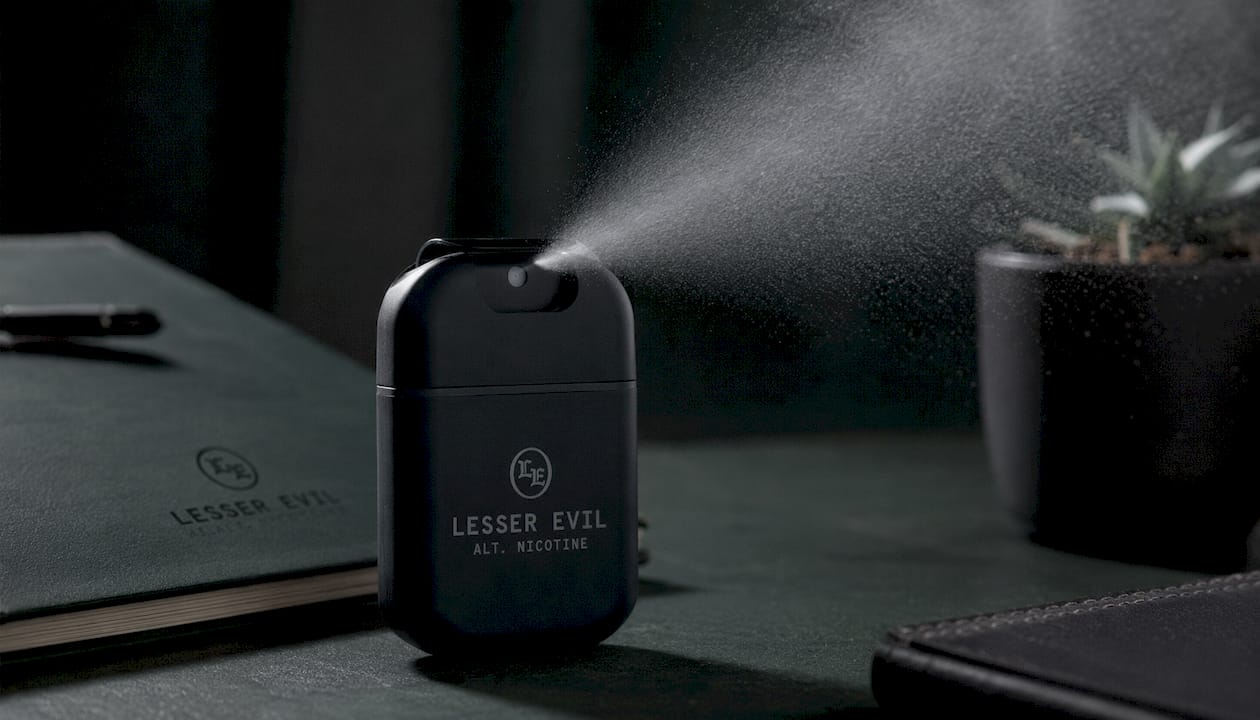
The Lesser Evil Oral Mister is a sublingual nicotine gel that sits under your tongue. No burning. No vapour. No battery, no e-waste. Just nicotine delivered via the oral mucosa, in Peppermint, Black Grape, or Green Apple. It is tobacco-free and made with natural flavours and sweeteners. No rubbish in your body.
It is built for the adult who wants to use nicotine without breathing anything in. Not a medicine, not a cessation programme. Just a cleaner way to do what you are already doing. If that sounds like the right fit, explore the Oral Mister and see what Lesser Evil Nicotine is about.