

Vaping and Cardio: 15% Lower VO2peak, Slower Recovery for Exercisers

Vaping raises your heart rate and blood pressure the moment you inhale, and the evidence linking regular use to lower measured fitness is now hard to dismiss. A 2026 study found young adults who vape or smoke had roughly 15% lower peak exercise capacity and VO2peak than never-users. In plain terms, that translates to workouts that feel harder, recovery that drags, and a ceiling on performance that has nothing to do with how hard you train.
TL;DR:
- Vaping can lead to a 15% reduction in peak exercise capacity and VO2peak, which can significantly affect endurance performance even in healthy young adults.
- Acute vaping sessions cause immediate increases in heart rate and blood pressure, along with decreased heart rate variability and exercise tolerance, within hours of use.
- Nicotine exposure from vaping impairs vascular function by causing endothelial dysfunction and reducing arterial dilation, limiting blood flow to muscles during exercise.
- A 15% fitness decline from vaping could shift sustainable training efforts noticeably, making moderate efforts feel harder and recovery slower.
- People with existing cardiovascular conditions, older adults, and those doing high-intensity training should be especially cautious, as vaping adds extra cardiovascular strain regardless of fitness level.
Table of Contents
- What does the research say about vaping and cardiovascular fitness?
- How vaping makes your heart and lungs work against you
- What do the key studies on vaping and exercise capacity actually show?
- How much would a 15% fitness drop actually cost your training?
- Who needs to take these cardio effects most seriously?
- A simple checklist for exercisers who vape
- Who wrote this and why does it matter here?
- Can you vape and take heart medication safely?
- What actually matters here, and what the fitness world gets wrong
- A factual look at the Lesser Evil Oral Mister
- Sources
- FAQ
What does the research say about vaping and cardiovascular fitness?
The strongest data point comes from a 2026 study out of Manchester Metropolitan University, and it should worry anyone who vapes and also trains seriously. Researchers put young adults through cardiopulmonary exercise testing (CPET), the gold-standard lab test that measures how much oxygen your body actually uses at peak effort. Vapers and smokers averaged around 180 watts of peak power output, against roughly 219 watts for never-users. Their VO2peak sat at 35.1 mL/kg/min, compared with 41.2 mL/kg/min in the non-vaping, non-smoking group.
That gap is not trivial. VO2peak is the single best marker of aerobic fitness we have, and a 15% shortfall is the kind of difference you would expect between someone who trains four times a week and someone who has barely trained at all. Except in this study, both groups were young and outwardly healthy. The lead researchers pointed out that this fitness loss showed up before any of the standard lung function tests turned abnormal, meaning the damage was happening in the vascular and muscular systems, not just the airways.
Acute effects show up even faster than that. A large product-challenge study measured what happens in the minutes and hours after a single session of vaping. It found clinically relevant increases in blood pressure and heart rate, a drop in heart rate variability (a marker of how well your nervous system balances stress and recovery), and a small fall in FEV1, the volume of air you can forcefully exhale in one second. Exercise tolerance dropped too, with participants managing fewer METs (a standard unit for exercise intensity) on treadmill testing after use.
A separate systematic review pulled these acute findings together across multiple studies and found a consistent pattern:
- Heart rate rose by a mean of 11.3 beats per minute after acute e-cigarette exposure compared with non-use.
- Systolic blood pressure increased by roughly 12.9 mmHg on average in the same comparison.
- Long-term disease links (heart attack, stroke) were less conclusive, though endothelial changes were already visible.
Individually each is a lab statistic. Together, they describe a cardiovascular system working harder to do less.
Where the evidence gets genuinely uncertain is long-term disease outcomes. Vaping is younger than smoking as a habit, so researchers have not yet tracked decades of outcomes the way they have with cigarettes. What is measurable, right now, in healthy young adults, is a fitness deficit that shows up on a bike or a treadmill within a single testing session.
How vaping makes your heart and lungs work against you
Nicotine is a sympathomimetic drug, which is a technical way of saying it flips on your body’s fight-or-flight response. Every session, your adrenal system releases catecholamines that spike heart rate and blood pressure and blunt heart rate variability, the very system your body relies on to recover between hard efforts.
That sympathetic surge does not stay contained to the moment you vape. Reduced heart rate variability lingers for hours, which is one reason vapers so often report their heart rate “won’t come down” during interval sessions, even when their perceived effort matches previous, easier workouts.
The vascular story is arguably more important for anyone who trains. A major cardiovascular review from the European Society of Cardiology found that nicotine and aerosol by-products drive endothelial dysfunction, oxidative stress and sympathetic activation, regardless of whether combustion is involved. The endothelium is the thin layer of cells lining every blood vessel, and it is what allows vessels to widen and deliver more oxygenated blood when muscles demand it during exercise.

Secondary coverage of the MMU research measured this directly using flow-mediated dilation (FMD), a test of how well an artery widens in response to increased blood flow. Vapers and smokers showed FMD values around 4.5 to 4.7%, against roughly 8.1% in never-users. Less arterial widening means less blood reaching working muscle at the exact moment you need it most, which is the mechanical link between vascular health and the watts you can actually produce on a bike.
Three more pathways worth understanding:
- Airway and ventilatory efficiency: reduced FEV1 and mild airway resistance after use mean each breath does slightly less work, forcing your ventilatory system to work harder for the same oxygen exchange.
- Skeletal muscle and lactate: CPET data shows earlier lactate accumulation and higher blood lactate at submaximal workloads in vapers, meaning muscles hit their “burn” threshold sooner.
- The double hit: exercise physiologists describe this as cardiac chronotropic impairment (the heart cannot raise its rate efficiently) paired with reduced peripheral oxygen extraction, which together explain why fatigue often arrives well before the finish line.
Pro Tip: If a session that used to feel like a 6 out of 10 on perceived effort suddenly feels like an 8, don’t assume it’s a bad day. Track it against how recently you vaped. The pattern often repeats.
What do the key studies on vaping and exercise capacity actually show?
Three pieces of research carry most of the weight in this area, and it is worth knowing exactly what each one measured before drawing conclusions from the headline numbers.
The Manchester Metropolitan University study, published through ERJ Open Research, used CPET on young adults split into never-users, vapers, and smokers. This is the most direct test available: participants exercised to genuine peak effort on a monitored ergometer while researchers recorded oxygen uptake, power output, and cardiovascular response throughout. The topline results, again, were markedly lower peak watts, and VO2peak of 35.1 versus 41.2 mL/kg/min. Vapers and smokers showed near-identical fitness deficits, which is itself notable. It suggests the aerosol and nicotine route, not just combustion, carries a measurable cost.
The acute product-challenge study took a different approach entirely. Rather than comparing habitual users against never-users, it measured the same individuals before and after a single controlled session of ENDS (electronic nicotine delivery system) use. That design strips out a lot of the confounding that plagues habitual-use comparisons, because each person acts as their own control. The result was a clear acute signature: blood pressure and heart rate both rose, heart rate variability fell, and FEV1 dipped, all within one session.
The systematic review and meta-analysis in Heart pooled data across many smaller acute studies, which is exactly the kind of aggregation that increases confidence in a mean effect size even when individual trials are modest. Its numbers, an 11.3 beat-per-minute rise in heart rate and a 12.9 mmHg rise in systolic blood pressure, sit close to what the challenge study found independently, which is a good sign the effect is real rather than a quirk of one lab’s methodology.
Where the evidence is strong versus where it’s still thin:
| Evidence type | What it shows | Confidence level |
|---|---|---|
| Acute HR/BP changes | Rise within minutes of a single session | High, replicated across studies |
| Peak VO2/watts deficit | ~15% lower in habitual vapers/smokers | High for this age group, needs more replication |
| Endothelial dysfunction (FMD) | Reduced vessel dilation in habitual users | Moderate, smaller sample sizes |
| Long-term disease risk | Association with cardiovascular disease | Still developing, causation not established |
None of these studies proves vaping causes every fitness deficit measured. Habitual-use comparisons can’t fully rule out that people who vape also differ in other ways, like sleep, diet or prior smoking history, that independently affect fitness. The acute challenge studies get around that problem by using each person as their own control, which is exactly why they carry so much weight despite smaller sample sizes.
How much would a 15% fitness drop actually cost your training?
Numbers on a lab printout mean little until you translate them onto a road, a track, or a gym floor. A 15% cut in VO2peak or peak watts, the kind of gap seen between vapers and never-users, commonly shifts your sustainable training zone down by a whole band. A runner holding 5:00/km at threshold might find that pace now sits closer to a 5:35/km effort. A cyclist used to holding 220 watts for a 20-minute test might find their genuine sustainable output closer to 185 to 190 watts.
Here’s how to actually work with that, rather than just feel frustrated by it:
- Stop chasing old numbers. If your usual paces and watts now feel disproportionately hard, that is data, not weakness. Recalibrate your zones rather than grinding through sessions at the wrong intensity.
- Push high-intensity intervals later in the day. Acute nicotine effects on heart rate and blood pressure are strongest in the hours immediately following use, so scheduling maximal efforts well clear of that window reduces the chance you’re training on an artificially compromised system.
- Extend your warm-up. Reduced ventilatory efficiency means your body takes longer to find its rhythm. A longer, more gradual warm-up gives lungs and heart rate more time to settle before you ask for peak output.
- Track heart rate recovery, not just heart rate. How quickly your pulse drops in the 60 seconds after a hard effort is a cleaner marker of cardiovascular strain than the number itself. A slower recovery week on week is worth paying attention to.
- Use RPE alongside your watch. Perceived exertion (RPE) tends to rise faster than heart rate in vapers, according to physiologists studying the peripheral oxygen extraction side of this of this effect, so a session that “feels” harder than your heart rate suggests is worth listening to.
If you’re rebuilding a training plan around a genuine baseline shift, tools that help you dial in effort by heart rate zone rather than pace alone are worth using. Even something as simple as structuring interval sessions around BPM-matched training zones can help you train at the intensity your body is actually capable of right now, not the one from six months ago.
Who needs to take these cardio effects most seriously?
Anyone with existing cardiovascular disease should treat vaping’s acute effects on heart rate and blood pressure with real caution. Nicotine-containing products are widely discouraged for this group in British Heart Foundation guidance, and the sympathetic strain that a healthy 25 year old shrugs off can be a genuine problem for someone with a compromised heart. Older adults and anyone doing very high-intensity or competitive training sit in a similarly cautious bracket, simply because their margin for extra cardiovascular load is smaller.
Here’s the part that catches fit people off guard: being young and lean does not cancel out the effect. The damage was happening at a vascular and muscular level, invisible to a standard health check.
Watch for these signs that warrant an actual clinical conversation rather than a training log adjustment:
- Chest pain or tightness during or after exercise, at any intensity.
- Dizziness or lightheadedness during sessions that didn’t previously trigger it.
- Fainting, or feeling close to it, during exertion.
- Palpitations, a racing or irregular heartbeat that feels out of proportion to effort.
- Recovery that stays unusually poor for weeks, not just a single bad session.
None of these are symptoms to push through and monitor casually. They are the threshold where self-tracking stops being enough.
A simple checklist for exercisers who vape
Getting a clear read on where you actually stand doesn’t require expensive testing. Start with what you can measure yourself, then know when it’s time to bring in a professional.
- Track resting heart rate every morning for two weeks. A rising baseline, even a few beats per minute, often shows up before performance drops feel obvious.
- Run a simple submaximal test weekly. A fixed effort, like 20 minutes at a set pace or wattage, gives you a consistent way to see if your heart rate for that same effort is creeping up over time.
- Log RPE alongside every hard session. Compare it against your heart rate and pace data. A growing gap between how hard something feels and what your metrics say is an early signal worth taking seriously.
- Avoid maximal intervals within a few hours of vaping. Acute sympathetic effects and reduced heart rate variability are strongest in this window, so you’re training on compromised numbers if you push hard here.
- Build your aerobic base before chasing intensity. Progressive, steady aerobic work supports the vascular adaptations that high-intensity intervals depend on, and it’s a more forgiving place to train while your cardiovascular system is under any added strain.
- Ask for CPET or a vascular assessment if red flags appear. Cardiopulmonary exercise testing, the same method used in the MMU research, gives a genuine measure of VO2peak and cardiovascular response, and clinicians increasingly ask about vaping history as standard practice before this kind of test.
Pro Tip: Bring your training log, not just your symptoms, to any clinical appointment. A few weeks of resting heart rate, RPE, and session data gives a clinician far more to work with than a single bad day.
If you’re weighing product alternatives as part of adjusting your nicotine use around training, that’s a separate decision from the testing and training steps above, and worth exploring in its own right further down this article.
Who wrote this and why does it matter here?
This piece was researched and written by Luke McLeod, drawing on peer-reviewed cardiopulmonary exercise testing data, systematic reviews, and cardiology commentary rather than anecdote. The article references a tobacco-free oral nicotine gel product available in Peppermint, Black Grape, and Green Apple, applied under the tongue and requiring no battery. None of that is a health claim, and nothing in this article should be read as one.
This article covers the research on vaping and exercise because this topic is frequently questioned by readers, and because the evidence on VO2peak, heart rate, and vascular function merits a clear explanation, not a scare story or a sales pitch disguised as science. Weigh the studies on their own terms. Then decide what fits your training and your habit.
Can you vape and take heart medication safely?
Common cardiovascular medications and vaping can interact in ways that are easy to overlook. Beta-blockers, prescribed to control heart rate and blood pressure, work against exactly the mechanism nicotine activates, meaning the two can end up pulling your cardiovascular system in opposite directions during a session. That doesn’t cancel nicotine’s effect. It just makes the net result harder to predict from how you feel.
Blood pressure medications carry a similar tension. If you’re on antihypertensives and vaping regularly, acute BP spikes of the kind measured in challenge studies are happening on top of a system already being medically managed, which can mask how well your medication is actually working when you check readings at rest.
Anticoagulants and antiplatelet drugs, prescribed after clotting events or for atrial fibrillation, sit in a different category. The concern here is less about acute heart rate and more about the endothelial dysfunction described earlier, since a vascular lining that’s already under strain from nicotine exposure adds another variable to a system these medications are trying to protect.
None of this means avoiding one or the other automatically. It means anyone on cardiovascular medication who also vapes should raise it directly with their prescriber, particularly before any exercise programme that pushes toward maximal effort.
What actually matters here, and what the fitness world gets wrong
The conventional line on vaping and exercise still treats it as a smoking-adjacent lung issue. That framing misses the point. The MMU data shows the deficit sitting in vascular function and VO2peak, not lung tests, in people whose spirometry looked entirely normal. If you’re only watching for a cough or shortness of breath, you’ll miss the actual signal.
The other overrated idea is that fitness offsets risk. It doesn’t, not for this. What actually matters is tracking the numbers that reflect vascular and cardiac strain: resting heart rate trends, heart rate recovery, and how your RPE compares to your actual output. Prioritise those over how fit you assume you are, and you’ll catch a real change long before a lab test would.
— Luke McLeod
A factual look at the Lesser Evil Oral Mister
If part of your interest in this article is about reducing how much vapour you’re inhaling day to day, it’s worth knowing what an oral alternative actually involves. The Lesser Evil Oral Mister is a tobacco-free nicotine gel, applied under the tongue rather than inhaled, so there’s no vapour to breathe in and no battery involved in using it.
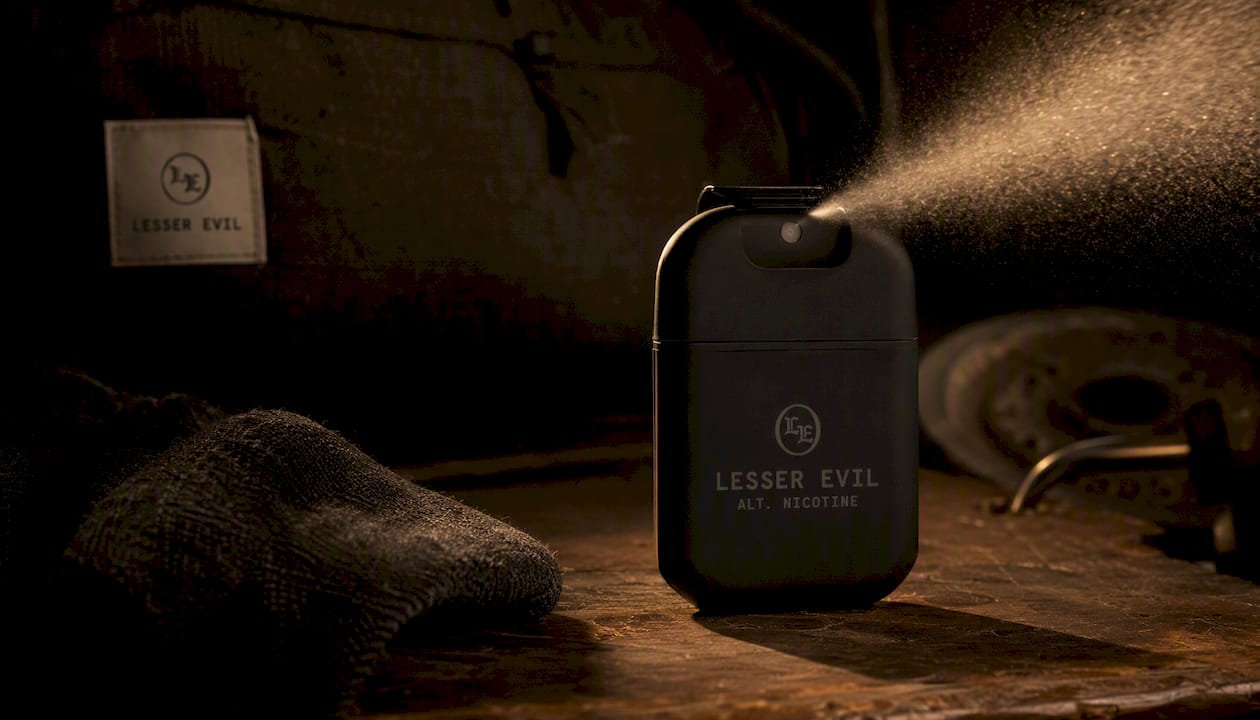
It comes in three natural flavours, Peppermint, Black Grape, and Green Apple, formulated with natural sweeteners rather than the synthetic mixes common in vape liquid. This is a product page, not medical guidance, and nothing here is a claim that the gel treats any condition or helps you quit anything. Someone who trains regularly and wants a more discreet way to manage nicotine without inhaling aerosol between sets might simply prefer that the dosing sits under the tongue instead of in a cloud they have to breathe. If you’re curious how the timing and use profile compares to a vape session, the breakdown on oral nicotine versus vaping walks through it in more detail. Head to the product page to see current flavours and pricing.
This article is general information, not a substitute for advice from a qualified doctor. Consult a qualified healthcare professional about your own circumstances before acting on anything here.
Sources
- Study finds vaping or smoking can reduce fitness in young people by 15% | Manchester Metropolitan University
- Cardiovascular and pulmonary responses to acute use of electronic nicotine delivery systems and combustible cigarettes in long-term users (PMC)
- Cardiovascular health effects of vaping e-cigarettes: a systematic review and meta-analysis | Heart
FAQ
Can you vape and still be fit?
You can build genuine fitness while vaping, but the evidence suggests you’re training with a handicap. Studies show roughly 15% lower VO2peak and peak power in vapers compared with never-users of the same age.
Can vaping lower your VO2 max?
Yes. The MMU study measured VO2peak at 35.1 mL/kg/min in vapers and smokers against 41.2 mL/kg/min in never-users, a gap researchers linked to vascular and muscular changes rather than lung damage alone.
Can a cardiologist tell if you vape?
Not from a routine check alone, but specific tests can reveal signs. Reduced flow-mediated dilation and abnormal heart rate variability, both measurable in a cardiology assessment, are patterns associated with regular nicotine use, and clinicians increasingly ask about vaping history before CPET or vascular testing.
Is vaping bad for your cardiovascular system?
Acute use raises heart rate by a mean of 11.3 beats per minute and systolic blood pressure by around 12.9 mmHg compared with non-use. Long-term disease risk is still being studied, but the acute strain on heart rate, blood pressure, and vessel function is well established.
Does vaping affect running or workout performance right away?
Yes, effects can appear within a single training session. Acute increases in heart rate and blood pressure, alongside reduced heart rate variability and small drops in FEV1, have been measured within hours of one use session, often showing up as harder-feeling efforts and slower recovery.