

First 14 Days: Quit Vaping Timeline for Adults, Hour by Hour

Symptoms usually start within 4 to 24 hours of your last vape and hit hardest around days 2 to 3. Most of the physical stuff, headaches, irritability, the works, tends to ease off over the following 2 to 4 weeks. The mental side, the urge to reach for something with your hand, that can hang around a lot longer. Get through the initial few days and the worst of the chemistry is behind you.
TL;DR:
- Withdrawal symptoms typically peak around days 2 to 3, with physical effects like headaches and irritability easing within one to two weeks.
- Habit-driven urges, such as hand-to-mouth routines, can persist for months and are often triggered by specific situations rather than chemical dependence.
- Cold turkey methods focus on the first 72 hours for rapid dependence removal, while tapering gradually reduces reliance over several weeks based on individual circumstances.
- Higher nicotine concentrations in salt e-liquids often lead to a more intense withdrawal peak, especially for heavy users, compared to lower-strength freebase options.
- Managing triggers and building new routines early in the quitting process significantly improves long-term success, regardless of vaping habits or device types.
Table of Contents
- Quit vaping timeline: hour by hour and day by day
- What symptoms should you expect, and how long do they last?
- What coping strategies actually work?
- When should you get professional help?
- Who wrote this and why it matters
- What happens in months two to six?
- Does the timeline differ for nicotine salts versus regular e-liquids?
- How does your vaping habit affect your quit timeline?
- What are the psychological stages of quitting vaping?
- Our take: the plan matters more than the willpower
- A discreet alternative worth knowing about
- Sources
Quit vaping timeline: hour by hour and day by day
Here’s the bit most guides skip: what actually happens, when. Nicotine has a short half life, so your body starts noticing its absence fast. Clinical summaries from the Cleveland Clinic indicate that withdrawal symptoms typically begin within several hours and generally peak within a few days. That 72 hour mark is the same pharmacological turning point flagged in hour-by-hour quit timelines, where nicotine has largely cleared your bloodstream.
- Hour 0 to 24. This is prep time, not survival time yet. Bin the pod, charger, and anything that makes vaping easy. Tell one person what you’re doing so you’ve got backup. Sort your fridge with cold water, sparkling water, whatever keeps your hands and mouth busy.
- Days 1 to 2. Restlessness, a flat mood, maybe a headache. Your sleep might already feel off. Nothing dramatic yet, but the itch to reach for the device is building.
- Days 2 to 3. Peak intensity. This is the 48 to 72 hour window everyone warns you about, and for good reason. Irritability spikes, focus drops, and cravings hit in waves rather than a constant hum. Get outside, move your body, and ride each wave out rather than fighting it head on.
- Days 4 to 7. The chemical fog starts lifting. What’s left is mostly habit: the hand-to-mouth motion, the “vape break” at your desk, the after-dinner hit. This is where your plan needs to shift from surviving symptoms to replacing routines.
- Days 8 to 14. Most people report a genuine turning point somewhere here. Sleep starts normalising, mood stabilises, and cravings become shorter and less frequent. This is momentum, not victory, so don’t get cocky.
- Weeks 3 to 4 and beyond. Physical symptoms should be largely gone by now. What remains is situational: stress, a pint at the pub, a stressful email. Protect the gains by staying alert to the specific moments that used to trigger a vape.
Pro Tip: Screenshot this list and keep it on your phone. When day three hits and you feel like rubbish, seeing “this is normal, this is the peak” written down helps more than you’d think.
What symptoms should you expect, and how long do they last?
Nobody gets the exact same list, but the patterns repeat often enough to plan around them.
- Headaches: common in the first 3 to 5 days, usually gone within a week.
- Increased appetite: can persist for several weeks as your body recalibrates without nicotine’s appetite-suppressing effect.
- Sleep disruption: worst in the first week, often settling by week two.
- Gastrointestinal changes: mild nausea or constipation in the early days for some people, rarely lasting beyond a week or two.
- Irritability and low mood: peaks around day 3, generally fading over 2 to 3 weeks.
- Concentration difficulties: frustrating in week one, but this is usually the first thing to improve.
Here’s the distinction that matters: chemical symptoms fade on a fairly predictable schedule. Habit-triggered urges don’t follow a calendar at all. A stressful meeting eight weeks in can trigger the exact same hand-to-mouth reflex you felt on day one, because your brain learned a routine, not just a chemical dependency.
What coping strategies actually work?
Cold turkey versus tapering isn’t a moral choice, it’s a practical one. Cold turkey front-loads the intensity into that 72 hour window but gets it over with fastest. Tapering, dropping your nicotine strength gradually over weeks as outlined in taper plan guidance, softens the peak but stretches out how long you’re still dependent on a device. If your job or home life can’t handle three rough days, taper. If you want it done fast, go cold.
- Control your environment. Remove the device, the charger, and anything that makes relapse a five-second decision.
- Plan distractions in advance. Walks, chewing gum, a fidget object, cold water. Decide before you need them.
- Protect your sleep. Withdrawal already disrupts it; caffeine after midday makes it worse.
- Map your triggers. Coffee, alcohol, driving, work breaks. Each one needs its own replacement action, decided ahead of time.
Pro Tip: Try the “ten minute delay” trick: when a craving hits, tell yourself you can vape in ten minutes if you still want to. Most urges lose their grip well before the timer runs out.
When should you get professional help?
Most of this is manageable on your own, but not all of it.
- Severe shortness of breath or chest pain needs medical attention immediately.
- Suicidal thoughts, psychosis, or symptoms that are rapidly worsening are not “normal withdrawal.” Contact a GP or emergency services.
- If low mood or anxiety feels unmanageable rather than just unpleasant, speak to a local mental health service.
- If you relapse, don’t spiral. Government health guidance is clear that relapse is common, and every nicotine-free day afterwards still counts.
Who wrote this and why it matters
Getting the timeline right isn’t about scaring people with worst-case symptoms. It’s about matching expectations to reality so day three doesn’t feel like failure when it’s actually exactly on schedule.
This piece was written by Luke McLeod, drawing on clinical withdrawal timelines and practical quit-day accounts rather than personal testing claims. Lesser Evil Nicotine is a premium oral nicotine brand preparing to launch, built around a sublingual gel used under the tongue rather than inhaled. It comes in Peppermint, Black Grape, and Green Apple. None of this is medical advice. If you have an existing health condition, talk to a clinician before changing how you use nicotine.
What happens in months two to six?
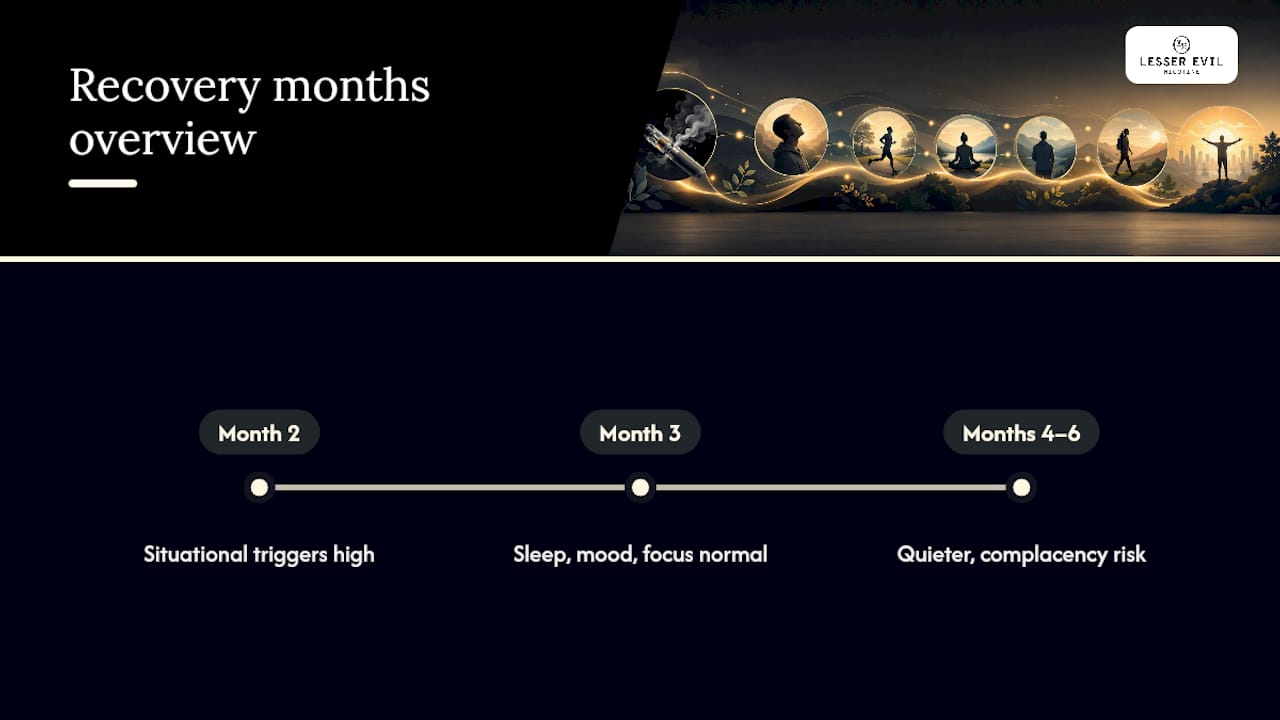
The first month gets all the attention, but relapse risk doesn’t disappear on day 31. Months two and three are often where routine changes catch people out: a work trip, a breakup, a stressful project, all classic relapse triggers precisely because the acute chemistry is long gone and people assume they’re “past it.”
By month three, most people report their sleep, mood, and concentration have normalised. What lingers is situational. A specific pub, a specific colleague who still vapes, a specific stress response. These are learned associations, and they don’t erase themselves on a schedule the way chemical withdrawal does.
Months four to six tend to be quieter, but complacency is its own risk. The habit loop that took years to build (hand reaches for pocket, mouth expects a hit) can resurface with almost no warning after a single stressful evening. Practical experience from people managing cravings in professional settings suggests the trigger-mapping work done in week one pays dividends here too. If you built a replacement routine for your 3pm work break back in week two, keep using it in month five. Don’t retire tactics just because the acute phase is over.
Does the timeline differ for nicotine salts versus regular e-liquids?
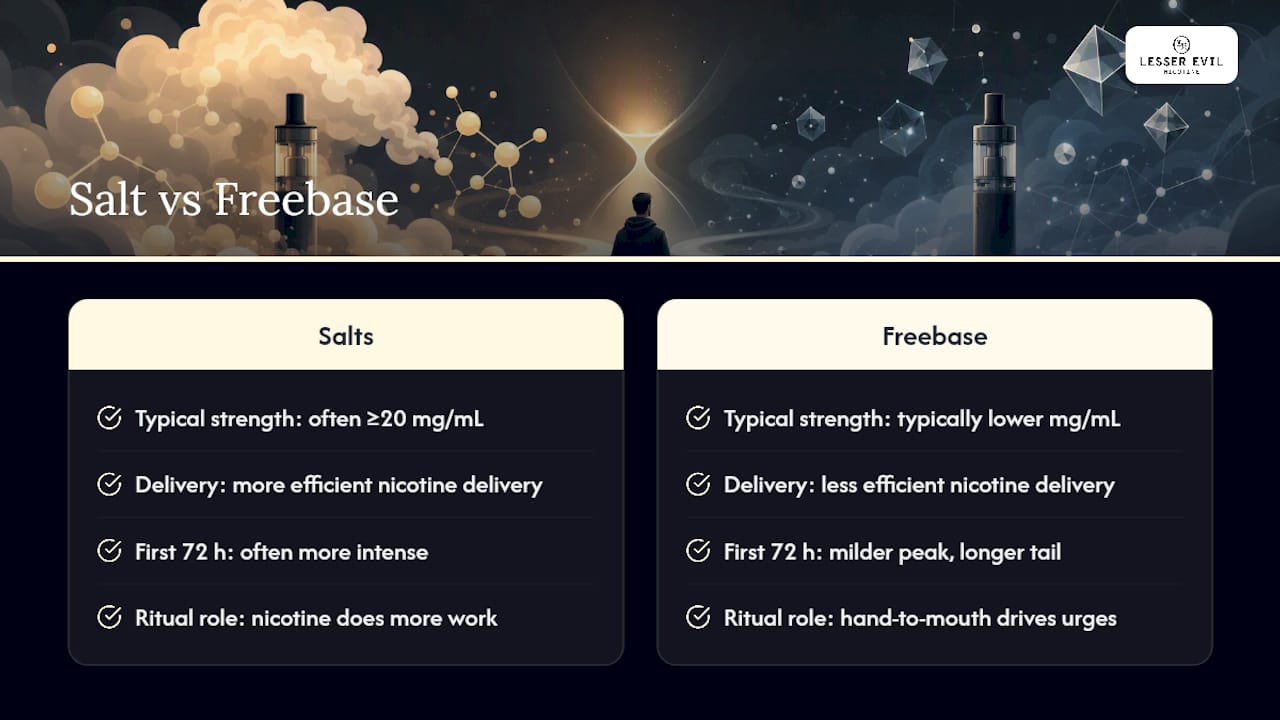
Yes, and it’s a distinction worth understanding before you set expectations. Nicotine salt e-liquids deliver nicotine more efficiently and at higher concentrations, often 20mg/mL or more, compared with freebase e-liquids typically sitting lower. Higher, more efficient dosing generally means your body has adapted to a steeper baseline, which can make the first 72 hours more intense for heavy salt users.
Freebase users, particularly those on lower strengths, sometimes describe a milder peak but a longer tail of habit-driven urges, possibly because the hand-to-mouth ritual (bigger devices, more frequent puffing) was doing more of the psychological work than the nicotine hit itself.
Neither pattern is universal. Someone vaping high-strength salts occasionally will likely have an easier time than someone vaping low-strength freebase constantly throughout the day. What matters more than the liquid type alone is total daily nicotine intake and how ingrained the physical ritual has become. If you’re unsure which category you fall into, look at your device type and mg/mL strength rather than guessing from how “strong” it felt.
How does your vaping habit affect your quit timeline?
Frequency and duration shape severity more than most people expect. Someone vaping every 20 minutes for three years is working with a very different nervous system than someone who picked up a disposable six months ago and vapes occasionally at parties.
Heavier, longer-term use generally means a sharper peak around that 48 to 72 hour mark and a longer tail of habit-driven urges afterwards, simply because there are more repetitions of the hand-to-mouth behaviour to unlearn. Lighter or more recent use often means a gentler physical peak, though the psychological habit can still be surprisingly stubborn if vaping became tied to specific situations, like driving or drinking.
Total daily nicotine intake matters more than how long you’ve technically been vaping. Someone with a two-year habit using a low-strength device sparingly may find the process easier than someone six months into constant, high-strength use. If your quit feels harder or easier than the timeline above suggests, frequency and strength are usually why, not some personal failing.
What are the psychological stages of quitting vaping?
The chemistry gets most of the attention, but the psychology is where most quit attempts actually succeed or fail. Motivation isn’t a straight line. It’s high in the first 24 hours (adrenaline and resolve), dips hard around day 3 to 5 when the novelty wears off and the difficulty sets in, then rebuilds slowly if you get through that trough.
Cravings follow a similar pattern to the physical timeline but on a longer arc. Early cravings are frequent and intense. By week two, they’re shorter but can still ambush you in specific situations. By month two or three, they’re often rare enough that people stop expecting them, which is precisely when an unexpected one catches people off guard.
Practitioner experience suggests days 3 to 5 mark a real crossover point, the moment habit cues start outweighing the chemical pull as the dominant relapse risk. Preparing specifically for that window, rather than treating the whole first month as one undifferentiated slog, tends to improve the odds of getting through it. Expect motivation to wobble. Plan for the wobble instead of being surprised by it.
Our take: the plan matters more than the willpower
Most advice on this topic treats quitting as a willpower contest. It isn’t. It’s a logistics problem dressed up as a personality test. The people who get through day three aren’t the ones with more grit, they’re the ones who removed the device, told someone, and had a plan for the specific hour cravings tend to spike.
The conventional wisdom oversells the physical symptoms and undersells the habit. Headaches and irritability fade on a fairly predictable schedule. The hand reaching for your pocket at 3pm doesn’t care what week it is. That’s the bit worth planning for, not the withdrawal chart.
If you take one thing from this: prioritise the first 72 hours ruthlessly, then pivot hard to habit replacement. Don’t wait for week three to start building new routines. Build them on day four, while the chemical fog is still lifting and you’ve got fresh motivation to work with.
— Luke McLeod
A discreet alternative worth knowing about
If part of what you’re replacing is the ritual, not just the nicotine, the Lesser Evil Oral Mister is worth knowing about as a factual option. It’s a sublingual oral nicotine gel, used under the tongue rather than inhaled, so there’s no vapour to breathe in and no device to charge. It’s tobacco-free, flavoured naturally, and comes in Peppermint, Black Grape, and Green Apple.

It won’t do the habit-replacement work for you, that’s still on the tactics above, but for adults who want to swap vaping for something discreet, battery-free, and free of e-waste, it’s a straightforward format to have in your pocket instead of a pod. If you’re weighing up alternatives during that habit-replacement phase in week two onwards, take a look at the product page for flavours, dosing details, and how to order.
Sources
For the clinical backbone of this timeline, the Cleveland Clinic’s nicotine withdrawal overview covers symptom onset and duration. For hour-by-hour detail through the first two weeks, see the 336-hour quit timeline. For a practical taper schedule, The Vaper’s Guide walks through step-down plans, and the Australian Government’s guidance covers when to seek professional support.
This article is general information, not a substitute for advice from a qualified doctor. Consult a qualified healthcare professional about your own circumstances before acting on anything here.
- Nicotine withdrawal: Symptoms, treatment & side effects — Cleveland Clinic
- Quitting Vaping: 336-hour timeline — Quit336
- How to quit vaping: withdrawal timeline and taper plan — The Vaper’s Guide
- What quitting feels like — Australian Government Department of Health