

Quick vaping headache fixes for adults: sip water, try no vape option

Vaping can cause headaches, usually down to nicotine, dehydration, or additives in the liquid. The fastest fix is simple: stop vaping, get some fresh air, and start sipping water. If you notice severe symptoms like vomiting, dizziness, or an irregular pulse, that’s not a normal headache. Stop all nicotine and call the National Poisons Centre on 0800 764 766 or ring emergency services.
TL;DR:
- Most vaping headaches are caused by nicotine spikes, dehydration, or additives, and usually improve within a few hours after stopping and hydrating.
- Chain vaping and high nicotine strengths increase the risk of headaches, so pacing puffs and lowering nicotine levels can help prevent symptoms.
- Severe symptoms like vomiting, irregular heartbeat, or difficulty breathing require immediate medical attention, and OTC painkillers should be used cautiously.
- Switching to inhalation-free nicotine products, such as sublingual gels, eliminates dry mouth and vapour-related irritations, offering a healthier alternative for nicotine management.
- Persistent or worsening headaches, alongside other symptoms, may indicate nicotine toxicity and should prompt consultation with a healthcare professional.
Table of Contents
- What does a vaping headache feel like?
- Why does vaping give you a headache in the first place?
- How long does a vaping headache actually last?
- How to get rid of a headache from vaping right now
- How can you stop vaping headaches before they start?
- When should you see a doctor or call the poisons centre?
- A factual look at going inhalation-free
- What I’d tell a friend with a pounding head after vaping
- Want to cut inhalation out of the equation entirely?
- Sources
- FAQ
What does a vaping headache feel like?
Most vaping headaches show up as a dull, pressing ache across the forehead or temples, usually within 30 to 60 minutes of a vaping session. It’s rarely one-sided or throbbing like a classic migraine. Instead, it tends to arrive alongside other tell-tale signs of too much nicotine, too fast:
- A dry mouth or throat that feels almost sandpapery
- Mild nausea or a queasy stomach
- Light-headedness or a spaced-out, foggy feeling
- Sometimes a fast heartbeat you can actually feel in your chest
The timing is the giveaway. If it kicks in shortly after a heavy vaping session and eases once you stop, that’s a strong clue it’s nicotine or dehydration, not a migraine. A review of e-cigarette studies found headache is one of the most commonly reported side effects of nicotine vaping, alongside throat irritation, cough, and nausea. Migraines, by contrast, usually come with visual disturbances or sensitivity to light and don’t clear up just because you put the vape down.
Why does vaping give you a headache in the first place?
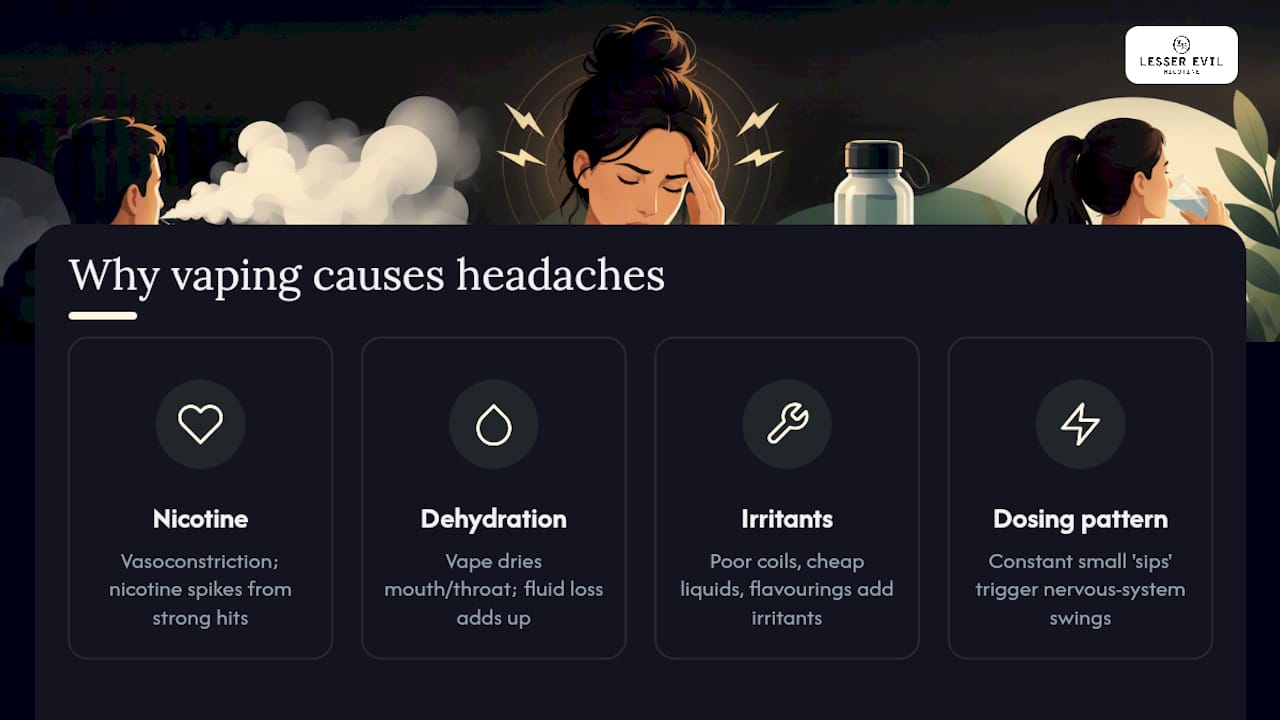
Nicotine narrows blood vessels. That’s not scaremongering, it’s just what nicotine does, and it’s a large part of why heavy vaping sessions leave your head throbbing. Hit it hard and fast, especially with a strong-strength liquid, and you get a nicotine spike your body wasn’t ready for.
Dehydration piles on top of that. Vaping dries out your mouth and throat, and that fluid loss adds up over a day of frequent puffing. Add poor-quality coils, cheap liquids, or certain flavourings and additives, and you’ve got extra irritants your body has to deal with on top of the nicotine itself.
Here’s the part most people miss: vaping changes how you take in nicotine compared with smoking. Cigarettes deliver nicotine in bigger, more spaced-out doses. Vapes let you “sip” constantly, dozens of small hits throughout the day, which can mean your body never quite settles into a steady state. Erratic, inconsistent dosing like this is a common trigger for that spiky, uncomfortable feeling, because your nervous system is reacting to constant small swings rather than one predictable hit. Public health commentary on switching from smoking to vaping notes that much of smoking’s harm comes from combustion by-products, but nicotine itself still drives dosing effects like this. Chain vaping just makes the pattern worse.
How long does a vaping headache actually last?
Most mild vaping headaches clear up within a few hours, especially once you stop puffing and start rehydrating. Improvement usually starts fast, often within 30 to 60 minutes of stepping away from the vape and having a proper drink of water.
If your headache is still hanging around after several hours, or it comes back day after day, that’s not typical. Persistent or worsening headaches deserve a proper look, ideally from a pharmacist or GP, rather than another dose of paracetamol and a shrug.
How to get rid of a headache from vaping right now
If your head’s pounding after a vaping session, work through these steps in order.
- Stop vaping immediately and get some fresh air. Sit or lie down somewhere quiet and dim. Bright light and noise make nicotine-related headaches feel worse.
- Hydrate, but pace yourself. Small, regular sips of water or an electrolyte drink work better than gulping a pint in one go. Vaping-related dry mouth contributes to fluid loss, so rehydrating is doing real work here, not just a nice-to-have.
- Try a cold or warm compress. Whichever feels better on your forehead or the back of your neck. Slow breathing for a few minutes can also take the edge off.
- Consider a standard OTC painkiller, following the label directions. Don’t reach for one every single day though, frequent use (more than two days a week) can actually cause a medication-overuse headache of its own.
If you’re dealing with severe symptoms, vomiting that won’t stop, fainting, breathing trouble, or a pulse that feels wildly irregular, skip the home remedies. Call emergency services or the National Poisons Centre on 0800 764 766 straight away.
Pro Tip: Keep a bottle of water next to whatever you’re vaping with. Pair every few puffs with a proper sip, not a splash, and you’ll break the dehydration pattern before it becomes a headache.
How can you stop vaping headaches before they start?
Prevention here isn’t about willpower, it’s about pacing. A few practical changes make a real difference:
- Drop to a lower nicotine strength if you’re currently on a high-mg liquid. Keeping your intake steady rather than swinging between high hits helps avoid the spikes that trigger headaches.
- Break the chain vaping habit. Space your puffs out and, if you can, track roughly how many you’re taking a day. Most people are shocked at the real number once they count.
- Fight dry mouth actively. Sip water throughout the day, keep sugar-free lozenges handy, and if you’re in a dry environment, a humidifier at home or in your workspace helps too. Our guide to vaping dry mouth covers this in more detail.
- Buy from reputable sources. Cheap liquids and poorly made coils are more likely to carry additives or contaminants your body reacts to.
- Talk to a pharmacist or stop-smoking adviser if headaches keep recurring despite these changes. Clinical guidance suggests dose adjustment or a different delivery method is often more useful than just toughing it out.
When should you see a doctor or call the poisons centre?
Most vaping headaches are mild and self-limiting. But certain symptoms cross the line from “annoying” into “get help now.” Watch for severe or repeated vomiting, fainting or near-fainting, difficulty breathing, or a pulse that feels fast, slow, or irregular in a way that worries you. These, alongside a severe headache, are recognised signs of acute nicotine toxicity.
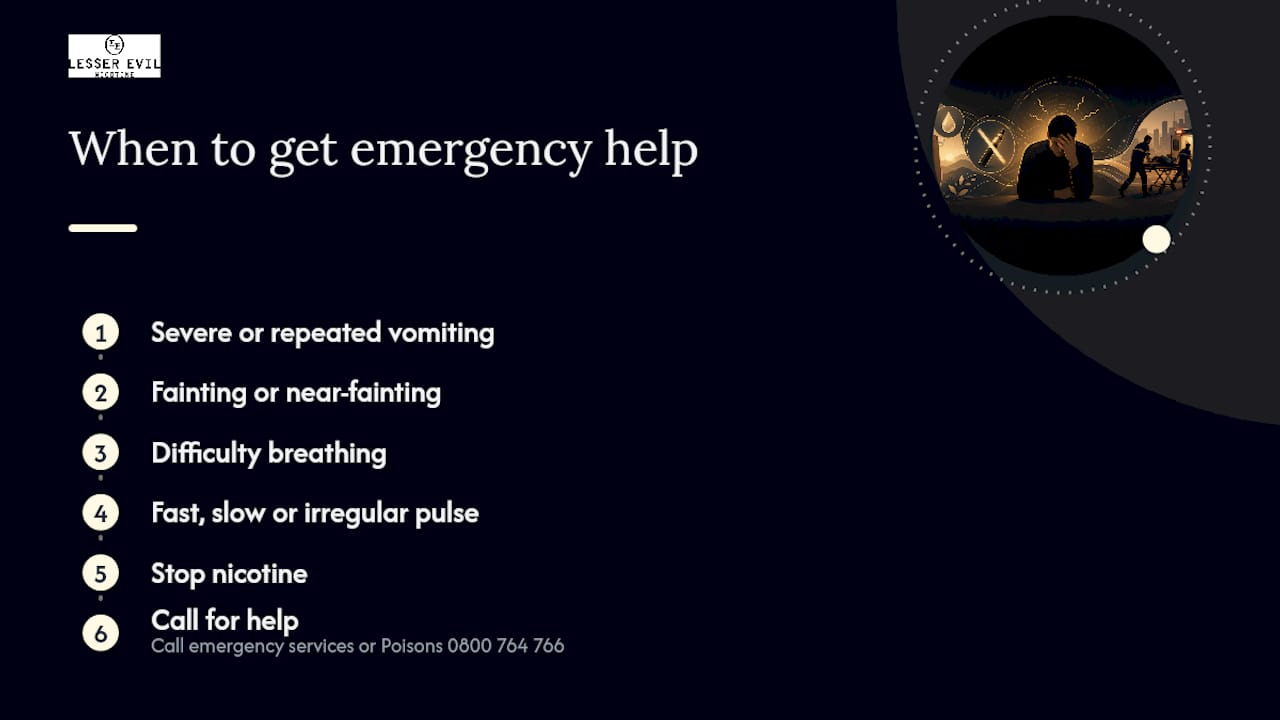
If any of that applies, stop all nicotine intake immediately and call emergency services or the National Poisons Centre on 0800 764 766. Don’t wait it out. Separately, if you find yourself reaching for painkillers most days of the week just to manage vaping headaches, that’s worth a conversation with a pharmacist. Repeated OTC use can create its own headache problem, layered on top of whatever’s causing the original one.
A factual look at going inhalation-free
Everything above assumes you’re still vaping. If you’re looking at ways to cut down on inhaling anything at all, it’s worth knowing what the alternatives actually are, factually.
Lesser Evil Nicotine makes a sublingual oral gel, used under the tongue rather than inhaled. It’s tobacco-free, battery-free, and flavoured with natural flavours and sweeteners across three options: Peppermint, Black Grape, and Green Apple.
Because it’s not inhaled, there’s no vapour to breathe in and no aerosol drying out your mouth and throat the way vaping does. That’s a plausible change in exposure pattern worth knowing about, not a medical claim. If you’re curious, start with the lowest suggested dose, use it discreetly wherever you are, and speak to a pharmacist first if you have any underlying health concerns.
What I’d tell a friend with a pounding head after vaping
People message us constantly describing the same thing: a foggy, thumping headache after a heavy vaping session, paired with a mouth that feels like the Sahara. It’s almost always the same combination of nicotine and dehydration working together.
The single habit that seems to help most is pairing every few puffs with a proper sip of water, then paying attention to whether the headaches ease off over the following days. It’s not complicated, but it works. If a headache ever comes with vomiting, breathing trouble, or an irregular pulse, don’t tough it out. Get help.
— Luke McLeod
Want to cut inhalation out of the equation entirely?
An oral nicotine gel product is available for those who want an alternative to vaping that avoids dry mouth, foggy heads, and uncertainty about vape liquid ingredients. The Lesser Evil Oral Mister delivers nicotine sublingually, under the tongue, so there’s no vapour to inhale and no battery involved. It’s tobacco-free, made with natural flavours and sweeteners, and comes in Peppermint, Black Grape, and Green Apple.

This product is designed for adult vapers seeking a discreet, inhalation-free option, offering an alternative way to manage nicotine use without making health claims. The Lesser Evil Nicotine Mouth Spray is priced at $18 as a one-off purchase. If you’ve got underlying health conditions or questions about dosing, check with a pharmacist first, then head to the store to see which flavour suits you.
Sources
This guide draws on established clinical and public health references, alongside official emergency contact information:
- MedlinePlus — Nicotine poisoning
- Medical News Today — Can vaping cause a headache?
- Electronic cigarettes for smoking cessation — review (PMC)
For urgent concerns about nicotine overdose in New Zealand, call the National Poisons Centre on 0800 764 766, available around the clock.
This article is general information, not a substitute for advice from a qualified doctor. Consult a qualified healthcare professional about your own circumstances before acting on anything here.
FAQ
How long do vape headaches last?
Most mild vaping headaches ease within a few hours, especially once you stop vaping and rehydrate properly. If a headache lasts more than a day or keeps recurring, it’s worth checking with a pharmacist rather than assuming it’s just vaping.
How many puffs a day counts as too much?
There’s no single safe number, since it depends on your liquid’s nicotine strength and your device. What matters more is the pattern. Frequent, closely spaced puffing throughout the day (chain vaping) is more likely to trigger headaches than the same total nicotine spread out with proper gaps and hydration.
What are common side effects of vaping?
Alongside headaches, commonly reported side effects include throat and mouth irritation, cough, nausea, and dry mouth. Many of these effects tend to ease with continued use, but persistent or worsening symptoms deserve a second look.
Can hitting a vape too much give you a headache?
Yes. Taking too many puffs in a short space of time, especially with a stronger nicotine liquid, can trigger a nicotine spike that brings on a headache alongside nausea or light-headedness. Spacing out your puffs and staying hydrated both reduce the likelihood.
Does Lesser Evil Nicotine help with vaping headaches?
Lesser Evil Nicotine doesn’t make any treatment or health claims. It’s a tobacco-free, battery-free oral nicotine gel used under the tongue instead of inhaled, which factually means no vapour and none of the throat drying that comes with it, though this is a change in exposure, not a medical remedy.