

Calculate Your Real Per Day Nicotine Gel Cost in New Zealand

Nicotine gel sits in an odd spot: it’s not one of the standard subsidised options like patches, gum, or lozenges, so don’t expect it on a pharmacy subsidy list. If you want free or low-cost NRT, Quitline and your local pharmacy are the first calls to make. If you’re after a retail oral gel product instead, budget for it as a premium item, not a subsidised medicine.
TL;DR:
- Nicotine gels are typically not included in subsidized programs and are priced higher due to complex formulation and small batch production costs.
- The cost of nicotine products depends on format, dose, pack size, and local taxes, with larger packs generally offering a better daily value.
- Government-supported options like Quitline provide subsidized or free patches, gum, and lozenges, but most retail gels are only available at full price.
- The Lesser Evil Oral Mister is a premium, tobacco-free gel spray used under the tongue, with costs influenced by pack size, nicotine content, and shelf life.
- Always calculate the daily cost by dividing the pack price by the number of days it is intended to last, regardless of product format.
Table of Contents
- How much does nicotine gel cost, and what actually drives the price?
- Why is nicotine gel hard to find on pharmacy shelves?
- Where can I get free or subsidised nicotine patches in New Zealand?
- What does nicotine gel cost compared with patches, gum, and sprays?
- Where does the Lesser Evil Oral Mister sit on price?
- When does it make sense to go official, and when does retail make more sense?
- Try the Lesser Evil Oral Mister as your consumer option
- Sources
- FAQ
How much does nicotine gel cost, and what actually drives the price?
Four things decide what you pay: format, dose, pack size, and who’s selling it. A patch, a piece of gum, and an oral gel spray are built differently, cost different amounts to manufacture, and get taxed and marked up in slightly different ways once they reach the shelf.
Format matters most. Patches and gum are decades-old, mass-produced categories with competing generic brands driving prices down. Gels and sprays are newer, made in smaller batches, and usually carry a brand premium because there’s less competition setting a price ceiling.
Dose and pack size come next. A box might hold 7, 14, or 21 patches; gum comes in packs of 24, 96, or more. The nicotine strength (2mg versus 4mg gum, for example) also shifts the price slightly, since higher-strength products often cost marginally more per unit.
Then there’s tax. New Zealand’s GST adds 15% to the shelf price of most retail nicotine products, and distribution mark-ups through pharmacies and retailers stack on top of the manufacturer’s price. This is why comparing New Zealand prices against overseas price lists rarely works — local tax and supply chains change the final number.
Here’s a rough-worked example. A 21-day patch pack costing $NZ 55 works out to a few dollars a day. A 30-day gum pack at $NZ 45, used at around 10 pieces daily, costs less per day, though your actual usage will vary.
- Format: patches, gum, lozenges, sprays, and gels all have different base manufacturing costs.
- Dose: higher nicotine strength usually nudges price up slightly.
- Pack size: bigger packs almost always work out cheaper per dose.
- Tax and mark-up: GST plus retailer margin can add a meaningful chunk to the sticker price.
Pro Tip: Always divide the total pack price by the number of days it’s meant to last, not by the number of pieces in the box. That’s the only number that tells you your real daily spend.
Why is nicotine gel hard to find on pharmacy shelves?
Gel formulations are genuinely more complicated to build than a lozenge or a stick of gum, and that complexity shows up in the price. Research into poloxamer-based gel systems for sustained nicotine delivery shows these gels can be engineered to shift from liquid to gel near body temperature and release nicotine steadily over days, which is genuinely clever chemistry. But clever chemistry isn’t cheap chemistry.
Getting a gel to behave consistently, batch after batch, takes controlled polymer sourcing and proper stability testing, both of which push up fixed costs compared with a simple pressed lozenge. That’s reflected in the patent world too, where nicotine gel patent filings describe multi-component formulations using ingredients like glycerol, low-acyl gellan, and xanthan gum, alongside stability claims that need to hold up over the product’s shelf life.
- Gel systems require sustained-release engineering that gum and patches don’t.
- Formulation stability testing and polymer sourcing raise the manufacturing bar.
- Many patented gel formulations stay at the R&D stage rather than reaching supermarket shelves quickly.
- Patent activity from major manufacturers shows genuine industry interest, but a patent is not a price promise.
The upshot: if you see a “nicotine gel” advertised, check whether it’s an established retail consumer product or something still working its way through development. The two have very different price tags.
Where can I get free or subsidised nicotine patches in New Zealand?
Start with Quitline, which remains the main door into subsidised and often free NRT supplies once you sign up for support. Local stop-smoking services and Health New Zealand publish similar guidance, and many community pharmacies run their own subsidised NRT schemes as well.
Here’s the practical checklist:
- Call or message Quitline and ask directly what NRT is currently subsidised or free for someone in your situation.
- Ask about eligibility — some free supplies are tied to enrolling in a support programme rather than a one-off pickup.
- Ring two or three local pharmacies and ask them to quote patch, gum, and lozenge prices side by side, including whether any subsidy applies to your purchase.
- Ask specifically about oral gel or spray products — most pharmacies won’t stock these under any subsidy scheme, so you’ll likely be quoted full retail.
- Confirm pack size and duration so you’re comparing genuine per-day costs, not just sticker prices.
The general pattern is straightforward: standard NRT formats (patches, gum, lozenges) are the ones most likely to carry subsidised or free access through official channels. Novel formats, including most gels and sprays, tend to sit outside those schemes and get sold at full retail price.
Pro Tip: When you call Quitline, ask what’s free right now, not what’s “usually” available. Subsidy schemes and stock can shift, and a quick phone call beats guessing.
What does nicotine gel cost compared with patches, gum, and sprays?
Rough New Zealand ballpark figures, based on typical retail patterns rather than a single fixed price:
- Patches: roughly $2 to $4 per day, depending on strength and pack size.
- Gum or lozenges: roughly $1 to $3 per day, with usage-dependent variation since people use different quantities daily.
- Nicotine mouth sprays: generally priced as a premium format, often working out to a few dollars per day depending on doses per bottle.
- Premium oral gel: where retail consumer gels exist, expect them priced closer to specialty consumer goods than commodity NRT, reflecting the smaller batch sizes and formulation costs covered above.
To turn any pack price into a daily figure, divide the total price by the number of days the manufacturer says the pack should last, based on the stated doses per day. That single calculation is more useful for budgeting than any brand-to-brand comparison of sticker prices, since pack sizes and dosing patterns vary so widely across formats.
Where does the Lesser Evil Oral Mister sit on price?
The Lesser Evil Oral Mister is a sublingual nicotine gel spray, used under the tongue rather than inhaled or applied to the skin. It’s tobacco-free, battery-free, and made with a water-based formula using natural flavours and sweeteners, available in Peppermint, Black Grape, and Green Apple.
As a newer format with small initial batch runs, it’s priced closer to a premium consumer product than a mass-market NRT item, for the same reasons covered above: formulation and production complexity rather than commodity manufacturing at scale. When comparing it against alternatives, check:
- Pack size and doses per bottle.
- Milligrams of nicotine per spray.
- Shelf life after opening, so you can work out real cost per week or month.
- The listed site price divided by expected doses, to get your own per-day figure.
When does it make sense to go official, and when does retail make more sense?
Official routes make sense when cost matters most and you want structured support alongside your NRT. Retail purchase suits people who want something immediate, discreet, and don’t need the accompanying programme. Neither route is inherently wrong. It depends on what you’re actually optimising for: lowest possible spend, or a specific product experience.
Whichever way you lean, check current subsidy rules through Quitline before assuming either option, since availability shifts and it costs nothing to ask.
— Luke McLeod
Try the Lesser Evil Oral Mister as your consumer option
If you’ve decided a retail oral gel fits your situation better than a patch or gum pack, the Lesser Evil Oral Mister gives you a tobacco-free, battery-free option you use under the tongue, with none of the vape hardware, charging, or e-waste that comes with a device.
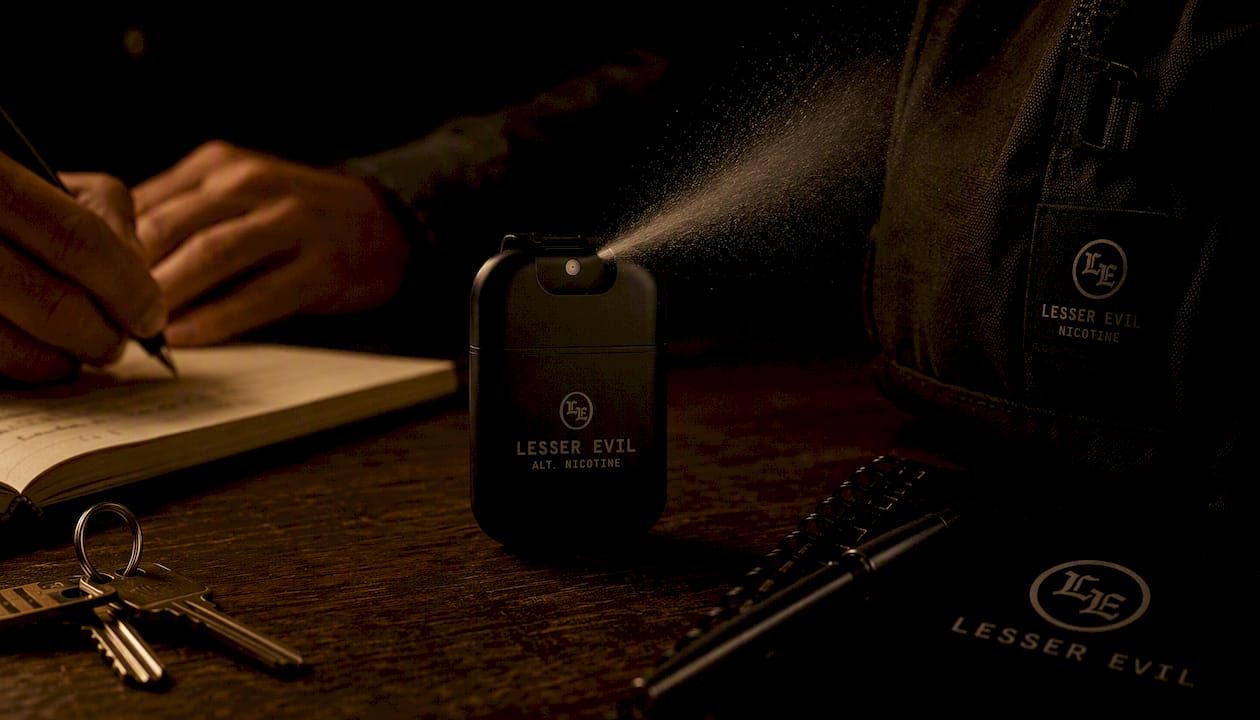
It comes in Peppermint, Black Grape, and Green Apple, and like any gel product, it’s worth checking pack size and shelf life after opening so you can work out your real per-dose cost before you buy. Head to the product page, check the current pack pricing, and do the maths against whatever you’re using now. That’s the only fair comparison.
This article is general information, not a substitute for advice from a qualified doctor. Consult a qualified healthcare professional about your own circumstances before acting on anything here.
Sources
FAQ
Where Can I Get Free Nicotine Patches in New Zealand?
Quitline is the main route to free or subsidised patches, gum, and lozenges once you register for support, and many local pharmacies run parallel schemes worth asking about directly.
Is Nicotine Gel Subsidised Like Patches or Gum?
Generally, no. Retail nicotine gel and spray products are newer, smaller-batch formats that typically sit outside standard subsidy schemes, so expect full retail pricing rather than a pharmacy subsidy.
How Do I Work Out the Daily Cost of a Nicotine Product?
Divide the total pack price by the number of days the pack is designed to last, based on the stated doses per day. That figure gives you a genuine per-day cost you can compare across formats.
Why Is Nicotine Gel More Expensive Than Gum or Patches?
Gel formulations require more complex manufacturing, including sustained-release engineering and stability testing, which raises production costs compared with simpler formats like gum or lozenges.
What Should I Ask a Pharmacy When Comparing Prices?
Ask for the price per pack, the number of days it’s meant to last, and whether any subsidy currently applies to that specific product for your situation.