

Manage nicotine anxiety naturally: your 2026 guide

TL;DR:
- Nicotine withdrawal anxiety temporarily lasts one to four weeks and occurs as your nervous system recalibrates.
- Managing it naturally with techniques like breathwork, movement, and cognitive reframing helps counteract the fight-or-flight response.
Nicotine withdrawal anxiety is a temporary physiological response caused by your nervous system recalibrating after nicotine dependence ends. The good news is you can manage nicotine anxiety naturally by activating your body’s own calming mechanisms through breathwork, movement, and cognitive reframing. Withdrawal-related anxiety typically lasts 1–4 weeks before improving significantly for most people. That timeline is not a life sentence. It is a window you can work with, and the strategies in this guide are built specifically for it.
What causes nicotine anxiety and why natural management matters
Nicotine does not actually reduce anxiety. It temporarily relieves the anxiety it creates. Nicotine creates a self-perpetuating cycle where your baseline anxiety rises with dependence, and each cigarette or vape only relieves the discomfort of not having one. Breaking that cycle means your baseline anxiety will drop, but the first few weeks feel rough because your nervous system is recalibrating.
When you stop, your brain’s reward pathways lose their regular dopamine hit. GABA, serotonin, and dopamine levels all shift, triggering an overactive fight-or-flight response. Your body reads the absence of nicotine as a threat. That is why you feel jittery, irritable, and on edge even when nothing stressful is actually happening.
Natural management matters because it targets the root cause rather than masking it. Techniques that activate the parasympathetic nervous system, the body’s “rest and digest” mode, directly counter the fight-or-flight state driving your anxiety. Effective natural approaches signal safety to the nervous system through lifestyle and behavioural adjustments, not willpower alone.
Here is what is happening in your body during this period:
- Dopamine dips. Nicotine artificially boosted dopamine. Without it, motivation and mood temporarily flatline.
- GABA suppression. Nicotine stimulated GABA receptors. Withdrawal reduces their activity, increasing nervous tension.
- Cortisol spikes. The stress hormone rises during early cessation, amplifying physical anxiety symptoms.
- Adrenaline surges. The fight-or-flight system fires more easily, making small stressors feel disproportionately intense.
Understanding this is not just reassuring. It is the foundation for choosing the right tools to fight back.
How to manage nicotine anxiety naturally: techniques that work fast
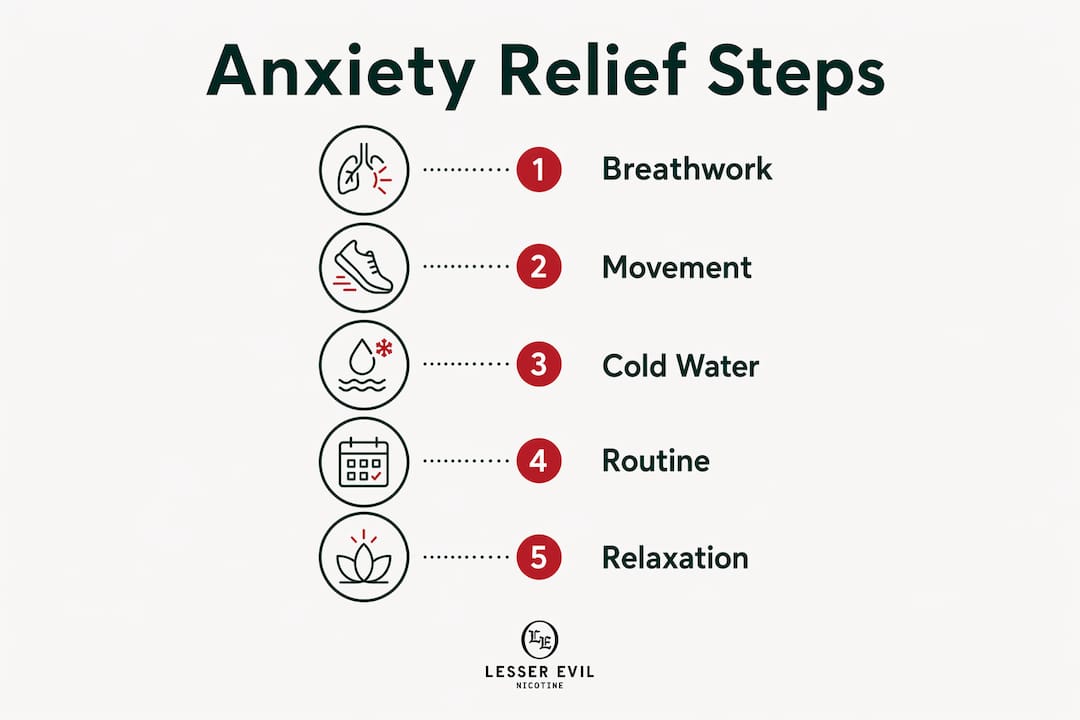
The fastest relief comes from techniques that directly interrupt the fight-or-flight response. These are not long-term fixes on their own, but they are your first line of defence when anxiety spikes.
Breathwork: your fastest tool
The 4-7-8 breathing technique and box breathing can counter anxiety spikes within 30–60 seconds by activating the parasympathetic nervous system. That is faster than any supplement and requires nothing but air.
For 4-7-8 breathing: inhale for 4 counts, hold for 7, exhale slowly for 8. The extended exhale is the key. It stimulates the vagus nerve, which tells your brain the threat is over. Box breathing works similarly: inhale for 4, hold for 4, exhale for 4, hold for 4. Use either method the moment you feel anxiety rising.
Movement: the 5-minute fix
Even 5 minutes of physical activity reduces anxiety with effects lasting up to 50 minutes through natural endorphin release. You do not need a gym. A brisk walk around the block, a set of jumping jacks, or climbing stairs counts. The point is to give your body a physical outlet for the adrenaline that withdrawal generates.

Short 90-second micro-workouts can also trigger a dopamine and endorphin release, providing fast relief when you genuinely cannot step away. Ten star jumps in the bathroom at work is not glamorous. It works.
Cold water and the dive reflex
Splashing cold water on your face or holding your wrists under cold running water triggers the mammalian dive reflex. Your heart rate drops, your body calms, and the acute spike passes. This is particularly useful in the first week when anxiety hits without warning.
Oral substitution
A significant part of the habit loop is oral. Your hands go to your mouth, your mouth expects something. Replacing that with sugar-free gum, herbal tea, or a tobacco-free oral option disrupts the habit loop without feeding the nicotine cycle.
- Identify your highest-risk times of day (morning coffee, after meals, work stress).
- Pre-plan a specific physical or breathwork response for each.
- Keep a cold drink nearby to use the “Drink water” step from the 4 Ds strategy.
- Use movement as your default when anxiety spikes without a clear trigger.
- Practise breathwork daily, not just during spikes, so it becomes automatic.
Pro Tip: Set a phone alarm labelled “breathe” for your two highest-anxiety times of day. Practising 4-7-8 breathing before anxiety hits trains your nervous system to respond faster when it does.
How to build a daily routine that lowers anxiety without nicotine
Acute techniques handle the spikes. Your daily routine handles the baseline. Reducing your overall anxiety level means the spikes are smaller and less frequent.
Sleep and hydration come first
Sleep deprivation amplifies every withdrawal symptom. A consistent sleep schedule, same bedtime and wake time every day, stabilises cortisol and supports mood regulation. Dehydration worsens anxiety and fatigue, both of which are already elevated during cessation. Aim for water consistently throughout the day rather than in large amounts at once.
Cut caffeine by half during early cessation
Caffeine metabolism slows after quitting nicotine, meaning caffeine stays in your system longer than it used to. Your usual two coffees now hit like three. Reducing caffeine intake by roughly half during the first few weeks prevents this from amplifying your anxiety. Switch one coffee for herbal tea. Green tea still provides a mild lift without the same cortisol spike.
Replace smoke breaks with something low-stress
Smoke breaks were not just about nicotine. They were micro-pauses built into your day. Remove them without replacement and you lose stress regulation moments. Replace them with a two-minute walk, a stretch, or a few minutes outside. The nicotine habit management strategies that stick are the ones that honour the function the habit served.
Progressive muscle relaxation
Progressive muscle relaxation lowers cortisol and eases withdrawal-related stress by systematically tensing and releasing muscle groups. Ten minutes before bed reduces the physical tension that accumulates during the day and improves sleep quality. It is one of the most underused tools in the quitter’s toolkit.
| Habit | Why it helps | When to do it |
|---|---|---|
| 4-7-8 breathing | Activates parasympathetic nervous system in under 60 seconds | At every anxiety spike |
| 5-minute walk | Releases endorphins, reduces cortisol | After meals, during breaks |
| Halved caffeine | Prevents amplified jitteriness from slower metabolism | From day one of cessation |
| Consistent sleep schedule | Stabilises cortisol and mood regulation | Every night |
| Progressive muscle relaxation | Lowers stress hormones, improves sleep | Before bed |
Pro Tip: Write your coping plan down before you need it. When anxiety spikes, your prefrontal cortex goes offline and decision-making suffers. A written plan removes the need to think. You just follow the list.
Common mistakes that make nicotine anxiety worse
Most people hit the same walls. Knowing them in advance means you can sidestep them.
- Believing nicotine calmed you. It did not. Nicotine only relieved the anxiety it created. Remembering this stops you from romanticising the habit when anxiety spikes.
- Relying on one coping method. A diverse toolbox of responses outperforms any single strategy. Breathwork alone will not cover every situation. Movement, cold water, distraction, and social support each serve different moments.
- Ignoring caffeine. This is the most overlooked mistake. Quitters who keep their full caffeine intake often attribute the resulting jitteriness to withdrawal, feel discouraged, and give up. It is a fixable problem.
- Avoiding stress triggers entirely. Avoidance increases anxiety long-term. The goal is to build new responses to triggers, not eliminate the triggers themselves.
- Going it alone. Social support significantly improves quit rates. Tell someone. Ask them to check in. Even a text exchange during a bad moment helps.
“The moment you label what you’re feeling as withdrawal rather than danger, you create a gap between the sensation and your reaction. That gap is where your choices live. Anxiety labelled as withdrawal loses its power to spiral.”
The 4 Ds strategy, Delay, Drink water, Deep breathing, and Distract, is one of the most consistently reported effective tools for managing stress-linked urges. It works because it matches the tool to the moment rather than relying on willpower. Pair it with the nicotine stress management guide for a fuller picture of how to structure your response plan.
Key takeaways
Natural anxiety management during nicotine cessation works best when you combine fast-acting physical techniques with consistent daily habits that lower your baseline stress over time.
| Point | Details |
|---|---|
| Anxiety is temporary | Withdrawal-related anxiety typically lasts 1–4 weeks before improving for most people. |
| Breathwork works fast | The 4-7-8 technique activates the parasympathetic nervous system within 30–60 seconds. |
| Movement is medicine | Five minutes of physical activity reduces anxiety for up to 50 minutes via endorphin release. |
| Cut caffeine early | Nicotine cessation slows caffeine metabolism, so your usual intake hits harder. |
| Build a toolbox | A diverse set of coping responses outperforms any single strategy during high-stress moments. |
What I have learned about quitting anxiety the hard way
by Luke McLeod
The thing nobody tells you is that the anxiety you feel in week one is not evidence that you cannot cope without nicotine. It is evidence that your nervous system is working exactly as it should. It is recalibrating. That distinction matters enormously.
Most people I have spoken to who relapsed did not do so because the physical urge was unbearable. They relapsed because they had no plan for the moment anxiety spiked and they were alone with it. The urge passed in minutes. The lack of a plan was the real problem.
What I have seen work consistently is this: breathwork as the first response, movement as the second, and cognitive labelling as the third. When you feel the spike, you breathe first. If that is not enough, you move. And throughout, you remind yourself that this feeling has a name, it is withdrawal, and it has an end date.
The self-compassion piece is not soft. It is practical. Beating yourself up for feeling anxious during cessation is like blaming yourself for feeling sore after surgery. Your body is doing something difficult. Give it the tools it needs and get out of its way.
If you are in the thick of it right now, the anxiety relief strategies for quitters are worth bookmarking. You will not regret having more options in your corner.
— Luke McLeod
Lesser Evil Nicotine: a different way to manage your habit
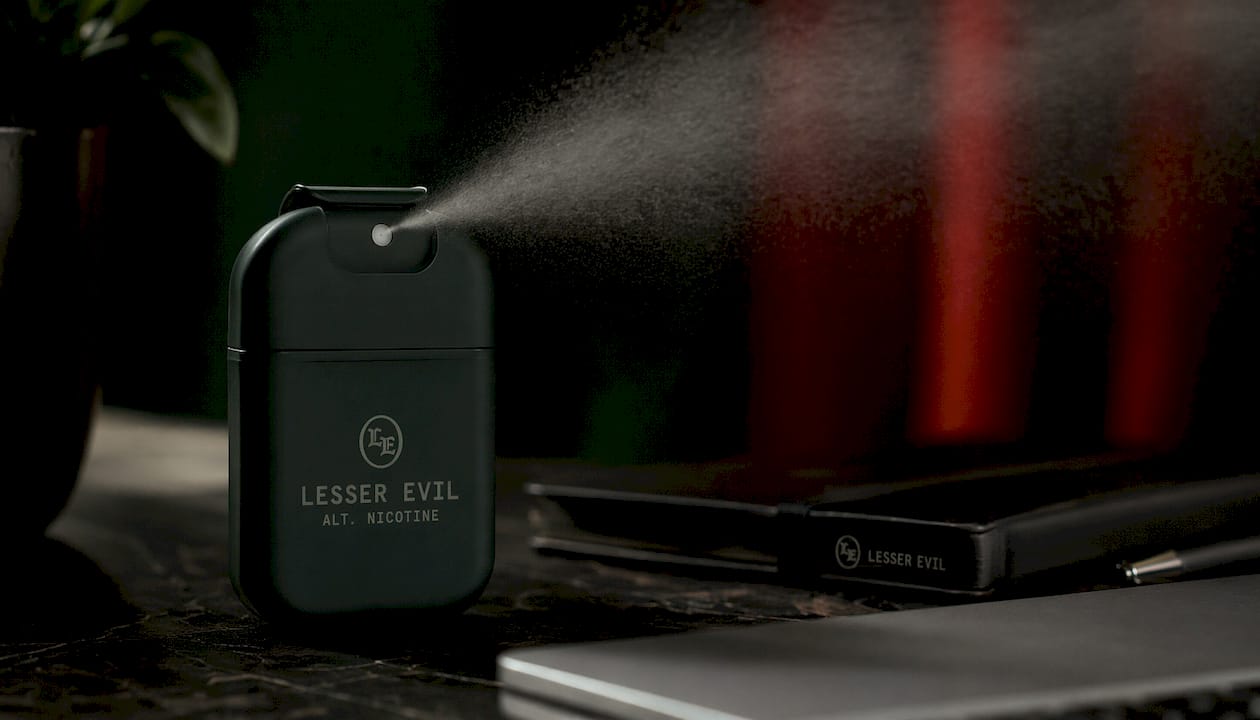
If you are cutting back on smoking or vaping and want something that fits your hands and your lifestyle without the chemicals, Lesser Evil Nicotine is worth a look. The Lesser Evil Oral Mister is a sublingual nicotine gel placed under the tongue. It is tobacco-free, battery-free, and made with natural flavours and sweeteners. You do not breathe it in. There is no vapour, no smoke, and no e-waste. It comes in Peppermint, Black Grape, and Green Apple, and it is discreet enough to use anywhere. For anyone working through a mindful, controlled approach to their nicotine habit, it is a practical alternative to reaching for a vape.
FAQ
How long does nicotine withdrawal anxiety last?
Withdrawal-related anxiety typically lasts 1–4 weeks after stopping nicotine, with most people seeing significant improvement after that window.
What is the fastest natural way to calm nicotine anxiety?
The 4-7-8 breathing technique activates the parasympathetic nervous system within 30–60 seconds and is the fastest drug-free option available during an acute anxiety spike.
Does exercise actually help with nicotine anxiety?
Yes. Five minutes of physical activity reduces anxiety and urges for up to 50 minutes by triggering endorphin and dopamine release. Even a brisk walk counts.
Why does coffee make anxiety worse after quitting?
Nicotine speeds up caffeine metabolism. Once you stop, caffeine stays in your system longer, so your usual intake produces stronger jitteriness and anxiety. Cutting intake by roughly half during early cessation helps considerably.
Is it normal to feel more anxious after quitting than before?
Yes, and it is temporary. Nicotine raised your baseline anxiety by creating a cycle of relief and withdrawal. Once that cycle breaks, most people report lower overall anxiety within a few months.